


How to Crochet a Scarf: Step-by-Step for Beginners
Sorting through yarn options at an American craft store can quickly feel overwhelming for beginner crochet enthusiasts. Finding the right combination of yarn and crochet hook affects not just how your scarf looks but also how easy and enjoyable the project becomes. This guide will highlight the most beginner-friendly choices and walk you step by step, so you can focus on the fun of creating without the confusion of mismatched materials or tricky textures. Matching your yarn and hook is the key to consistent, frustration-free scarf making.
Table of Contents
- Step 1: Select The Right Yarn And Crochet Hook
- Step 2: Prepare Your Yarn And Create A Foundation Chain
- Step 3: Work Basic Crochet Stitches For The Scarf Length
- Step 4: Check Scarf Shape And Adjust Stitch Tension
- Step 5: Finish The Scarf And Weave In Ends
Quick Summary
| Key Point | Explanation |
|---|---|
| 1. Choose compatible yarn and hook | Select worsted weight yarn with a matching crochet hook size for beginner-friendly scarf making. |
| 2. Create a consistent foundation chain | Aim for 30-40 chain stitches, keeping tension even for a smooth, professional foundation. |
| 3. Use simple stitches for texture | Focus on single crochet or half double crochet to achieve a uniform fabric effect in your scarf. |
| 4. Periodically check scarf shape and tension | Regularly assess your work to ensure straight edges and consistent tension throughout your project. |
| 5. Finish properly by weaving in ends | Secure loose yarn tails and finish edges neatly to enhance the overall appearance of your scarf. |
Step 1: Select the right yarn and crochet hook
Choosing the perfect yarn and crochet hook is your first crucial step in creating a beautiful scarf. This selection impacts everything from the texture and warmth of your finished project to how comfortable you’ll be while crafting.
Start by understanding yarn weight and hook compatibility. Crochet hook sizes vary widely depending on the project, and matching your hook to your yarn is essential for creating consistent stitches. Here are some key considerations:
- Yarn Weight: For beginners, worsted weight yarn is recommended
- Yarn Texture: Choose soft, smooth yarns that slide easily
- Hook Material: Consider aluminum, bamboo, or wood based on comfort
- Hook Size: Match the hook size to your yarn weight
For a beginner scarf project, I recommend selecting a medium-weight yarn like worsted weight in a light color. This will help you see your stitches clearly and provide enough structure for learning. Acrylic or wool-blend yarns are excellent choices because they’re forgiving, affordable, and easy to work with.
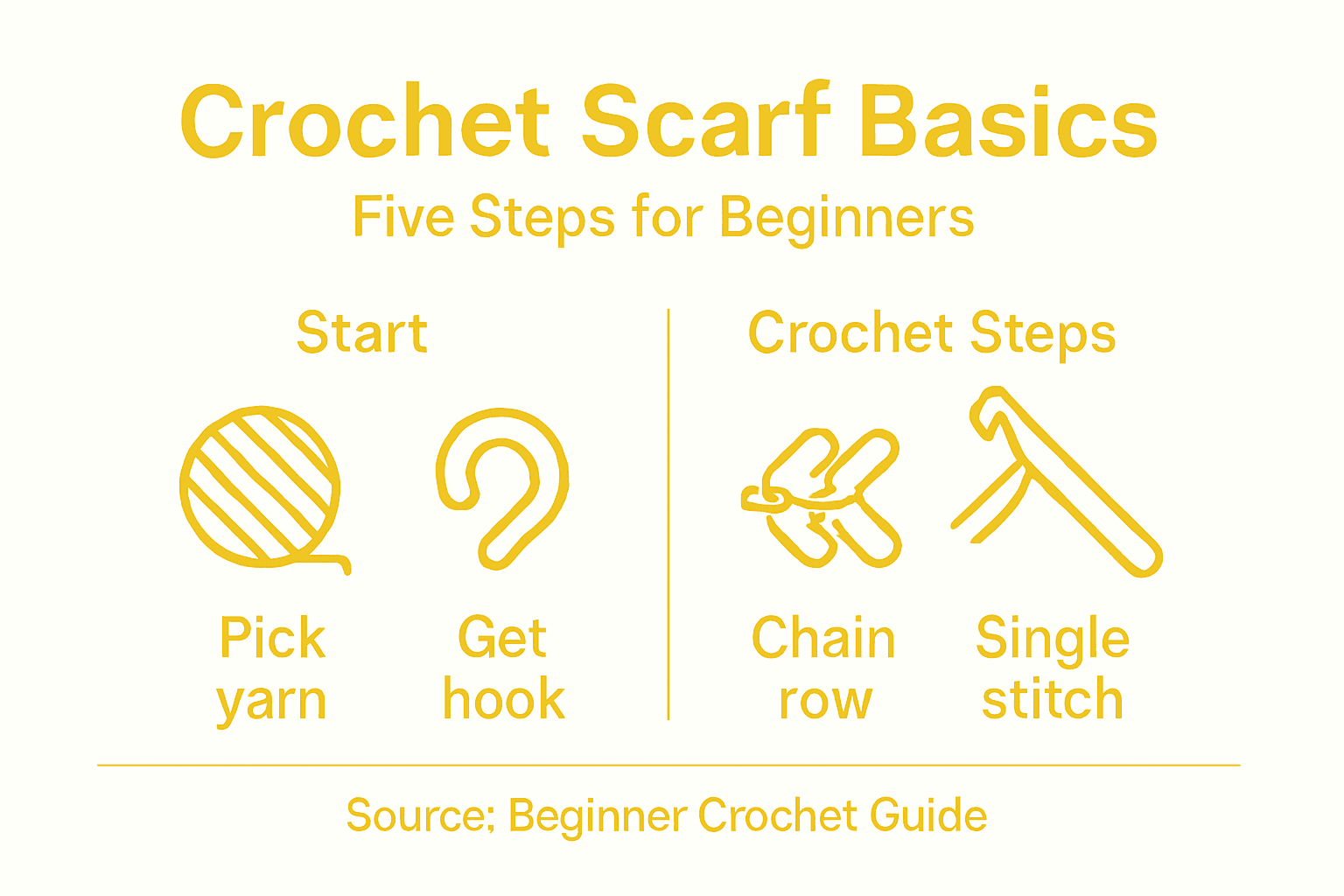
When selecting your crochet hook, look for sizes between G (4.0mm) and I (5.5mm), which work perfectly with worsted weight yarn. Ergonomic hooks with cushioned handles can help reduce hand fatigue as you learn.
For easy reference, here is a comparison of common crochet hook materials and their benefits:
| Hook Material | Comfort Level | Best Use Case |
|---|---|---|
| Aluminum | Lightweight, smooth | Fast stitching, beginners |
| Bamboo | Warm, flexible | Long projects, eco-friendly |
| Wood | Durable, rustic | Stress relief, grip comfort |
Matching your yarn weight to the right hook size ensures even stitches and a professional-looking finished scarf.
Pro tip: Visit a local craft store and feel different yarn textures in person to find the most comfortable option for your first scarf project.
Recommended supplies for your project


Step 2: Prepare your yarn and create a foundation chain
Now that you’ve selected your yarn and hook, it’s time to start your scarf by creating a foundation chain. This initial step sets the stage for your entire project and determines the width of your finished scarf. How to start crocheting can seem intimidating, but with practice, you’ll master this fundamental technique quickly.
To begin, follow these steps for creating your foundation chain:
- Hold the yarn correctly by wrapping it around your non-dominant hand
- Create a slip knot about 6 inches from the yarn end
- Insert your crochet hook into the slip knot
- Yarn over by bringing the working yarn behind the hook
- Pull the yarn through the loop on your hook
The number of chain stitches depends on your desired scarf width. For a standard adult scarf, aim for 30-40 chain stitches. Keep your tension consistent - not too tight or too loose. Consistent tension ensures your scarf will have an even, professional appearance.
A smooth, even foundation chain is the cornerstone of a beautiful crochet project.
As you practice, you’ll develop muscle memory and your chains will become more uniform. Don’t get discouraged if your first attempts look uneven - every crafter started exactly where you are now.
Pro tip: Practice your foundation chain on scrap yarn to build confidence before starting your actual scarf project.
Step 3: Work basic crochet stitches for the scarf length
With your foundation chain complete, you’re ready to create the main body of your scarf by working rows of crochet stitches. Crochet stitches vary in technique and can dramatically change your scarf’s appearance and texture.
For beginners, I recommend starting with single crochet or half double crochet stitches. These foundational stitches create a uniform, smooth fabric that’s perfect for your first scarf project. Here’s how to work these basic stitches:
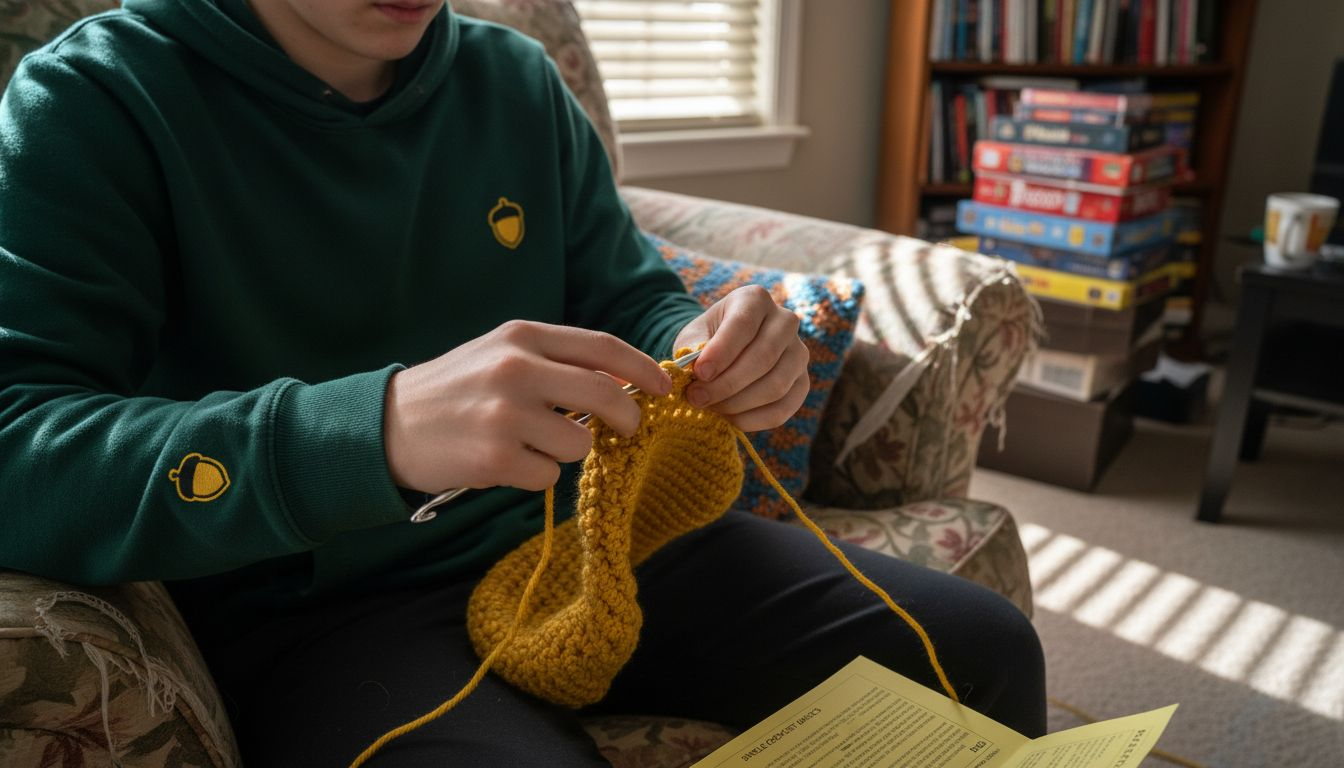
Here is a summary of beginner-friendly crochet stitches and their unique properties:
| Stitch Type | Fabric Result | Difficulty | Common Uses |
|---|---|---|---|
| Single Crochet | Dense, smooth | Basic | Scarves, blankets |
| Half Double Crochet | Soft, flexible | Easy | Shawls, hats |
- Single Crochet (SC): Insert hook, yarn over, pull through first loop, yarn over again, pull through both loops
- Half Double Crochet (HDC): Yarn over, insert hook, yarn over, pull through first three loops
- Maintain consistent tension throughout each row
- Count your stitches to ensure uniform width
As you work each row, you’ll turn your work at the end and create a new row using the same stitch. This repetitive motion builds length and creates the classic rectangular shape of a scarf. Aim for about 4-5 inches of width and continue until your scarf reaches your desired length - typically 60-72 inches for an adult scarf.
Consistent stitch tension is the secret to a professional-looking handmade scarf.
Practice makes perfect. Your first few rows might look uneven, but you’ll quickly develop muscle memory and improve your technique with each stitch.
Pro tip: Place a stitch marker at the beginning of each row to help you keep track of your row count and maintain consistent stitch width.
Step 4: Check scarf shape and adjust stitch tension
As you continue crocheting, periodically stopping to examine your work becomes crucial for creating a professional-looking scarf. Stitch tension affects fabric quality dramatically, influencing everything from your scarf’s appearance to its final drape and comfort.
To check your scarf’s shape and tension, follow these key steps:
- Lay your work flat periodically to assess shape
- Check edge straightness and overall symmetry
- Look for unintended curling or waviness in the fabric
- Measure width consistently across different sections
If you notice inconsistencies, try these tension adjustment techniques:
- Loosen your grip if stitches appear too tight and dense
- Tighten your yarn if stitches look loose or uneven
- Practice maintaining a steady hand position
- Use your non-dominant hand to control yarn tension
Consistent tension transforms a beginner’s project into a professional-looking handmade scarf.
Remember that slight variations are normal, especially for first-time crocheters. Each row you complete will improve your technique and muscle memory.
Pro tip: Work near natural light and periodically stretch your project to help you spot tension irregularities more easily.
Step 5: Finish the scarf and weave in ends
You’re almost done creating your first handmade scarf! The final steps involve securing your hard work and giving your project a polished, professional appearance. Finishing techniques prevent unraveling and ensure your scarf looks neat and tidy.
To complete your scarf, follow these essential finishing steps:
- Cut the yarn leaving a 6-inch tail after your final row
- Pull the tail through the last loop to secure
- Use a yarn needle for weaving in loose ends
- Weave the tail through several stitches on the back side
Weaving in ends requires patience and precision. Here’s a detailed approach:
- Thread your yarn needle with the loose tail
- Insert the needle through the back of several stitches
- Weave in different directions to distribute tension
- Trim any excess yarn close to the fabric
Properly weaving in ends transforms your scarf from homemade to professionally crafted.
Don’t worry if your first attempt looks imperfect. With practice, you’ll develop a smooth, nearly invisible technique for finishing your crochet projects.
Pro tip: Choose a yarn needle with a large, blunt eye that matches your yarn’s thickness for easier end weaving.
Ready to Start Your First Scarf With Confidence
Choosing the right yarn and mastering basic stitches can feel overwhelming at first. If you are worried about picking the perfect materials or want an easier way to begin, we understand the challenge of maintaining consistent tension and creating smooth, even stitches. That is why we offer specially curated Bundles for Crochet and Knitting Beginners that include beginner-friendly yarn and hooks designed to make your first scarf project enjoyable and successful.
.png)
Explore our high-quality Yarn selection crafted for comfort and ease. Plus, keep your supplies organized with durable Yarn Bags so you can focus on learning stitches and perfecting tension. Start your creative journey today at CRAFTISS where expert support and quality materials meet to help you crochet like a pro. Don’t wait to transform your passion into beautiful handmade scarves.
Frequently Asked Questions
What materials do I need to crochet a scarf?
You will need worsted weight yarn, a crochet hook sized between G (4.0mm) and I (5.5mm), and a yarn needle for finishing. Start by selecting a soft and smooth yarn to make the process enjoyable and easier for beginners.
How do I choose the right yarn for my scarf project?
Select medium-weight yarn, preferably in a light color so you can easily see your stitches. Acrylic or wool-blend yarns are excellent choices for beginners due to their affordability and forgiving nature.
What is the foundation chain, and how do I create it?
The foundation chain is the initial series of stitches that determines the width of your scarf. To create it, make a slip knot, yarn over, and pull through loops on your hook until you reach your desired number of chain stitches, typically 30-40 for an adult scarf.
How can I keep my crochet stitches consistent?
Maintain a steady hand position and grip on your yarn while working. Regularly check your tension, and if you notice inconsistencies, adjust your grip to either loosen or tighten your stitches as needed.
What should I do at the end of my scarf to finish it properly?
To finish your scarf, cut the yarn leaving a 6-inch tail, pull the tail through the last loop to secure it, and weave in the loose ends with a yarn needle. Ensure you weave the tail through several stitches on the back side to create a neat, polished look.
How do I fix uneven tension in my crochet work?
If you notice uneven tension, identify if your stitches are too tight or loose. Adjust your grip on the yarn accordingly—loosen your grip if they appear tight or tighten your yarn hold if they are loosely formed. Keep practicing to improve your technique.
