


Blocking in Crochet: Transforming Your Finished Projects
A crochet project can look lumpy and uneven straight off the hook. Learning about blocking techniques gives American beginners a way to turn rough edges into smooth, professional results using moisture and strategic shaping. With basic tools and a clear plan, you can help stitches settle, shape your work accurately, and reveal the beauty hiding in your yarn. This guide breaks down the process and shows how blocking improves drape, fit, and the overall look of your finished pieces.
Table of Contents
- Blocking In Crochet Defined And Debunked
- Types Of Blocking Methods For Crochet
- How Blocking Works For Project Enhancement
- Essential Tools And Materials For Blocking
- Common Mistakes And Best Practices To Avoid
Key Takeaways
| Point | Details |
|---|---|
| Blocking Enhances Projects | Blocking is essential for achieving a polished and professional look in crochet items, especially for intricate designs. |
| Different Techniques for Different Fibers | Use wet, steam, or spray blocking methods based on the yarn type to attain the best results. |
| Tools are Essential | Invest in quality blocking mats, pins, and moisture tools to effectively reshape your projects. |
| Avoid Common Mistakes | Pay attention to fiber-specific instructions and always test your blocking method on a swatch first to prevent damage. |
Blocking in Crochet Defined and Debunked
Blocking is a transformative finishing technique that helps crocheters elevate their handmade projects from good to extraordinary. It’s the secret weapon that professional crafters use to refine their work, ensuring each piece looks polished and professionally crafted.
At its core, blocking is a process of reshaping and setting a finished crochet project using moisture and strategic positioning. Textile arts blocking techniques) involve manipulating fabric’s final dimensions and enhancing its overall appearance. This method allows stitches to settle into their optimal configuration, smoothing out uneven areas and creating a more uniform, professional look.
The blocking process varies depending on the type of yarn and project, but typically involves several key steps:
- Gently washing or misting the completed project
- Carefully stretching and pinning the item to desired measurements
- Allowing the piece to dry completely in its new shape
- Using steam or heat to help fibers relax and set
Not every crochet project requires blocking, but certain types benefit significantly from this technique. Lace patterns, intricate shawls, sweaters, and garments with complex stitch patterns often see dramatic improvements through careful blocking. Blocking helps stitches bloom and reveals the true potential of your handcrafted textile.
Pro tip: Always check your yarn label for specific blocking recommendations, as different fibers respond uniquely to moisture and heat.
Recommended supplies for your project


Types of Blocking Methods for Crochet
Crocheters have several specialized blocking techniques available to transform and perfect their finished projects. Blocking methods in textile arts) range from gentle spray techniques to full immersion, each designed to enhance different types of yarn and project designs.
The three primary blocking methods crocheters utilize include:
-
Wet Blocking: Best for natural fibers like wool and cotton
- Completely submerge project in lukewarm water
- Gently squeeze out excess moisture
- Reshape and pin to desired dimensions
-
Steam Blocking: Ideal for synthetics and delicate fibers
- Use a handheld steamer or iron with steam setting
- Hold steamer slightly above fabric
- Reshape without direct pressure
-
Spray Blocking: Gentlest method for delicate yarns
- Lightly mist project with water
- Pin to blocking mat
- Allow to air dry naturally
Different blocking approaches suit various fiber types and project complexities. Wool responds beautifully to wet blocking, while acrylic yarns often require steam or spray methods to maintain their shape without damage. Understanding these techniques helps crocheters achieve professional-looking finished pieces with precise dimensions and smooth textures.
Here’s a quick guide comparing blocking methods by fiber type and typical outcomes:
| Blocking Method | Suitable Fiber Types | Best For Project Types | Key Result |
|---|---|---|---|
| Wet Blocking | Wool, cotton | Lace, garments, shawls | Maximum shape control |
| Steam Blocking | Acrylic, blends | Synthetics, delicate fabrics | Gentle reshaping |
| Spray Blocking | Silk, specialty yarns | Lightweight, fragile items | Light smoothing effect |
Pro tip: Always perform a small test swatch blocking before treating your entire project to understand how your specific yarn will respond to moisture and heat.
How Blocking Works for Project Enhancement
Blocking is a transformative process that turns handmade crochet projects from rough drafts into polished masterpieces. Textile arts blocking techniques) work by manipulating fabric at a fundamental level, reshaping and setting stitches to create a professional finish.
The science behind blocking involves several key mechanisms:
- Fiber Relaxation: Moisture and heat help yarn fibers release tension
- Stitch Alignment: Stretching and pinning evens out uneven stitches
- Dimensional Control: Setting precise measurements and shapes
- Texture Enhancement: Softening and smoothing fabric surface
Blocking transforms fabric structure by allowing fibers to settle into their most optimal configuration. When heat or moisture is applied, the yarn’s internal structure becomes more malleable, enabling crocheters to reshape their work with remarkable precision. This process is particularly crucial for natural fibers like wool, which respond dramatically to moisture and strategic positioning.
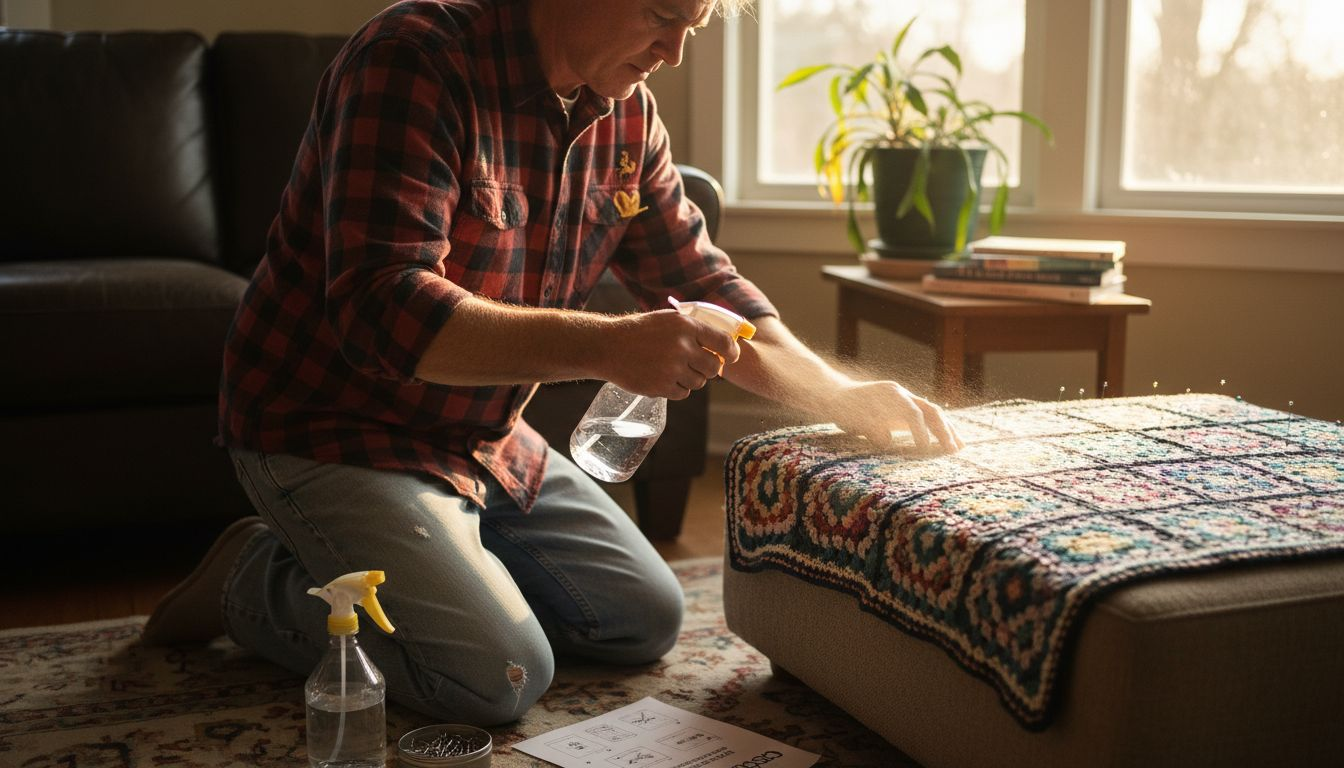
Different fiber types require unique blocking approaches. Wool stretches and holds shape beautifully, while synthetic yarns might need more careful steam treatment. The goal remains consistent: transforming a handmade piece into a professional-looking, perfectly structured textile.
Pro tip: Invest in blocking mats, rust-proof pins, and a spray bottle to create a consistent blocking setup that works for multiple project types.
Essential Tools and Materials for Blocking
Successful blocking requires a strategic collection of specialized tools and materials designed to transform your crochet projects. Blocking tools for textile crafts are essential for achieving professional-quality finishes that elevate handmade textiles from amateur to artisan level.
Key blocking tools every crocheter should have in their arsenal include:
-
Blocking Mats
- Foam or cork surfaces with grid markings
- Interlocking design for customizable workspace
- Provides stable, flat surface for shaping
-
Pinning Tools
- Rust-proof stainless steel pins
- T-pins for heavier fabrics
- Fine pins for delicate lace work
-
Moisture Tools
- Spray bottle for light misting
- Clean towels for moisture absorption
- Steamer or steam iron for heat blocking
Blocking materials help reshape fabric with precision and control. Different projects demand different approaches, so having a comprehensive toolkit ensures you can tackle any blocking challenge. Specialized tools like sock blockers for dimensional shaping and blocking wires for creating perfectly straight edges can transform your crochet finishing techniques.
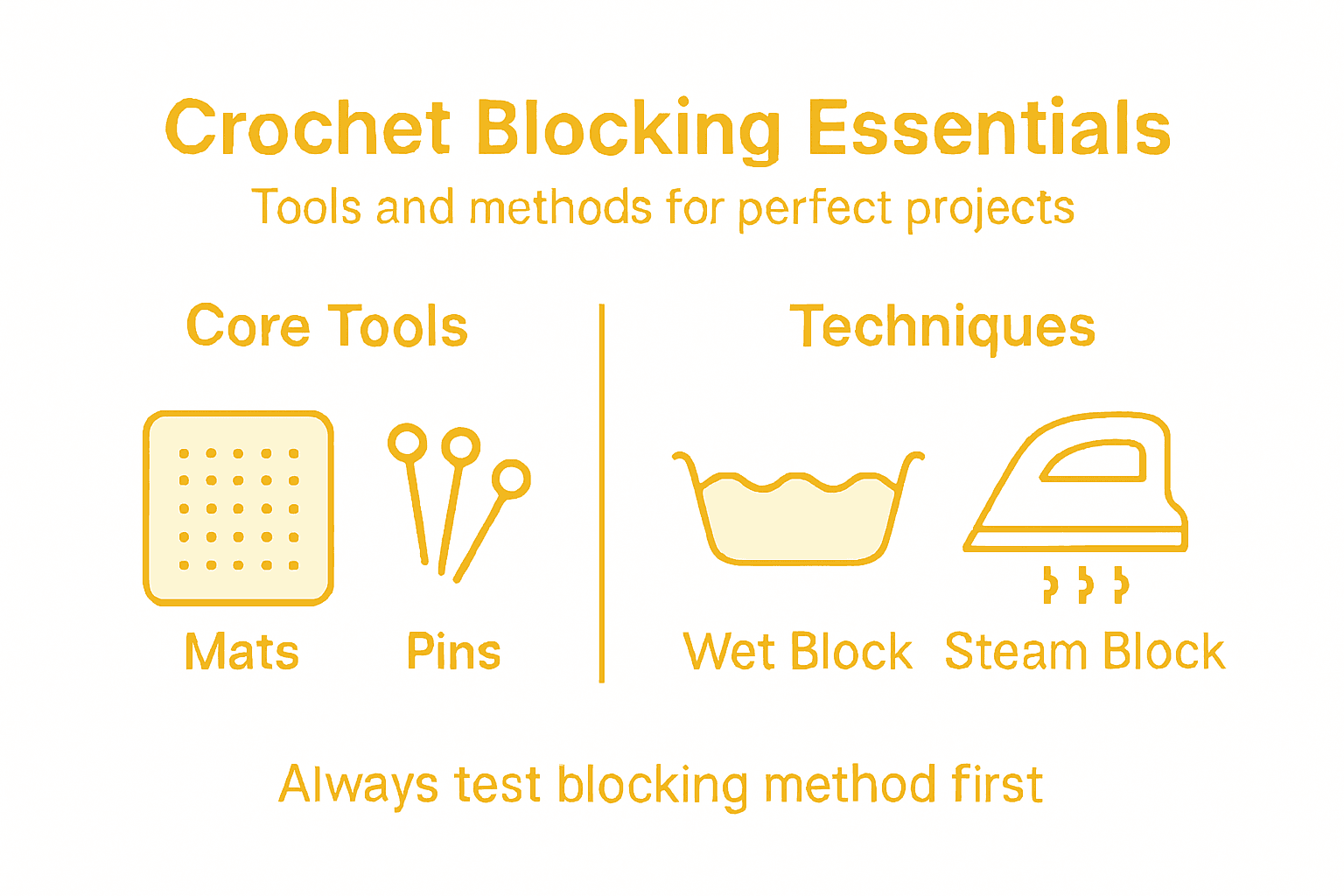
Quality matters when selecting blocking equipment. Invest in rust-proof pins, durable mats with measurement grids, and versatile moisture tools that can handle various yarn types and project complexities.
Summary of essential blocking tools and their unique purposes:
| Tool | Main Purpose | Best Used For |
|---|---|---|
| Blocking Mats | Provide flat surface | Large or modular projects |
| Rust-Proof Pins | Secure fabric in shape | Detailed or heavy items |
| Steamer/Spray Bottle | Apply moisture/heat | Control over fiber relaxation |
Pro tip: Store your blocking tools in a dedicated, moisture-free container to prevent rust and maintain their precision and effectiveness.
Common Mistakes and Best Practices to Avoid
Blocking can transform your crochet projects, but only when done correctly. Textile arts blocking mistakes) can permanently damage your carefully crafted work, making understanding best practices crucial for every crafter.
Common blocking mistakes to avoid include:
-
Fiber-Inappropriate Techniques
- Using wet blocking on synthetic yarns
- Applying direct heat to delicate fibers
- Ignoring yarn-specific blocking instructions
-
Stretching and Shaping Errors
- Overstretching the fabric
- Uneven pinning leading to distorted shapes
- Failing to maintain original project dimensions
-
Equipment and Process Mistakes
- Using rust-prone pins
- Blocking without proper measurement tools
- Rushing the drying process
Blocking practices require careful consideration of each project’s unique characteristics. Professional crocheters understand that blocking is both an art and a science, demanding patience, precision, and a deep understanding of textile behavior. Different fibers respond differently to moisture and heat, so what works for wool might completely ruin a delicate acrylic piece.
To ensure successful blocking, always test your method on a small swatch first. This allows you to understand how your specific yarn will react and prevent potential disasters on your main project.
Pro tip: Create a blocking journal to track which methods work best for different yarn types and project styles, helping you develop a personalized blocking strategy.
Elevate Your Crochet Projects with Expert-Approved Tools and Supplies
Blocking is essential for transforming great crochet projects into beautifully finished pieces. If you want to avoid common blocking mistakes and achieve perfect stitch alignment and shape control, having the right materials is key. Whether you are working with delicate fibers or natural yarns, choosing quality yarn and organizing your tools properly can make all the difference.
.png)
Discover our carefully curated selection of premium Yarn designed to respond excellently to various blocking methods. Keep your workspace organized with durable Yarn Bags that protect your supplies and help maintain fiber quality. If you are just starting your journey, explore beginner-friendly options in our Bundles for Crochet and Knitting Beginners collection. Visit Craftiss today to find the essential tools you need to master blocking and bring your crochet creations to life now.
Frequently Asked Questions
What is blocking in crochet?
Blocking is a finishing technique that reshapes and sets a finished crochet project using moisture and strategic positioning, enhancing its overall appearance and helping stitches settle into their optimal configuration.
What are the different methods of blocking crochet projects?
The three primary blocking methods are:
- Wet Blocking: Best for natural fibers, involves submerging the project in water.
- Steam Blocking: Ideal for synthetics, uses steam to reshape without direct pressure.
- Spray Blocking: The gentlest method for delicate yarns, lightly misting the project and pinning it to a blocking mat.
Do all crochet projects need to be blocked?
Not every crochet project requires blocking, but items like lace patterns, intricate shawls, and garments with complex stitch patterns greatly benefit from it, improving their overall look and structure.
What common mistakes should I avoid when blocking crochet projects?
Common mistakes to avoid include using inappropriate blocking techniques for specific fibers, overstretching or unevenly pinning the project, and not following proper drying processes. Always test a small swatch before blocking the entire project.
