


How to Start a Crochet Project for Beginners: Easy Steps
Starting your first crochet project as an American beginner can feel both exciting and overwhelming, especially when faced with long aisles of yarn and tools at every craft store. Over half of American crafters struggle to choose the right supplies at the beginning, making the process more confusing than it needs to be. With clear, step-by-step guidance, you will quickly learn which essentials to gather so you can enjoy each stitch and create something beautiful using quality yarn.
Table of Contents
- Step 1: Gather Essential Crochet Supplies
- Step 2: Select the Ideal Yarn and Hook
- Step 3: Create a Secure Slip Knot and Foundation Chain
- Step 4: Work the First Row of Stitches Confidently
- Step 5: Check Your Progress and Tension
Quick Summary
| Key Point | Explanation |
|---|---|
| 1. Gather essential crochet supplies | Start with medium hooks, worsted weight yarn, scissors, and a tapestry needle for beginners. |
| 2. Choose yarn and hook wisely | Match yarn weight to the appropriate hook size for consistent and successful crocheting. |
| 3. Create a slip knot and chain | The slip knot is foundational, and the chain sets the stage for the rest of your project. |
| 4. Focus on your first row of stitches | Stitch types like single and double crochet form the base of your piece, so practice consistency. |
| 5. Monitor tension for uniform stitches | Regularly check your tension to ensure even stitches and a professional-looking finished product. |
Step 1: Gather Essential Crochet Supplies
Starting your first crochet project requires assembling the right tools and materials. This section will help you collect everything needed to begin your crafting journey with confidence and excitement.
The foundation of any successful crochet project starts with selecting quality supplies. You’ll want to gather a few key items: crochet hooks, yarn, scissors, and a tapestry needle. When choosing your first set of hooks, beginners should opt for medium size hooks typically ranging from G/4.0mm to J/6.0mm, which work well with most starter yarns. The Crochet Guild of America recommends selecting hooks that feel comfortable in your hand, as ergonomic design can make a significant difference in your crafting experience.
For yarn selection, start with medium weight yarns like worsted weight (category 4), which are most forgiving for new crocheters. Look for yarns labeled as acrylic or wool blends, which are affordable and easy to work with. Avoid slippery or highly textured yarns until you’ve mastered basic stitches. Consider purchasing a few skeins in different colors to practice with minimal financial investment. Most craft stores offer affordable starter yarn bundles perfect for beginners.
Here is a quick reference for recommended beginner crochet materials:
| Supply Type | Preferred for Beginners | Special Benefit |
|---|---|---|
| Yarn | Medium weight, light color | Easy to see and handle |
| Hook | G/4.0mm to J/6.0mm, ergonomic | Comfortable grip reduces strain |
| Scissors | Small, sharp crafting scissors | Cleanly cuts yarn ends |
| Tapestry Needle | Large eye, blunt tip | Easily weaves in loose ends |
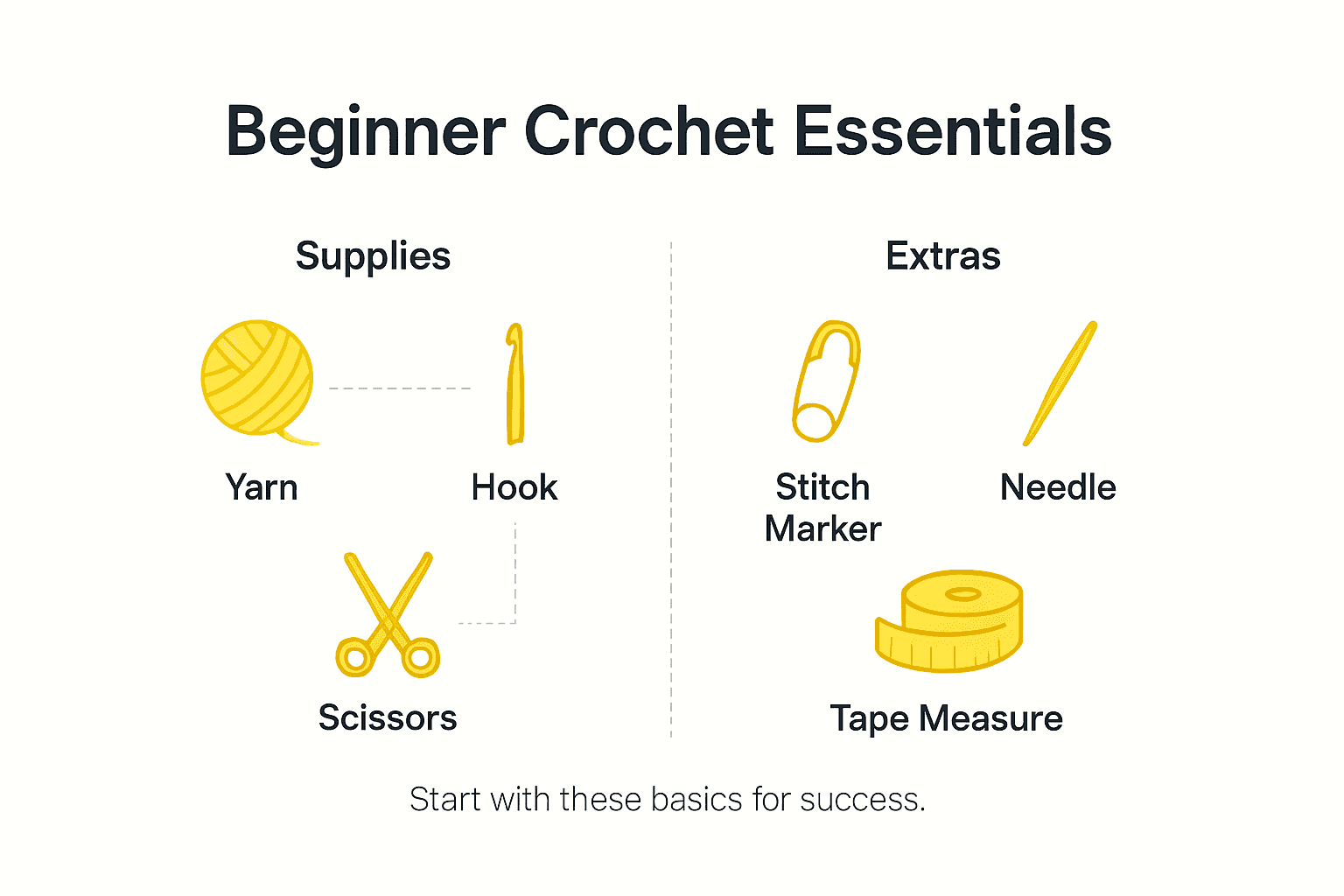
Pro tip: Invest in light colored yarns when first learning, as they make it easier to see your stitches and track your progress.
Recommended supplies for your project


Step 2: Select the Ideal Yarn and Hook
Choosing the right yarn and hook combination is crucial for a successful crochet project. This step will guide you through understanding how to match your materials for optimal crafting results.
Understanding yarn characteristics and weight classifications is essential for selecting the perfect materials. Yarns range from lightweight lace to super bulky, with each weight requiring a specific hook size. For beginners, medium weight yarns (category 4) like worsted weight are most recommended. These yarns offer stability and are forgiving while you learn basic techniques. When selecting your yarn, consider the fiber content as well. Natural fibers such as wool and cotton or synthetic options like acrylic provide different textures and performance characteristics.
Hook selection directly correlates with your chosen yarn. Generally, medium sized hooks between G/4.0mm and J/6.0mm work best for beginners using worsted weight yarn. Pay attention to the hook’s material some crafters prefer aluminum for smooth yarn glide while others enjoy wooden hooks for their warmth and grip. Consider purchasing a hook set that includes multiple sizes to experiment and find your personal comfort level.
Pro tip: Always check the yarn label for recommended hook sizes to ensure your stitches come out uniform and consistent.
Step 3: Create a Secure Slip Knot and Foundation Chain
Learning to create a secure slip knot and foundation chain is your first practical skill in crochet. This step will teach you how to start your project with confidence and precision.
Creating a slip knot is fundamental to starting most crochet projects, forming an adjustable and secure loop on your hook. Begin by leaving a 6-inch tail of yarn, then create a loose loop with the working yarn. Insert your hook through the loop, catching the yarn and pulling it through to create a sliding knot. The key is to keep the loop loose enough to move but tight enough to hold its shape. Once you have your slip knot, you will begin creating your foundation chain by yarning over (wrapping the yarn around your hook) and pulling through the loop on your hook.
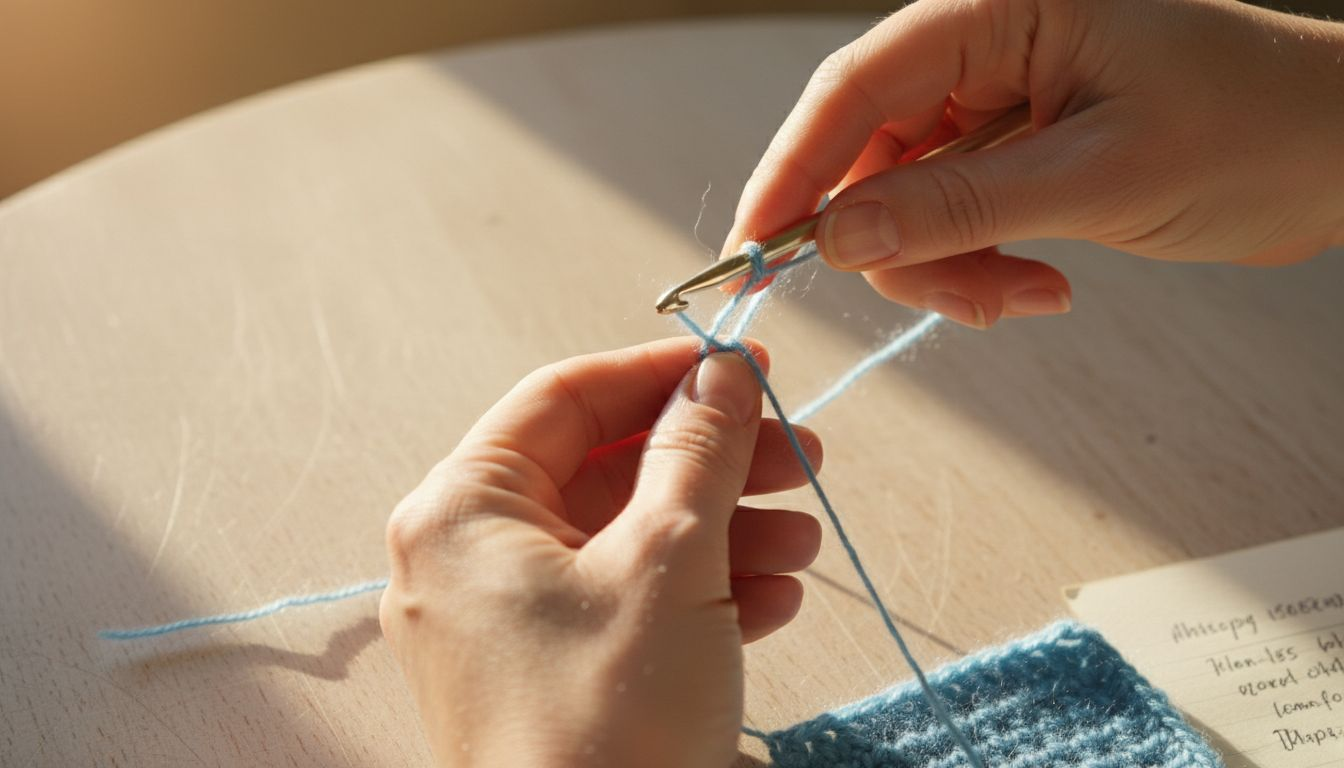
As you practice your foundation chain, maintain consistent tension to ensure even stitches. Count your chain stitches carefully and try to keep them uniform in size. Anchoring the yarn to the hook allows beginners to start their foundation chain securely, creating a stable base for your upcoming crochet project. Practice makes perfect, so do not get discouraged if your first attempts look uneven.
Pro tip: Hold the yarn and hook loosely to prevent tight, difficult to work with stitches.
Step 4: Work the First Row of Stitches Confidently
Mastering the first row of stitches is a critical milestone in your crochet journey. This step will transform your foundation chain into a structured fabric, building your confidence as a new crafter.
The first row typically begins by working stitches into your foundation chain, with basic techniques like single crochet or double crochet. Start by inserting your hook into the second chain from the hook for single crochet, or third chain from the hook for double crochet. Yarn over and pull through the first loop, creating a new stitch. Maintain consistent tension as you work across the row, keeping your stitches neither too tight nor too loose. Each stitch should look uniform and neat.
This overview contrasts basic crochet stitches and their uses:
| Stitch Type | Appearance | Best For |
|---|---|---|
| Single Crochet | Dense, tight fabric | Scarves, dishcloths |
| Double Crochet | Taller, airy fabric | Blankets, shawls |
| Half Double | Medium height, soft | Hats, baby clothes |
Comprehensive stitch guides recommend focusing on basic stitch types to build fundamental skills, so concentrate on executing each stitch precisely. Count your stitches to ensure you are maintaining the same number across the row. If you make a mistake, do not worry. Crochet is a skill that improves with practice, and your first attempts are part of the learning process.
Pro tip: Use stitch markers to help you keep track of your stitch count and maintain consistent spacing.
Step 5: Check Your Progress and Tension
Maintaining consistent tension and monitoring your crochet project’s progress are essential skills for creating professional looking work. This step will help you develop the ability to assess and adjust your technique as you craft.
Keeping consistent tension is crucial for creating even stitches and a uniform appearance, so take time to periodically pause and evaluate your work. Start by laying your project flat and examining the overall texture. Look for any areas where stitches appear significantly tighter or looser than others. If you notice inconsistencies, take a moment to relax your grip on the yarn and hook, allowing for more natural movement. Your goal is to create stitches that look uniform and lie smoothly without puckering or stretching.
The psychological benefits of maintaining relaxed tension extend beyond just creating a beautiful project. By practicing mindful tension control, you are not just improving your craft but also developing patience and focus. Use a measuring tool or stitch gauge to check that your rows maintain consistent width. If you find your tension changing, take a short break to reset your hand position and breathing.
Pro tip: Practice tension control by crocheting a small sample swatch before starting your main project.
Begin Your Crochet Journey with Confidence and Quality Tools
Starting a new crochet project can feel overwhelming when you are unsure about the right supplies and techniques. This article highlights common beginner challenges such as selecting the ideal yarn and hook size, mastering the foundation chain, and maintaining consistent tension. At CRAFTISS, we understand these hurdles and offer solutions designed specifically for beginners eager to create beautiful crochet work without frustration.
.png)
Explore our carefully curated collection of Yarn that includes beginner-friendly options in medium weight and soft textures, perfect to practice your stitches clearly. Complement your crafting with ergonomic tools and storage from our selection of Yarn Bags, keeping your materials organized and accessible. Empower yourself to move beyond the basics by visiting CRAFTISS now and invest in quality supplies that make every stitch more comfortable and satisfying. Start creating with confidence today.
Frequently Asked Questions
What basic supplies do I need to start my first crochet project?
To start your first crochet project, you’ll need a few essential supplies: crochet hooks, yarn, scissors, and a tapestry needle. Gather medium-sized hooks (G/4.0mm to J/6.0mm) and worsted weight yarn (category 4) to get started with confidence.
How do I choose the right yarn for a beginner crochet project?
Select medium weight yarns, like worsted weight, as they are the most forgiving for beginners. Look for yarns labeled as acrylic or wool blends, which are both affordable and easy to work with, ideally in light colors to help you see your stitches better.
What is the process for creating a slip knot and foundation chain in crochet?
Begin by leaving a 6-inch tail of yarn and creating a loose loop. Insert your hook through the loop, pull the yarn through to create a slip knot, and then yarn over to start your foundation chain by pulling through to create new stitches.
How do I understand and maintain even tension while crocheting?
Maintaining consistent tension is crucial for uniform stitches. Regularly pause to inspect your work, and if you notice tight or loose stitches, relax your grip on the yarn and hook, ensuring even tension throughout your project.
What is the best way to start my first row of stitches in crochet?
To start your first row, insert your hook into the appropriate chain from your foundation chain and work your basic stitches, like single or double crochet. Aim for consistent tension and keep track of your stitch count to ensure uniformity across the row.
How can I check my progress effectively during a crochet project?
Periodically lay your project flat and evaluate the texture and stitch uniformity. Use a measuring tool to check that your rows maintain consistent width, and if there are inconsistencies, take a short break to reset your hand position and breathing.
Recommended
- 8 Essential Beginner Crochet Tips for Success – CRAFTISS
- How to crochet with yarn: your ultimate beginner’s guide to mastering – CRAFTISS
- 7 Easy Crochet Patterns for Beginners to Try Now – CRAFTISS
- How to Start Crocheting: Your First Stitches Made Easy – CRAFTISS
- Hair Extensions for Beginners: Effortless Fullness and Length
