


Haptic Yarn: Enhancing Sensory Crochet Projects
Crochet crafters across the United States are always searching for next-level materials that elevate their work. One exciting option is haptic yarn, which introduces touch-responsive feedback through yarns engineered with electropneumatic controls and multiple layers. This technology transforms traditional crochet projects into truly interactive textiles, opening new possibilities for sensory experiences. Discover how haptic yarn works and why American crafters are curious about its unique properties for creative and technical crafting adventures.
Table of Contents
- What Is Haptic Yarn And How It Works
- Types Of Haptic Yarn For Crochet Projects
- Key Features: Sensory Feedback And Integration
- Top Applications In Crochet And Textiles
- Comparing Haptic Yarn To Regular And Smart Yarns
- Practical Considerations: Durability And Safety
Key Takeaways
| Point | Details |
|---|---|
| Haptic Yarn Technology | Haptic yarn transforms traditional textiles into interactive experiences by integrating specialized actuator technologies for tactile feedback. |
| Main Characteristics | Key features include multilayered structures, electropneumatic mechanisms, and lightweight designs allowing seamless integration into various projects. |
| Applications | Potential uses range from wearable tech to sensory rehabilitation garments and immersive art installations, enhancing the creative possibilities for crafters. |
| Selection Criteria | When choosing haptic yarn, consider factors like tactile sensitivity, project complexity, electrical conductivity, and durability to optimize performance in your designs. |
What Is Haptic Yarn and How It Works
Haptic yarn represents an innovative textile technology that transforms traditional crafting materials into interactive sensory experiences. Unlike conventional yarns, haptic yarn integrates specialized actuator technologies that enable textile materials to provide precise tactile feedback.
At its core, haptic yarn functions through an advanced multilayered structure designed to create localized touch sensations. Researchers have developed actuator yarn systems that incorporate complex engineering principles to achieve dynamic textile interactions.
Key characteristics of haptic yarn include:
- Embedded electropneumatic control mechanisms
- Multilayered yarn structure with inner porous textile and elastomer outer layer
- Ability to generate precise radial forces and localized displacements
- Lightweight design enabling seamless textile integration
How Haptic Yarn Works
The technological mechanism behind haptic yarn involves intricate layers working together to generate touch sensations. Electropneumatic circuitry enables subtle textile interactions, allowing the yarn to contract and expand in response to programmed signals.
The yarn’s unique construction permits nuanced tactile feedback through controlled pneumatic movements. Its inner porous textile layer provides structural flexibility, while the external elastomer layer enables precise skin contact and sensation transmission.
Potential Applications
Crafters and textile designers can leverage haptic yarn for innovative projects that go beyond traditional sensory experiences:
- Interactive textile art installations
- Wearable technology prototypes
- Sensory rehabilitation garments
- Educational demonstration materials
Pro tip: Experiment with small haptic yarn samples to understand its unique tactile properties before integrating into larger crochet projects.
Recommended supplies for your project


Types of Haptic Yarn for Crochet Projects
Crafters exploring haptic yarn technologies will discover multiple fascinating variants designed to transform textile experiences. Electroactive yarns offer unique interactive capabilities that enable dynamic sensory interactions within crochet projects.

Electroactive Yarn Types
The primary categories of haptic yarn for crochet enthusiasts include:
- Ionic polymer composite yarns
- Elastomer-coated conductive yarns
- Graphite-filled composite yarns
- Graphite-free elastomer yarns
Each yarn type presents distinctive characteristics that influence its performance and sensory feedback. Composite yarn technologies enable varied force feedback through strategic material composition and electrical conductivity.
Functional Characteristics
Different haptic yarn types provide unique sensory experiences:
- Ionic polymer yarns contract with minimal voltage
- Elastomer-coated yarns offer flexible tactile responses
- Graphite-filled composites generate consistent pressure feedback
- Conductive yarns enable precise electrical signal transmission
Considerations for Selection
When choosing haptic yarn for crochet projects, crafters should evaluate:
- Desired tactile sensitivity
- Project complexity
- Electrical conductivity requirements
- Durability and flexibility needs
- Budget constraints
Pro tip: Start with small sample swatches to test different haptic yarn types and understand their unique sensory characteristics before committing to larger crochet projects.
Here’s a summary of key considerations for selecting the right haptic yarn for your crochet project:
| Factor | Impact on Project | Recommendation |
|---|---|---|
| Tactile Sensitivity | Determines feedback quality | Choose based on desired feel |
| Conductivity | Affects signal responsiveness | Select as needed for tech integration |
| Durability | Influences longevity | Prioritize for frequent use |
| Flexibility | Enables smooth crafting | Test before large-scale use |
| Budget | Limits available options | Plan for sample tests first |
Key Features: Sensory Feedback and Integration
Haptic yarn represents a breakthrough in textile technology, delivering sophisticated sensory experiences through intricate design. Radial force generation enables precise tactile feedback, transforming traditional textile interactions.
Sensory Feedback Mechanisms
Haptic yarn incorporates multiple sophisticated feedback techniques:
- Electropneumatic activation
- Low-voltage polymer contraction
- Localized displacement generation
- Discrete tactile signal transmission
Integration Strategies
Electroactive polymers enable comfortable sensory interactions through advanced material engineering. The integration process involves careful consideration of several critical factors:
- Voltage requirements
- Material compatibility
- Textile manufacturing techniques
- Signal transmission efficiency
Performance Characteristics
Key performance metrics for haptic yarn integration include:
- Durability under repeated cycles
- Consistent feedback quality
- Minimal voltage consumption
- Seamless textile compatibility
- Comfortable user experience
Technical Considerations
Crafters must evaluate specific technical parameters when selecting haptic yarn for projects:
- Signal response time
- Force feedback intensity
- Electrical conductivity
- Material flexibility
- Temperature resistance
Pro tip: Conduct comprehensive testing of haptic yarn samples under various conditions to understand their full sensory performance potential before implementing in complex crochet projects.
Top Applications in Crochet and Textiles
Haptic yarn transforms traditional textile experiences by introducing dynamic sensory interactions across multiple domains. Interactive textile applications expand creative possibilities for crafters and technologists alike.
Healthcare and Assistive Technologies
Innovative applications of haptic yarn include:
- Wearable medical feedback systems
- Sensory navigation aids for visually impaired individuals
- Rehabilitation and physical therapy textiles
- Pressure monitoring garments
Immersive Experience Design
Interactive clothing enables advanced sensory interactions across multiple domains. The potential applications span several exciting fields:
- Virtual reality garment enhancements
- Athletic training performance wear
- Gaming and interactive apparel
- Social touch communication textiles
Creative and Performance Domains
Haptic yarn offers unique opportunities in creative fields:
- Adaptive performance costumes
- Interactive art installations
- Therapeutic textile design
- Sensory experience prototyping
- Experimental fashion engineering
Technical Frontier Applications
Emergent uses of haptic yarn demonstrate its versatility:
- Anti-vibration protective suits
- Temperature-responsive clothing
- Biometric feedback garments
- Adaptive ergonomic textiles
- Responsive emergency wear
Pro tip: Experiment with small haptic yarn samples across different project types to understand their unique sensory and technical capabilities before committing to complex designs.
The table below compares top application areas for haptic yarn in textiles and their unique advantages:
| Domain | Example Use | Unique Benefit |
|---|---|---|
| Healthcare | Rehabilitation garments | Supports recovery and therapy |
| Experience Design | Gaming apparel | Creates immersive feedback |
| Creative Arts | Interactive costumes | Enables expressive interactions |
| Technical Frontier | Protective suits | Enhances safety and ergonomics |
Comparing Haptic Yarn to Regular and Smart Yarns
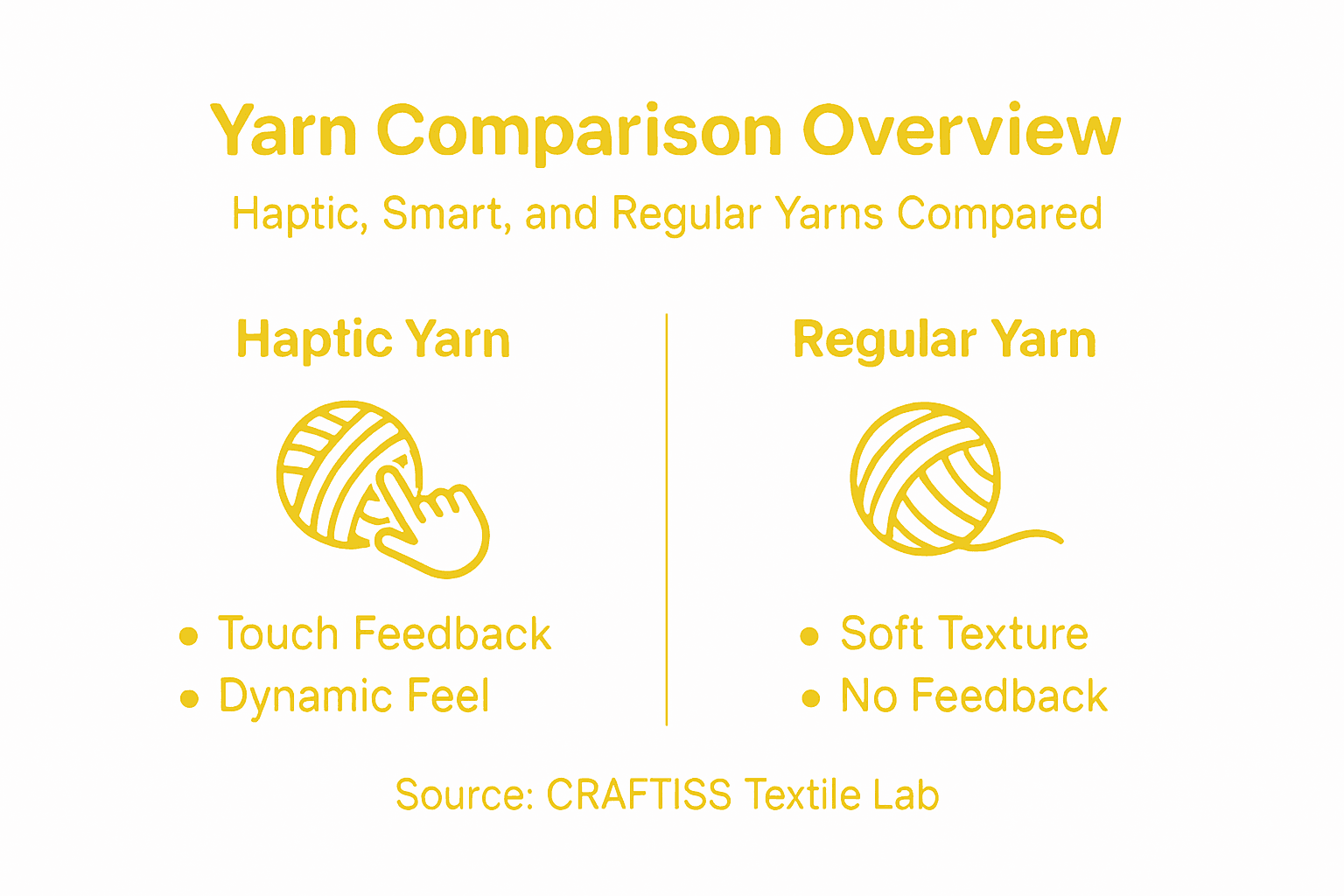
Haptic yarn represents a revolutionary textile technology that dramatically differs from traditional and smart yarn approaches. Electroactive polymer technologies create unique interactions that transform textile experiences.
Comparative Characteristics
Key differences between yarn types include:
- Regular yarns: Passive, no interactive capabilities
- Smart yarns: Sensing or conductive properties
- Haptic yarns: Active tactile feedback generation
- Responsive yarns: Limited sensory interaction
Technical Performance Distinctions
Graphite composite materials enhance yarn durability across different yarn technologies. The primary differentiators include:
- Force feedback capabilities
- Electrical activation mechanisms
- Material complexity
- Sensory interaction potential
- Manufacturing requirements
Functional Capabilities
Haptic yarn distinguishes itself through:
- Low-voltage electroactive polymer activation
- Precise tactile stimuli generation
- Dynamic textile interactions
- Physical engagement with wearer
- Sophisticated sensory feedback
Performance Comparison Table
| Yarn Type | Interactivity | Power Requirements | Sensory Feedback |
|---|---|---|---|
| Regular Yarn | None | N/A | None |
| Smart Yarn | Minimal | Low | Sensing Only |
| Haptic Yarn | High | Low Voltage | Direct Physical |
Pro tip: Conduct hands-on testing with different yarn samples to personally experience the nuanced differences in sensory interactions and technological capabilities.
Practical Considerations: Durability and Safety
Haptic yarn technology introduces complex considerations for crafters focused on long-term performance and user safety. Composite structures enhance yarn durability through advanced material engineering.
Durability Factors
Key durability characteristics include:
- Ability to withstand 7500+ actuation cycles
- Resistance to material delamination
- Consistent force feedback maintenance
- Structural integrity under repeated use
- Minimal performance degradation
Safety Considerations
Low-voltage activation ensures user protection across different textile applications. Critical safety parameters include:
- Voltage range between 1-1.5 volts
- Bio-friendly coating materials
- Skin-safe interaction protocols
- Compliance with textile manufacturing standards
- Minimal electrical risk
Performance Reliability
Haptic yarn safety involves multiple interconnected factors:
- Precise electrical control mechanisms
- Temperature stability
- Mechanical stress resistance
- Controlled sensory feedback
- Predictable material behavior
Risk Mitigation Strategies
Crafters should evaluate:
- Manufacturer certification
- Material testing documentation
- Electrical safety ratings
- Recommended usage guidelines
- Potential environmental interactions
Pro tip: Always conduct preliminary testing and consult manufacturer specifications to understand the specific safety and durability parameters of your chosen haptic yarn.
Elevate Your Crochet Projects with Innovative Yarn Choices
Discover how haptic yarn can transform your crochet creations into dynamic sensory experiences. If you are looking to add tactile feedback and interactive elements to your work, understanding the right yarn blend and integration techniques is essential. Pain points like selecting yarn with the perfect balance of flexibility, durability, and conductivity can be solved by choosing technologically advanced materials designed specifically for creative innovation.
Explore our diverse collection at Yarn where you will find quality options to experiment with. Whether you are prototyping interactive wearables or crafting artistic installations, the right yarn makes all the difference in achieving subtle and effective haptic feedback.
.png)
Harness the potential of haptic yarn technology on your next sensory crochet project by visiting CRAFTISS. Start by picking yarn that suits your tactile sensitivity needs and durability goals. Don’t miss out on elevating your crafting experience—shop now and bring your visionary ideas to life with precision and comfort.
Frequently Asked Questions
What is haptic yarn and how does it work?
Haptic yarn is an innovative textile technology that integrates actuator technologies to provide interactive sensory experiences. It functions through a multilayered structure that generates precise tactile feedback, allowing the creation of localized touch sensations in textile materials.
What are the different types of haptic yarn suitable for crochet projects?
The main types of haptic yarn include ionic polymer composite yarns, elastomer-coated conductive yarns, graphite-filled composite yarns, and graphite-free elastomer yarns. Each type has unique characteristics that affect performance and sensory feedback in crochet projects.
How do I choose the right haptic yarn for my crochet project?
When selecting haptic yarn, consider factors like desired tactile sensitivity, project complexity, electrical conductivity requirements, durability, and budget constraints. Starting with small sample swatches can help you test different yarn types before committing to a larger project.
What applications can benefit from using haptic yarn in textiles?
Haptic yarn can be used in various applications, including interactive textile art installations, wearables for health monitoring, rehabilitation garments, and immersive experience designs in gaming and virtual reality. Its versatility allows for innovative uses across creative and technical fields.
