


Crochet Texture Explained: Creating Depth and Dimension
Most American crafters are surprised to learn that achieving eye-catching crochet texture does not require advanced skills or expensive specialty supplies. Even beginners can add depth and dimension to their projects with just a few strategic stitch variations. Understanding the real building blocks behind texture helps crafters avoid common myths and unlock new creative possibilities. This guide breaks down the essentials so you can confidently create tactile, visually striking pieces every time.
Table of Contents
- Defining Crochet Texture And Common Myths
- Popular Texture Types And Their Effects
- Essential Stitches For Building Texture
- Choosing Yarns To Enhance Texture
- Avoiding Pitfalls In Crochet Texture Projects
Key Takeaways
| Point | Details |
|---|---|
| Understanding Crochet Texture | Crochet texture is achieved through specific stitch combinations and yarn manipulation, creating visual and tactile depth in projects. |
| Myths of Textured Crochet | Beginners can create textures with basic skills and materials by experimenting with stitch height and yarn behavior, without needing advanced techniques. |
| Essential Stitches for Texture | Master fundamental stitches like post, cluster, and loop stitches to build depth and complexity in your crochet pieces. |
| Yarn Selection Matters | Choose yarn based on fiber composition and spinning techniques to enhance textural qualities and achieve desired effects in your projects. |
Defining Crochet Texture and Common Myths
Crochet texture represents the tactile and visual depth created through strategic yarn manipulation and stitch techniques. Far more than just a flat fabric, texture emerges from intentional variations in stitching that transform simple threads into complex, dimensional artwork. In understanding texture, crafters learn how subtle changes can dramatically alter a project’s appearance and feel.
At its core, crochet texture involves creating intentional height, depth, and visual interest through specific stitch combinations. Techniques like post stitches, front loop/back loop work, and strategic yarn overs enable crafters to produce raised surfaces, intricate patterns, and three-dimensional effects. Understanding crochet pattern types provides deeper insight into how different approaches generate unique textural landscapes.
Common myths about crochet texture often mislead beginners. Many believe that creating textured pieces requires advanced skills or specialized equipment. The reality is quite different. Texture can be achieved with basic stitches and a fundamental understanding of yarn behavior. Novice crafters can generate complex textures by experimenting with simple variations like changing stitch height, working into different loops, or incorporating basic relief techniques.
Understanding texture goes beyond technical execution. It involves developing an intuitive sense of how yarn characteristics like weight, fiber content, and twist interact with different crochet techniques. Wool behaves differently from cotton, and a fine merino will create softer textures compared to a robust acrylic yarn. Successful texture creation requires both technical skill and creative experimentation.
Recommended supplies for your project


Popular Texture Types and Their Effects
Crochet offers a rich palette of textural techniques that transform simple yarn into visually compelling and tactilely interesting fabrics. From subtle raised surfaces to dramatic three-dimensional effects, crafters can choose from an array of texture types that add depth and personality to their projects. Exploring unique textured crochet stitches reveals the incredible versatility of these techniques.
Some of the most popular texture types include relief stitches, which create raised or recessed patterns by working stitches around or behind previous rows. Post stitches like front post double crochet and back post single crochet allow crafters to build dimensional landscapes within their fabric. These techniques can produce striking cable-like patterns, ribbed surfaces, and intricate geometric designs that seem to pop off the surface.

Another fascinating texture category involves bobble and popcorn stitches. These techniques create small, three-dimensional clusters that add significant visual and tactile interest. Bobble stitches involve partially completed stitches worked into the same stitch and then collapsed together, creating puffy, rounded protrusions that add whimsy and depth to blankets, sweaters, and decorative items. Popcorn stitches offer similar dimensionality but with slightly different structural characteristics.
Crafters can also explore textural variations through yarn selection. Different fibers and spinning techniques dramatically influence a project’s final texture. Woolens provide loft and bounce, creating soft, airy textures. Cotton produces crisp, defined stitches with excellent stitch definition. Alpaca yields a fuzzy, soft texture, while acrylic offers consistent, structured surfaces. Understanding how yarn properties interact with specific stitch techniques allows crafters to design truly unique textural experiences.
Essential Stitches for Building Texture
Mastering texture in crochet requires a strategic approach to stitch selection and manipulation. Certain fundamental stitches serve as the building blocks for creating depth, dimension, and visual complexity in fiber art. Exploring essential crochet stitch types provides crafters with a comprehensive foundation for texture creation.
Post stitches represent one of the most powerful techniques for generating textural interest. These specialized stitches involve working around the post of previous rows instead of into the traditional top loops. Front post and back post variations like front post double crochet (FPDC) and back post single crochet (BPSC) create raised or recessed surfaces that dramatically transform a project’s appearance. By strategically alternating these techniques, crafters can produce cable-like patterns, ribbed textures, and three-dimensional landscapes within a single piece.
Another critical texture-building stitch category includes cluster and loop stitches. Cluster stitches involve working multiple incomplete stitches into a single stitch and then joining them, creating small, puffy formations that add significant visual depth. Loop stitches generate hanging threads that provide unique tactile and dimensional qualities. These techniques allow crafters to introduce unexpected visual complexity, transforming flat fabric into a rich, sculptural experience.
Advanced texture techniques also involve combining different stitch heights and working into alternative stitch locations. By mixing tall stitches like treble crochet with shorter single crochet stitches, crafters can create undulating surfaces with natural rises and falls. Working stitches into the back loops, front loops, or even between stitches provides additional opportunities for textural exploration. The key is experimentation and understanding how subtle variations can produce dramatically different visual and tactile results.
Choosing Yarns to Enhance Texture
Yarn selection plays a critical role in amplifying and defining textural qualities in crochet projects. Exploring yarn textures for crafting reveals the nuanced ways different fibers can transform a project’s visual and tactile characteristics. Understanding how yarn properties interact with specific stitching techniques allows crafters to intentionally design rich, dimensional pieces.
Fiber composition dramatically influences texture potential. Wool yarns offer exceptional loft and memory, creating pronounced dimensional effects that hold their shape beautifully. Alpaca provides a soft, fuzzy texture with incredible warmth, while cotton produces crisp, well-defined stitches that showcase intricate stitch patterns. Synthetic fibers like acrylic can be engineered to mimic various textures, offering consistent performance and affordability for texture-focused projects.
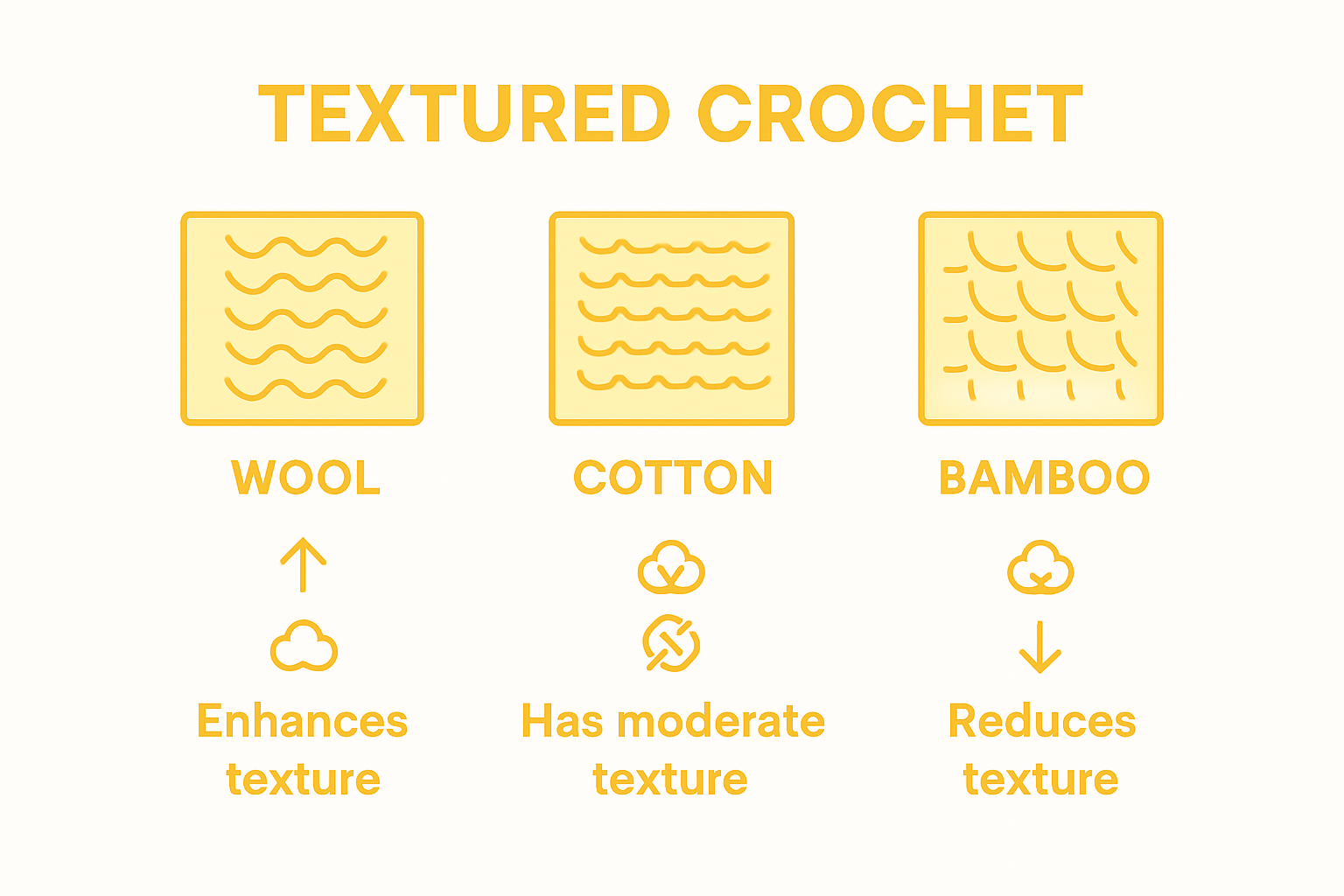
Yarn spinning technique and structural characteristics also play crucial roles in texture development. Bouclé yarns, with their looped, bumpy structure, automatically introduce visual complexity and interesting surface variations. Tweed yarns incorporate flecked color and subtle textural elements that add depth without overwhelming the underlying stitch pattern. Chainette and textured yarns with multiple plies can create additional dimensional interest, transforming even simple stitch patterns into visually compelling designs.
Successful texture creation requires experimentation and an understanding of how different yarn qualities interact. Crafters should consider factors like fiber content, yarn weight, spinning method, and color variation when selecting materials. Swatching multiple yarn types allows for direct comparison of textural effects, helping artists make informed choices that align with their creative vision. The most sophisticated crochet textures emerge from a thoughtful dialogue between yarn characteristics and intentional stitch manipulation.
Avoiding Pitfalls in Crochet Texture Projects
Crochet texture projects require careful planning and strategic execution to avoid common mistakes that can compromise dimensional effects. Mastering project planning techniques helps crafters anticipate and prevent potential challenges that might undermine their textural goals.
Tension consistency represents one of the most critical factors in maintaining texture integrity. Uneven stitching can cause unexpected distortions, flattening intricate dimensional work or creating unintended rippling effects. Crafters should practice maintaining uniform tension throughout their project, using techniques like regular gauge checking and working in good lighting. Blocking becomes especially crucial for textured pieces, as it helps even out slight irregularities and allows complex stitch patterns to fully develop their intended three-dimensional qualities.
Another significant pitfall involves inappropriate yarn selection. Not all yarns behave similarly when worked into textured patterns. Slippery or overly elastic fibers can cause stitch definition to blur, while very heavy yarns might collapse intricate raised stitches. Crafters should always swatch extensively, testing how different yarn types interact with specific textural techniques. Understanding each yarn’s inherent characteristics helps prevent disappointing outcomes and ensures the planned texture emerges as envisioned.
Technical execution demands precision in textural crochet. Complex stitches like bobbles, popcorns, and post stitches require careful attention to stitch placement and tension. Rushing through these detailed techniques can lead to misshapen clusters or uneven surfaces. Experienced crafters recommend practicing individual stitch techniques separately before incorporating them into larger projects, allowing muscle memory and technique refinement to develop naturally. Patience and methodical approach ultimately determine the success of intricate textural crochet work.
Elevate Your Crochet Texture with the Right Yarn and Tools
Mastering crochet texture demands not only skill but also the perfect materials that enhance your project’s depth and dimension. This article highlights the challenges of achieving consistent tension, selecting yarns that bring out stitch details, and using essential textured stitches. If you struggle with maintaining texture integrity or want your projects to truly stand out visually and tactilely explore our curated Yarn collection where fiber quality meets texture versatility.
.png)
Take control of your crochet journey today with quality yarn that inspires creativity and projects that showcase your unique style. Visit CRAFTISS now to browse expert-approved yarns and discover the perfect match for your next textured masterpiece. Don’t miss out on transforming your crochet work with materials designed for texture perfection. Complete your crafting setup with durable Yarn Bags to keep your supplies organized and ready for your next creative breakthrough.
Frequently Asked Questions
What is crochet texture, and how is it created?
Crochet texture refers to the tactile and visual depth achieved by manipulating yarn through various stitching techniques. It is created using combinations of stitches that add height and dimension, allowing crafters to transform flat fabric into complex, three-dimensional designs.
What are some common techniques to achieve texture in crochet?
Common techniques include using post stitches, front loop and back loop work, as well as variations like bobble and popcorn stitches. These techniques create raised or recessed patterns that enhance the visual and tactile qualities of the fabric.
How does yarn type influence crochet texture?
The type of yarn significantly affects texture. Different fibers, such as wool, cotton, or alpaca, have unique properties that influence the final appearance and feel of the project. For instance, wool creates softer, loftier textures, while cotton offers crisp stitch definition.
What are some tips for avoiding mistakes when creating textured crochet projects?
To avoid mistakes, maintain consistent tension throughout your project, swatch different yarn types to see how they interact with your chosen stitches, and practice complex techniques separately before incorporating them into larger projects. This attention to detail ensures the desired texture is achieved effectively.
