


Role of Hand Spun Yarn: Elevating Texture and Sustainability
Most American craft enthusiasts are discovering that over 50 percent of textile makers now seek hand spun yarn for its unique textures and eco-friendly origins. This shift matters to experienced crocheters who crave fibers that go beyond the predictable feel of commercial yarn. By understanding hand spun yarn and debunking common myths, you will uncover how sustainable choices can add both character and meaning to every project.
Table of Contents
- Defining Hand Spun Yarn And Common Myths
- Types Of Fibers And Spinning Techniques
- Distinctive Qualities And Project Suitability
- Sustainability And Artisan Impact In Yarn
- Practical Tips: Working With Hand Spun Yarn
- Comparing Hand Spun And Commercial Yarns
Key Takeaways
| Point | Details |
|---|---|
| Hand Spun Yarn is Unique | Each skein of hand spun yarn offers variations in texture and character, celebrating individual craftsmanship over machine uniformity. |
| Choose the Right Fiber | Different fiber types and spinning techniques dramatically affect the yarn’s final characteristics, so select based on project requirements. |
| Project Suitability Matters | Hand spun yarn is ideal for artisanal projects, while commercial yarns are better for uniform, technical applications. |
| Sustainability Through Craft | Hand spinning promotes sustainable practices, supporting local economies and reducing industrial textile waste. |
Defining Hand Spun Yarn and Common Myths
Hand spun yarn represents a traditional textile craft with roots stretching back centuries, involving the manual transformation of raw fibers into continuous threads through careful twisting and drafting techniques. Unlike mass-produced machine yarns, hand spinning allows crafters to create unique textural compositions that reflect individual skill and creative intention.
The process of hand spinning involves drawing out fibers from animal, plant, or synthetic sources and systematically twisting them to form continuous strands. Historically, artisans used simple tools like spindles and distaffs to transform raw materials into usable yarn, a technique that predates mechanical spinning wheels and industrial textile production. Modern hand spinners often preserve these traditional methods while incorporating contemporary design principles and sustainable practices.
Contrary to popular misconceptions, hand spun yarn is not inferior to machine-produced alternatives. In fact, hand spinning offers several distinctive advantages that machine production cannot replicate. Each skein represents a unique textile with nuanced variations in texture, thickness, and character. The imperfections and subtle irregularities in hand spun yarn actually contribute to its aesthetic appeal, creating fabric with more depth, personality, and artisanal value.
Pro Tip: When selecting hand spun yarn, examine the twist consistency and fiber alignment to assess overall quality and potential performance in your crafting project.
Types of Fibers and Spinning Techniques
Hand spinning encompasses a diverse range of textile spinning techniques) that transform raw fibers into functional yarns. Natural fibers like cotton, wool, and silk, as well as synthetic materials such as polyester and nylon, each require unique processing methods to create high-quality textile threads. The selection of fiber type dramatically influences the yarn’s final characteristics, including strength, texture, and performance.
The spinning process involves several critical techniques that craftspeople can employ. Natural fibers typically involve drafting and twisting methods that preserve the inherent qualities of the raw material. Wool, for instance, can be spun using long draw or short draw techniques, each producing distinctly different yarn textures. Synthetic fibers, by contrast, undergo more complex transformations like melt spinning, dry spinning, and wet spinning, which determine the final yarn’s molecular structure and functional properties.
Crafters can choose from multiple spinning approaches based on their project requirements. Woolen spinning creates lofty, soft yarns with significant air trapped between fibers, ideal for warm, lightweight garments. Worsted spinning produces smoother, more compact yarns with fibers aligned parallel to each other, resulting in stronger, more durable textiles. These techniques allow artisans to manipulate fiber characteristics, creating yarns with specific performance attributes tailored to individual crafting needs.
Pro Tip: Experiment with different fiber blends and spinning techniques to discover unique yarn textures that can elevate your crafting projects from ordinary to extraordinary.
Here’s a summary of common fiber types and their key yarn properties:
| Fiber Type | Typical Texture | Strength Level | Best For |
|---|---|---|---|
| Wool | Soft, lofty | Moderate, elastic | Warm garments, accessories |
| Cotton | Smooth, breathable | High, less elastic | Lightweight tops, dishcloths |
| Silk | Shiny, smooth | Strong, lustrous | Shawls, luxury projects |
| Polyester/Nylon | Consistent, smooth | Very strong, resilient | Durable wearables, outerwear |
| Blends | Variable, unique | Balanced | Special texture or performance |
Recommended supplies for your project


Distinctive Qualities and Project Suitability
Hand spun yarn offers distinctive textural characteristics that set it apart from mass-produced alternatives. Inherent irregularities become a hallmark of craftsmanship, with each skein telling a unique story through its subtle variations in thickness, color blending, and fiber alignment. These nuanced qualities make hand spun yarn particularly compelling for artisanal projects that celebrate individual creativity and textile expressiveness.
The spinning technology significantly influences yarn performance across different crafting applications. Ring spinning produces strong, smooth yarns ideal for projects requiring durability, while compact spinning creates yarns with exceptional tensile strength and minimal surface hairiness. Crafters can strategically select spinning techniques based on project requirements, whether seeking softness for delicate garments or structural integrity for hard-wearing textiles.
Project suitability depends on understanding the specific properties of hand spun yarns. Lightweight, lofty yarns work beautifully for shawls and accessories that prioritize drape and movement, while more densely spun yarns excel in structured garments and items requiring increased wear resistance. The intentional imperfections in hand spun yarn actually enhance visual and tactile interest, making each piece a testament to the spinner’s skill and artistic vision.
Pro Tip: Match your hand spun yarn’s unique characteristics to your project’s specific functional and aesthetic demands to maximize both performance and visual appeal.
Sustainability and Artisan Impact in Yarn
Hand spinning represents more than a textile technique—it’s a powerful avenue for sustainable textile production that connects environmental consciousness with traditional craftsmanship. Sustainable yarns emerging from artisan practices blend natural and regenerated fibers, creating textiles that minimize environmental impact while preserving cultural textile heritage. These innovative approaches transform yarn production from a mere manufacturing process into a meaningful ecological and social statement.
Artisan spinning techniques demonstrate remarkable potential for reducing industrial textile waste and supporting local economies. By combining natural fibers like cotton with eco-friendly alternatives such as lotus, refibra, and kapok, craftspeople create yarns that offer improved fabric strength and reduced resource consumption. This approach goes beyond traditional manufacturing, embedding environmental stewardship directly into the textile creation process and supporting circular economy principles.
The economic and cultural impact of hand spinning extends far beyond material production. Local artisan communities leverage traditional spinning skills to generate sustainable livelihoods, preserving generational knowledge while simultaneously meeting contemporary market demands for ethically produced textiles. Each hand spun skein represents a narrative of cultural preservation, environmental responsibility, and skilled craftsmanship—transforming yarn from a simple commodity into a powerful medium of social and ecological expression.
Pro Tip: When selecting yarn for your next project, prioritize materials from artisan producers who demonstrate transparent sustainability practices and support local crafting communities.
Practical Tips: Working with Hand Spun Yarn
Working with hand spun yarn requires specialized understanding of yarn handling techniques that differ significantly from commercial yarn processing. Fiber preparation stands as the critical first step, demanding careful attention to the yarn’s unique structural characteristics. Crafters must learn to recognize and adapt to the inherent variations in thickness, twist, and texture that define artisan-produced yarns.
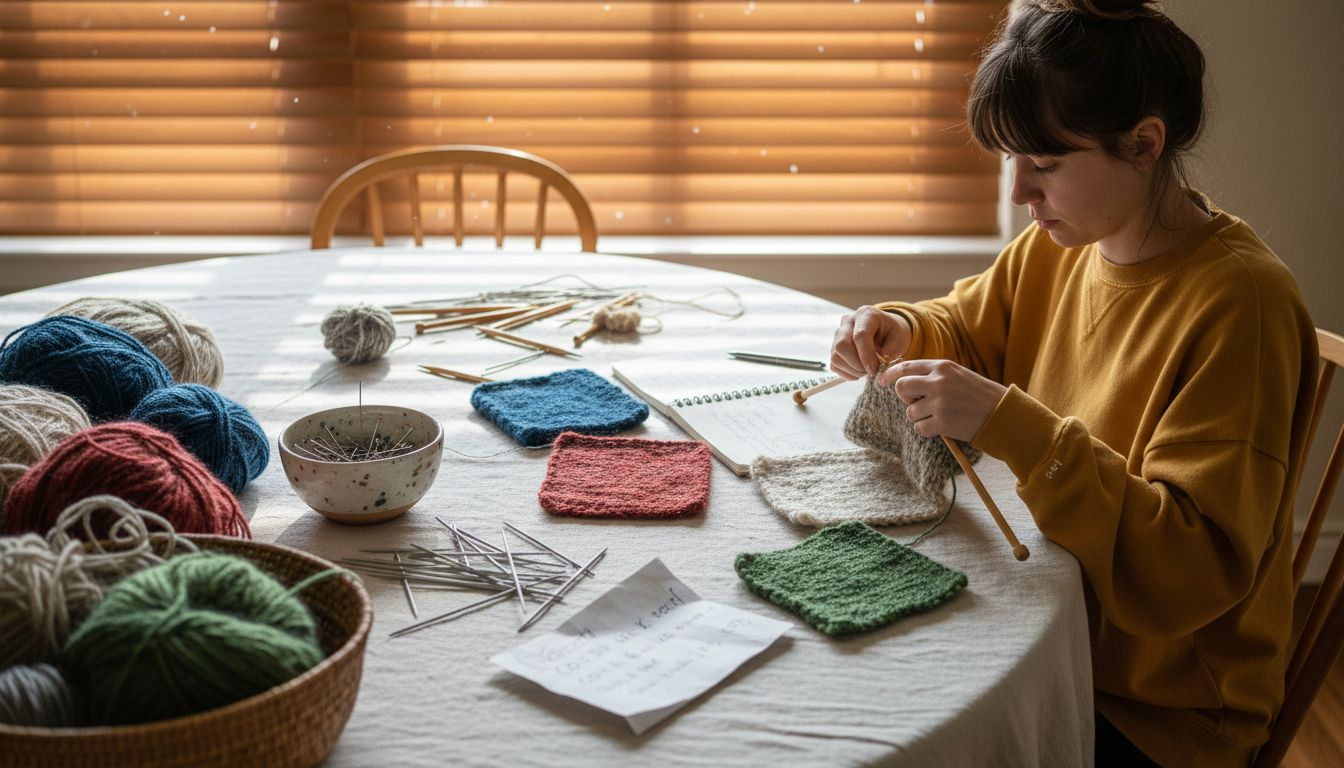
Successful hand spun yarn projects rely on strategic tool selection and technique modification. Needle sizing becomes particularly crucial, as hand spun yarns often require larger or more flexible needles to accommodate their irregular surface and variable thickness. Knitters and weavers should practice tension control, using lighter touch and more flexible techniques to prevent yarn breakage and maintain the delicate structure of hand spun fibers. Blocking techniques may also need adjustment to preserve the yarn’s natural characteristics and prevent distortion.
Proper yarn conditioning and storage play pivotal roles in maintaining hand spun yarn’s quality. Gentle washing techniques, careful drying, and strategic storage in cool, dry environments help preserve the yarn’s structural integrity. Crafters should avoid direct sunlight, excessive humidity, and compressed storage that might compromise the yarn’s natural loft and unique textural qualities. Understanding each skein’s individual characteristics allows for more intentional and successful crafting experiences.
Pro Tip: Always do a small gauge swatch with hand spun yarn to understand its unique behavior before starting your primary project.
Comparing Hand Spun and Commercial Yarns
The fundamental differences between hand spun and commercial yarns extend far beyond their production methods, revealing profound variations in textile characteristics. Commercial yarns represent precision and uniformity, manufactured through industrial processes that prioritize consistency, strength, and large-scale production efficiency. In contrast, hand spun yarns embody individuality, with each skein presenting unique textural landscapes that reflect the spinner’s skill and creative intention.
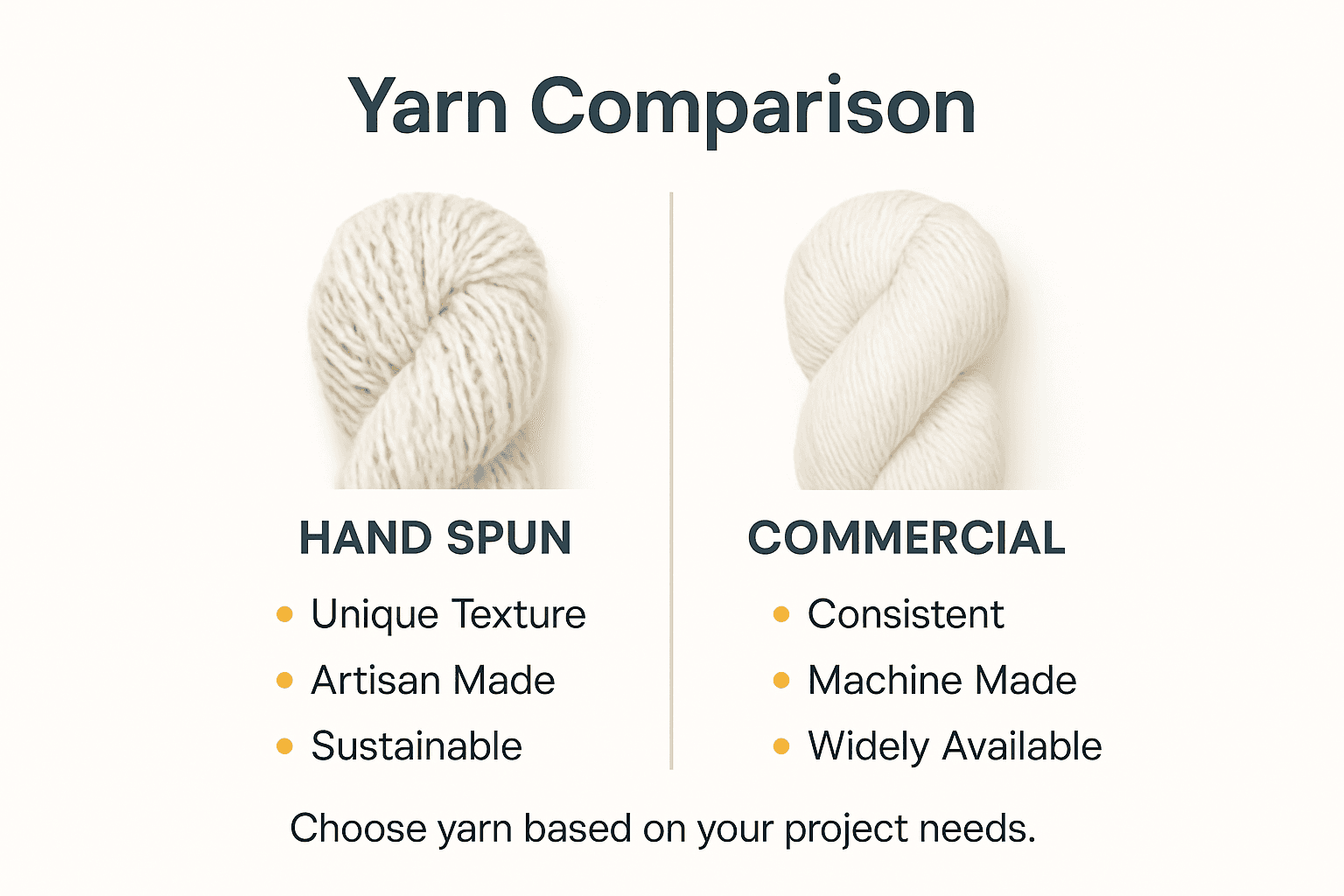
Technical distinctions in yarn production highlight significant performance variations. Industrial spinning techniques like ring spinning, compact spinning, and open-end spinning create yarns with predictable mechanical properties, optimized for mass manufacturing. Hand spinning, however, produces yarns with inherent irregularities—variations in twist, thickness, and fiber alignment that commercial processes intentionally eliminate. These subtle differences translate into dramatically different textile experiences, with hand spun yarns offering enhanced breathability, organic texture, and a more nuanced aesthetic appeal.
Project suitability becomes a critical consideration when choosing between hand spun and commercial yarns. Commercial yarns excel in applications requiring precise, repeatable performance—structured garments, technical textiles, and projects demanding consistent stitch definition. Hand spun yarns shine in artisanal, bespoke creations where uniqueness and individual character are prized, such as handcrafted accessories, specialty garments, and textile art pieces that celebrate imperfection and human craftsmanship.
The table below compares hand spun and commercial yarns for project selection:
| Yarn Feature | Hand Spun Yarn | Commercial Yarn |
|---|---|---|
| Texture Variation | High, unique in each skein | Low, highly consistent |
| Production Method | Manual, artisanal craftsmanship | Industrial, machine-made |
| Suitability | Artisanal, expressive projects | Technical or uniform projects |
| Environmental Impact | Typically lower, supports artisans | Often higher, less sustainable focus |
Pro Tip: Evaluate your project’s specific requirements by creating small swatches with both hand spun and commercial yarns to understand their distinct behavioral characteristics.
Discover the Art and Impact of Hand Spun Yarn with Craftiss
Hand spun yarn brings unique texture and sustainable values that industrial yarns cannot match. If you are passionate about creating projects that reflect authentic craftsmanship and environmental care, understanding the subtle nuances of fiber selection and spinning technique is vital. At Craftiss, we recognize these challenges and offer a carefully curated Yarn collection designed to inspire your creativity with premium fibers crafted for artisanal expression.
.png)
Elevate your next project by exploring our range of hand selected yarns that emphasize texture, durability, and sustainability. Visit Craftiss now to experience yarns that support artisan makers and eco-friendly practices. Don’t miss the chance to transform your crafting journey today with tools and materials that honor quality and tradition.
Frequently Asked Questions
What is hand spun yarn?
Hand spun yarn is a type of yarn created through traditional textile craft methods, where raw fibers are manually transformed into continuous threads by twisting and drafting them. This process is often performed using simple tools like spindles and distaffs, allowing for unique textural compositions.
How does hand spun yarn compare to commercial yarn?
Hand spun yarn differs from commercial yarn primarily in texture and production method. Hand spun yarns have inherent irregularities and variations that add unique character, while commercial yarns are manufactured for uniformity and consistency, making them ideal for technical projects requiring precise performance.
What are the benefits of using hand spun yarn in crafting projects?
Using hand spun yarn elevates crafting projects by providing unique texture, aesthetic appeal, and a connection to sustainable practices. The imperfections in hand spun yarn enhance its visual and tactile interest, making each piece a testament to individual skill and creativity.
What techniques can I use when working with hand spun yarn?
When working with hand spun yarn, it’s important to use appropriate needle sizing and tension control to accommodate its irregularities. Crafters should also perform gauge swatches to understand the yarn’s behavior and adapt their techniques for successful project outcomes.
Recommended
- Understanding the Role of Yarn Spin in Crafting – CRAFTISS
- Why Try Sustainable Yarns for Eco Crafting – CRAFTISS
- Why Plant-Based Yarns Matter for Crafters – CRAFTISS
- Understanding the Role of Blended Yarns in Crafting – CRAFTISS
- Top Trades Gear and Apparel for 2025: Rugged Choices - WorkWear Comfort
