


How to Substitute Yarn for Better Crochet Results
Picking the right yarn substitute can feel overwhelming, especially when your crochet pattern calls for materials you cannot easily find or afford. Getting this decision right is crucial for American crafters who want their projects to turn out as expected. By focusing on key details like yarn weight, fiber content, and gauge, you can confidently swap yarns without risking poor results or wasted effort. Explore practical steps to compare, test, and verify your choices for a smoother crochet experience.
Table of Contents
- Step 1: Assess Project Requirements For Yarn Substitution
- Step 2: Compare Yarn Weight, Fiber, And Gauge
- Step 3: Test And Adjust Swatch For Compatibility
- Step 4: Verify Results Before Starting The Project
Quick Summary
| Essential Insight | Clear Explanation |
|---|---|
| 1. Assess Project Requirements | Understand yarn weight, fiber type, yardage, and gauge before choosing a substitute yarn to ensure compatibility with your project. |
| 2. Compare Yarn Weight and Fiber | Evaluate potential substitutes based on yarn weight, fiber content, and gauge to achieve similar stitch behavior and finished appearance. |
| 3. Test and Adjust Your Swatch | Crochet a test swatch to check stitch definition, drape, and color before fully committing to your yarn choice. |
| 4. Verify Results Before Project | Carefully review gauge accuracy and fiber behavior after washing to ensure your chosen yarn meets your expectations for the project. |
| 5. Document Your Findings | Keep detailed notes on yarn choice, gauge, and adjustments to replicate success in future projects and avoid mistakes. |
Step 1: Assess project requirements for yarn substitution
Before you pick a replacement yarn, you need to understand what your project actually demands. This step prevents costly mistakes and ensures your finished piece looks and feels right. You’ll evaluate the original pattern requirements against your available alternatives.
Start by examining your crochet pattern closely. Look for these specific details:
- Yarn weight listed in the pattern (worsted, bulky, fingering, etc.)
- Fiber content the designer recommended
- Yardage needed for the entire project
- Stitch count per inch or gauge requirements
- Finished dimensions and how size matters to your project
These specifications exist for a reason. They determine how your stitches will look, drape, and perform. A blanket behaves differently than a fitted garment, so your substitution strategy changes accordingly.
Next, define your own priorities. Are you substituting because of allergies, budget constraints, or availability issues? Your reason shapes which characteristics matter most. Someone avoiding animal fibers needs different solutions than someone seeking durability or softness.
Consider the yarn characteristics that affect final results. Understanding fiber type and production methods helps you anticipate how substitutions will perform. This knowledge prevents surprises during your project.
To simplify yarn substitution decisions, here’s a comparison of key fiber types and their unique practical effects:
| Fiber Type | Main Benefit | Common Drawback | Typical Use Cases |
|---|---|---|---|
| Wool | Excellent warmth | May cause itching | Garments, winter accessories |
| Cotton | Breathable, absorbs moisture | Can lack elasticity | Summer wear, dish cloths |
| Acrylic | Affordable, easy-care | Less natural feel | Baby items, easy-care projects |
| Bamboo | Soft, drapes well | Can pill or stretch | Lightweight scarves, tops |
| Linen | Durable, cool to touch | Feels stiff at first | Home decor, bags |
Write down your project’s actual requirements. Document the pattern’s specified weight, fiber type, yardage, and any special instructions about drape or structure. This becomes your reference guide when evaluating alternatives.
Accurate project assessment prevents wasted time, money, and materials later in your substitution process.
Pro tip: Create a simple checklist with the original yarn’s weight, fiber content, price point, and availability, then use it to evaluate potential substitutes systematically.
Recommended supplies for your project


Step 2: Compare yarn weight, fiber, and gauge
Now that you know your project requirements, it’s time to compare how potential substitute yarns stack up against the original. This step ensures your replacement yarn will produce similar results in stitch size, drape, and finished appearance.
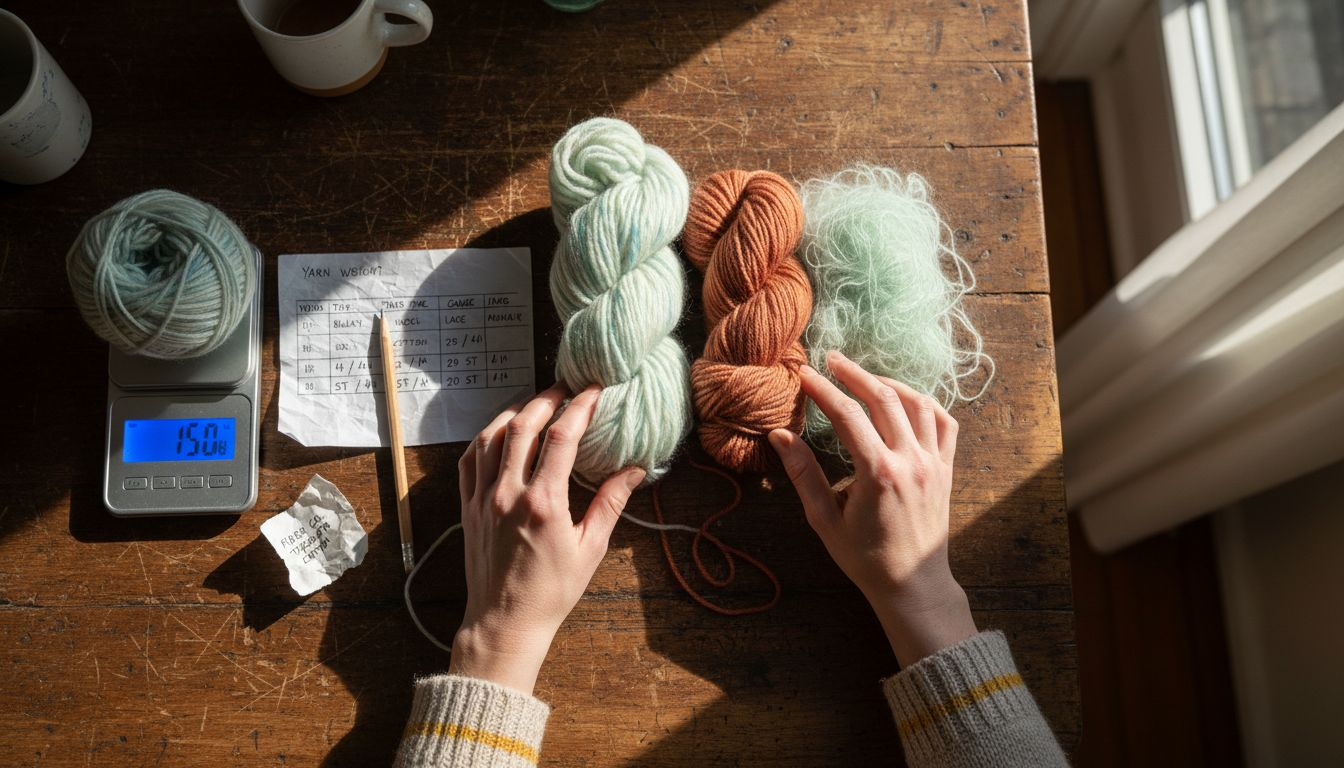
Start with yarn weight comparison. Yarn weight refers to the thickness of the strand, which directly affects how many stitches you’ll produce per inch. If your pattern calls for worsted weight, don’t assume all worsted yarns work identically. Some run thicker or thinner within the same category, so compare the specific yardage per 100 grams.
Next, examine the fiber content of both yarns. Cotton behaves completely differently than acrylic or wool, even at the same weight. Here’s what matters:
- Elasticity affects how stitches hold their shape
- Drape determines if your piece hangs stiffly or flows
- Moisture absorption changes how the fabric feels against skin
- Durability impacts how many wash cycles it survives
- Texture influences the visual appearance of your stitches
Then test gauge. Gauge measures stitches and rows per inch) and directly impacts your finished project size. Hook up with the suggested crochet hook for your substitute yarn, work a 4-inch by 4-inch swatch, and count your stitches carefully. Your swatch gauge must match the pattern’s required gauge within one stitch per inch.
Create a simple comparison chart listing the original yarn and your substitute options side by side. Include weight, fiber content, yardage per 100 grams, and your actual gauge swatch results. This visual reference prevents confusion and helps you spot incompatibilities immediately.
The best substitute matches your original yarn’s weight, fiber behavior, and gauge within acceptable tolerances.
Pro tip: Test gauge with the exact hook size and fiber you plan to use, since different fibers respond differently to tension and hook interaction.
Step 3: Test and adjust swatch for compatibility
A swatch is your safety net. Before committing 20 hours to a project with an untested yarn substitute, you need proof that it will work. This step reveals whether your replacement yarn truly matches your original in behavior and appearance.
Begin by crocheting a test swatch using your substitute yarn and the hook size recommended for that yarn. Work at least a 6-inch by 6-inch square using the main stitch pattern from your project. This size gives you enough fabric to see how the stitches actually look and feel in context.
While your swatch dries, observe these details:
- Stitch definition and how clearly each loop shows
- Color consistency across rows and whether it matches your vision
- Fabric drape and whether it falls stiffly or flows naturally
- Texture appearance under different lighting
- Overall weight of the finished fabric in your hands
Once dry, measure your gauge again precisely. Count stitches and rows carefully across the center of your swatch, away from the edges where tension gets wonky. If your gauge is off by more than half a stitch per inch, you’ll need to adjust your hook size or reconsider the yarn choice.
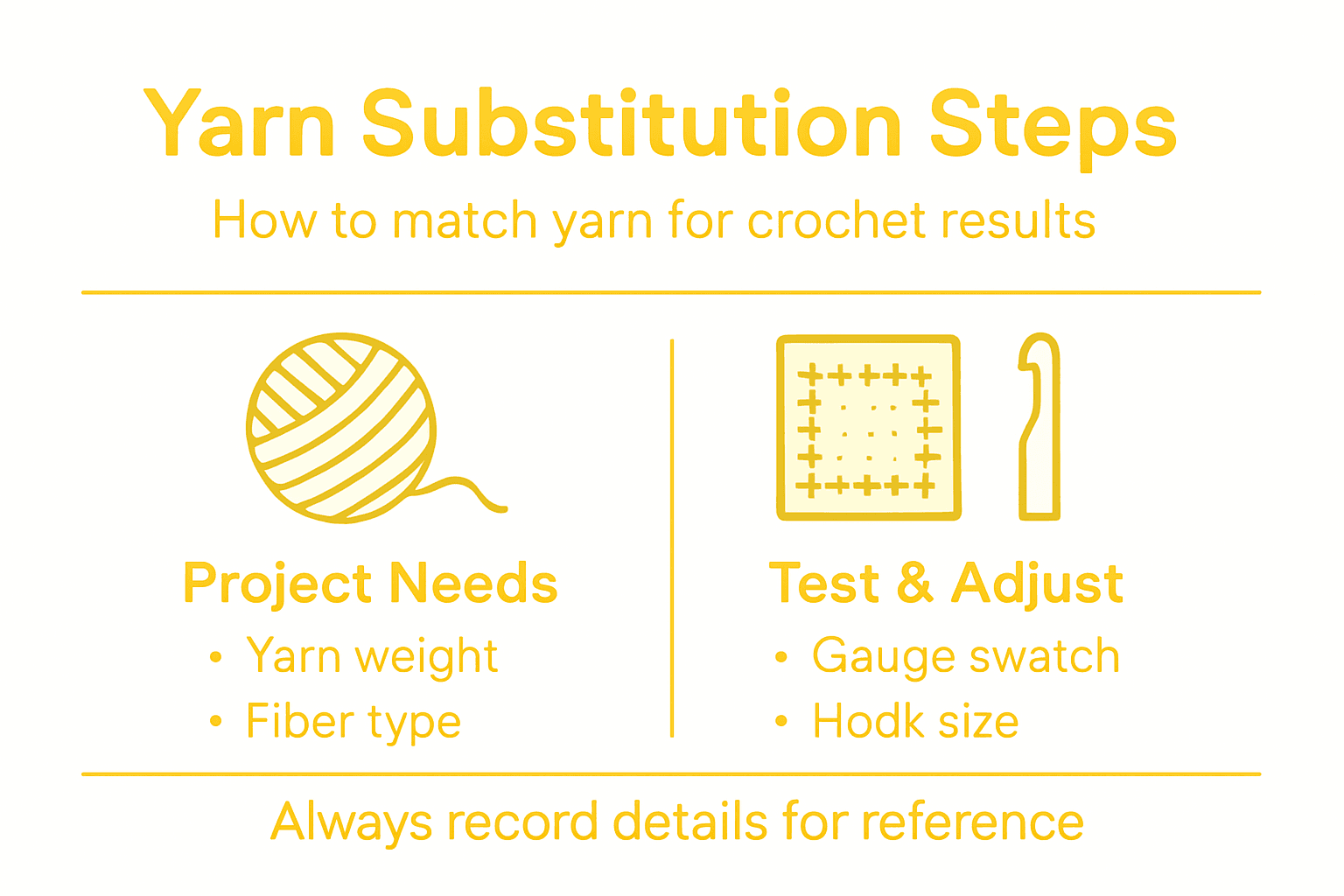
Testing component compatibility before full-scale production ensures you catch problems early. Adjust your hook size up or down and retest until your gauge matches within acceptable limits. A larger hook creates looser stitches, while a smaller hook tightens them.
Wash your swatch using the care method your finished project will need. This reveals how the fiber responds to water, heat, and agitation. Some yarns bloom, shrink, or lose shape after washing, so this step is critical before starting your actual project.
A swatch that passes all tests gives you confidence to proceed with your full project.
Pro tip: Keep your washed swatch pinned to a card with the yarn name, dye lot, hook size, gauge, and washing notes written clearly for future reference.
Step 4: Verify results before starting the project
You’re almost ready to commit. Before you cast on with your full project, take time to verify that your swatch results truly support moving forward. This final check prevents wasted time and yarn on a project that won’t meet your expectations.
Review your swatch data systematically. Compare your actual gauge measurements against the pattern requirements. Did your stitches come out the right size? Is your fabric weight matching what you expected? Your gauge must be within one stitch per inch of the pattern’s specification, or your finished project will be noticeably too large or too small.
Evaluate these critical factors:
- Finished fabric appearance matches your vision and the original pattern
- Drape and stiffness suit the project type (loose for garments, firm for blankets)
- Color and sheen work well together in the intended design
- Fiber behavior after washing shows no unexpected shrinking or stretching
- Stitches hold their shape and don’t look distorted or loose
Assessing results against initial expectations confirms whether your substitution will succeed. If your swatch feels too stiff or your gauge is consistently off despite hook adjustments, this is the moment to reconsider. Going back to try a different yarn now costs far less than 40 hours of work on the wrong choice.
Calculate your yardage needs based on your test swatch weight. Weigh your finished swatch and note how many inches it covers. This real data helps you estimate whether you have enough of your substitute yarn for the full project. Patterns sometimes underestimate yardage, so having accurate calculations prevents running short partway through.
Document everything in writing. Record your yarn choice, hook size, actual gauge, any adjustments you made, fiber content, and care instructions. This record becomes invaluable if you ever want to recreate the project or help someone replicate your results.
This table summarizes key checkpoints to confirm before starting a project with a substitute yarn:
| Checkpoint | Why It Matters | When to Review |
|---|---|---|
| Gauge accuracy | Ensures correct sizing | After swatch is dry |
| Fiber behavior | Prevents shrink/stretch | After washing swatch |
| Fabric appearance | Matches project vision | Before final approval |
| Yardage calculation | Avoids running short | After weighing swatch |
| Care instructions | Maintains project quality | At project start |
A thorough verification step saves hours of regret and wasted materials.
Pro tip: If anything about your swatch feels uncertain, make a second test swatch with a different hook size or yarn choice rather than gambling with your full project.
Elevate Your Crochet Projects with the Perfect Yarn Choice
Finding the right yarn substitute can feel overwhelming when you want your crochet projects to turn out just right. The key challenges like matching yarn weight, fiber behavior, and gauge can make or break your finished piece. At Craftiss, we understand how important these details are to your success and creative satisfaction.
Explore our extensive Yarn collection where you can compare fiber types and weights carefully to find the ideal replacement yarn that matches your project needs. To keep your materials organized and protected while you work, check out our durable Yarn Bags designed for crafty convenience.
.png)
Don’t risk your next project on guesswork. Visit Craftiss today to access trusted yarn options and tools that help you test, adjust, and verify your yarn substitutions with confidence. Start transforming your crochet experience now with materials that truly fit your vision.
Frequently Asked Questions
What factors should I consider when substituting yarn for my crochet project?
When substituting yarn, evaluate the yarn weight, fiber content, yardage needed, gauge requirements, and finished dimensions. Creating a checklist of these requirements helps ensure your substitute matches the original as closely as possible.
How can I determine if my substitute yarn will match the original gauge?
You can test the gauge by crocheting a swatch using the substitute yarn and the recommended hook size. Measure your stitches and rows per inch; your gauge should match the original pattern within one stitch to ensure proper sizing.
What should I do if my gauge is off after testing my swatch?
If your gauge is off, adjust your hook size and retest your swatch until the gauge matches within acceptable limits. For example, switch to a larger hook for looser stitches or a smaller hook for tighter stitches, and remeasure after each adjustment.
How can I avoid issues with my yarn substitution after washing?
To avoid issues after washing, always wash your test swatch using the same method you will use for your final project. This will help you see how the substitute yarn behaves, whether it shrinks, stretches, or maintains its shape.
What information should I document after testing my yarn substitution?
Document your yarn choice, hook size, actual gauge, adjustments made, fiber content, and care instructions. This record will be useful for replicating results in future projects or for helping others with similar substitutions.
Why is it important to assess my project’s requirements before substituting yarn?
Assessing your project’s requirements is crucial because it helps you avoid costly mistakes and ensures the final piece looks and feels right. It sets the foundation for making informed choices about yarn substitutions that meet your specific project needs.
