


Role of Crepe Yarn: Texture and Durability in Crochet
Finding the right yarn to highlight your favorite stitch patterns can sometimes feel like searching for a hidden gem. For American crochet enthusiasts ready to elevate their projects, exploring the distinctive qualities of crepe yarn opens a world of texture and artistry. The tight twisting process behind crepe yarn creates a three-dimensional texture with natural crinkles, making it a dynamic choice for advanced crochet work. This article helps you make sense of crepe yarn’s structure, drape, and design possibilities, so your next project stands out with professional detail.
Table of Contents
- Defining Crepe Yarn In Crochet Projects
- Types And Construction Methods Of Crepe Yarn
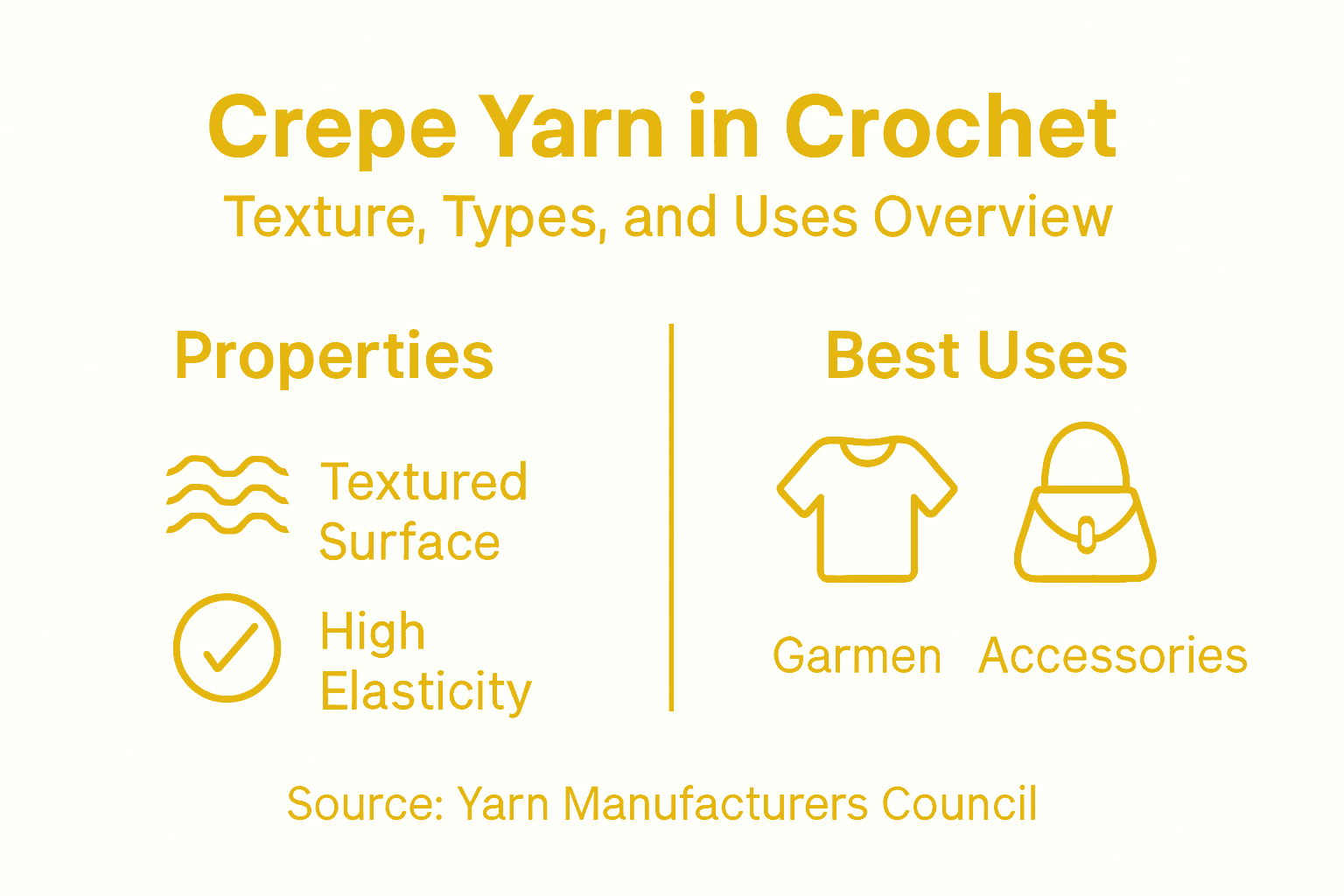
- Unique Texture, Elasticity, And Stitch Definition
- Best Uses For Crepe Yarn In Crochet
- Comparison: Crepe Yarn Versus Standard Options
- Mistakes To Avoid When Using Crepe Yarn
Key Takeaways
| Point | Details |
|---|---|
| Crepe Yarn Characteristics | Crepe yarn features a unique textured surface and high resilience, making it ideal for intricate crochet projects. |
| Types of Crepe Yarn | Different types, including silk, wool, synthetic, and blended crepe, offer varied properties suited for specific applications. |
| Stitch Definition and Elasticity | Crepe yarn provides exceptional stitch definition and elasticity, allowing for precise patterns and comfortable wear. |
| Common Mistakes to Avoid | To achieve optimal results, manage tension carefully and use appropriate hook sizes to maintain crepe yarn’s unique properties. |
Defining Crepe Yarn in Crochet Projects
Crepe yarn represents a distinctive textile material with unique characteristics that make it particularly fascinating for crochet enthusiasts. Originating from ancient textile traditions, this specialized yarn type offers crocheters an exceptional opportunity to create textured, visually intriguing projects.
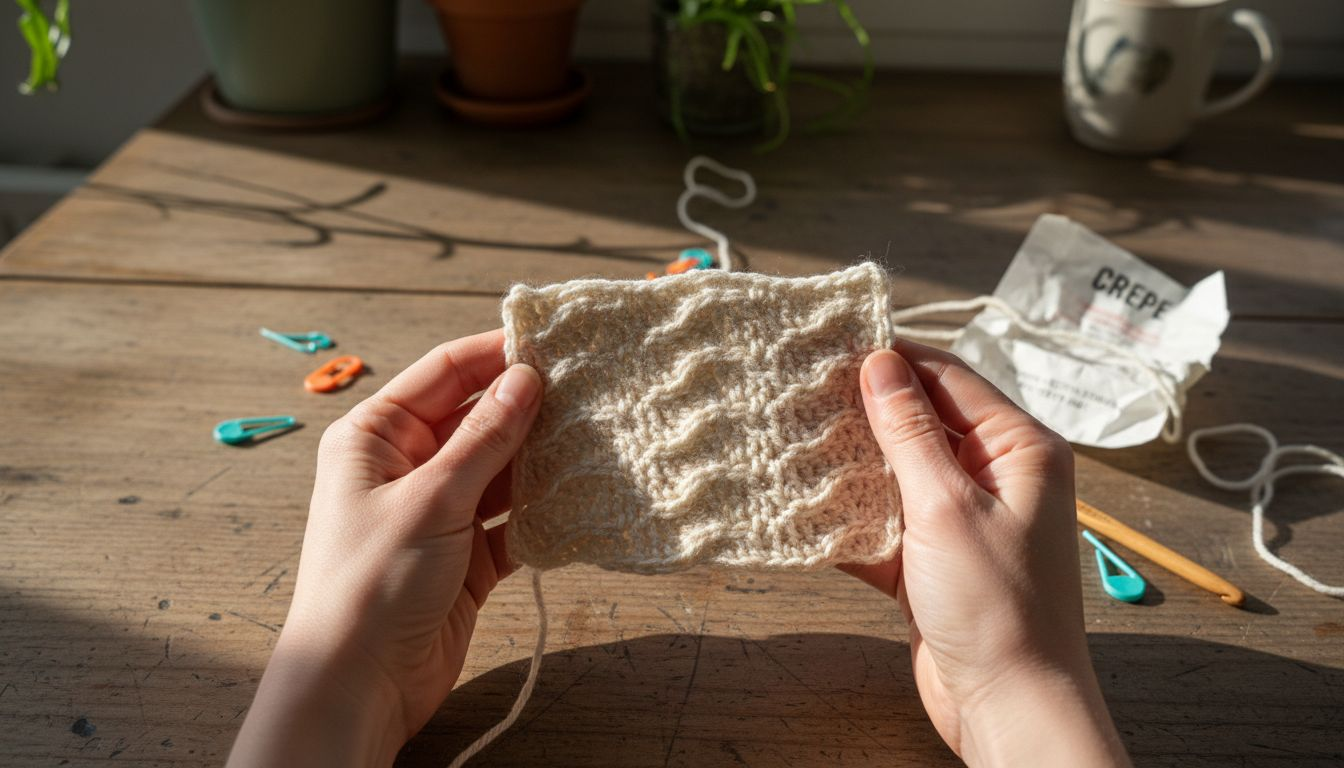
At its core, crepe yarn is characterized by an extremely tight twisting process that generates a distinctive three-dimensional texture. The yarn’s manufacturing process involves intensely twisting fibers, which results in a remarkable crimped and crinkled appearance. Unlike standard yarns, crepe yarn produces a fabric with a subtle, rippled surface that adds depth and visual interest to crochet work.
Key characteristics of crepe yarn include:
- Unique textured surface with natural crinkles
- Enhanced fabric draping capabilities
- Soft and silky tactile sensation
- High resilience and structural integrity
- Ability to create dramatic, elegant fabric designs
The manufacturing process of crepe yarn involves specialized techniques that differentiate it from traditional yarn production. Textile experts create these yarns) by using extremely hard-spun fibers, typically sourced from silk, wool, or synthetic materials. This meticulous spinning process generates a yarn with exceptional texture and visual complexity.
Pro tip: When working with crepe yarn, use slightly smaller crochet hooks to maintain the yarn’s unique textural characteristics and prevent excessive stretching.
Recommended supplies for your project


Types and Construction Methods of Crepe Yarn
Crepe yarn represents a complex textile manufacturing process with multiple sophisticated construction techniques. Various specialized production methods) create unique yarn characteristics that distinguish crepe from standard textile materials.
The primary types of crepe yarn can be categorized based on fiber composition and manufacturing approach:
- Silk crepe: Traditional high-end variant with luxurious texture
- Wool crepe: Warm and resilient, ideal for winter garments
- Synthetic fiber crepe: Versatile and cost-effective modern alternative
- Blended fiber crepe: Combining multiple fiber types for enhanced performance
Crepe yarn construction involves intricate techniques that generate its distinctive texture. Textile manufacturers employ complex twisting processes that alternate yarn twist directions, creating the signature crinkled appearance. These methods typically involve hard-spinning fibers and applying specialized treatments to generate dimensionality and visual complexity.
The construction process includes several critical stages:
- Fiber selection and preparation
- Intense twisting of yarn strands
- Alternating S and Z directional spinning
- Chemical or thermal treatments
- Final finishing and texturizing
The hallmark of excellent crepe yarn lies in its ability to create three-dimensional texture through precise manufacturing techniques.
Pro tip: When selecting crepe yarn for your project, examine the twist intensity and fiber composition to ensure optimal performance and desired textural effects.
Here is a comparison of crepe yarn types, their properties, and ideal project uses:
| Crepe Yarn Type | Main Properties | Best Crochet Uses |
|---|---|---|
| Silk Crepe | Luxurious texture, natural sheen | Evening wraps, fine shawls |
| Wool Crepe | Warm, resilient, crisp feel | Lightweight jackets, winterwear |
| Synthetic Crepe | Cost-effective, easy care | Everyday accessories, decor |
| Blended Crepe | Enhanced performance, varied texture | Versatile garments, custom projects |
Unique Texture, Elasticity, and Stitch Definition
Textile manufacturing techniques) have elevated crepe yarn into a remarkable material with extraordinary texture and performance characteristics. The yarn’s distinctive structure creates a complex interplay of visual and tactile qualities that make it exceptional for crochet projects.
The unique texture of crepe yarn emerges from its specialized construction, characterized by several key features:
- Intense fiber twisting
- Alternating S and Z directional spinning
- Pronounced surface crimp and dimensionality
- Enhanced fabric resilience
- Exceptional stitch definition
Elasticity stands as a critical attribute of crepe yarn, enabling crafters to create garments and accessories with superior shape retention. Extreme fiber twisting generates remarkable yarn flexibility, allowing stitches to maintain their structural integrity while providing comfortable stretch and movement.
The intricate construction of crepe yarn directly impacts stitch definition, producing crochet work with remarkable clarity and depth. Its unique texture allows each stitch to stand out distinctly, creating visual interest and professional-looking finished pieces. Crafters can achieve crisp, well-defined stitches that showcase intricate patterns with exceptional precision.
Crepe yarn transforms ordinary crochet projects into extraordinary textile art through its remarkable textural complexity.
Pro tip: Select crepe yarn with moderate twist intensity to balance stitch definition and fabric drape in your crochet projects.
Best Uses for Crepe Yarn in Crochet
Textile design experts) recognize crepe yarn as a versatile material with exceptional potential for specialized crochet projects. Its unique structural characteristics make it ideal for creating garments and accessories that demand both visual complexity and functional performance.
Prime applications for crepe yarn in crochet include:
- Elegant evening wear
- Structured lightweight jackets
- Delicate shawls and wraps
- Textured decorative accessories
- Intricate lace-like garments
- Fine lingerie and intimate apparel
Garment Construction benefits significantly from crepe yarn’s remarkable properties. Dramatic textile textures emerge through its distinctive spinning technique, allowing crocheters to produce pieces with exceptional drape and visual depth. The yarn’s inherent elasticity ensures that finished projects maintain their shape while providing comfortable wearability.
Crochet designers particularly appreciate crepe yarn for its ability to showcase intricate stitch patterns. The yarn’s crisp texture enables precise stitch definition, making it perfect for complex designs that require sharp, well-defined contours. Delicate projects like evening shawls, structured cardigans, and refined accessories benefit most from its unique characteristics.
Crepe yarn transforms ordinary crochet projects into sophisticated textile art through its exceptional textural complexity.
Pro tip: Select lightweight crepe yarn weights for projects requiring maximum drape and visual complexity.
Comparison: Crepe Yarn Versus Standard Options
Textile manufacturing approaches reveal significant distinctions between crepe yarn and standard yarn options that dramatically impact crochet project outcomes. These differences extend beyond mere appearance, fundamentally affecting fabric performance and aesthetic qualities.
Key comparative characteristics include:
- Texture: Crepe yarn features distinctive crinkled surface
- Elasticity: Higher twist provides superior structural resilience
- Drape: More pronounced and fluid movement
- Stitch Definition: Sharper, more pronounced stitch edges
- Visual Complexity: Dramatically more intricate surface appearance
Fiber Composition plays a crucial role in differentiating yarn types. Standard yarn variations demonstrate wide performance ranges, with each material offering unique characteristics. Crepe yarn stands out through its intentional over-twisting technique, which generates a remarkable three-dimensional texture unavailable in conventional yarn manufacturing.
When selecting between crepe and standard yarns, crocheters must consider project-specific requirements. Standard yarns like acrylic, cotton, and wool provide reliable performance with predictable characteristics, while crepe yarn offers enhanced visual complexity and structural intrigue. The choice depends on desired project outcomes, aesthetic preferences, and technical demands.
Crepe yarn transforms ordinary textile projects by introducing unparalleled textural sophistication.
Pro tip: Experiment with crepe yarn in small test swatches to understand its unique draping and textural qualities before committing to larger projects.
Mistakes to Avoid When Using Crepe Yarn
Yarn spinning techniques reveal complex challenges specific to working with crepe yarn. Novice crocheters often encounter technical difficulties that can compromise their project’s overall quality and aesthetic appeal.
Common mistakes when using crepe yarn include:
- Maintaining inconsistent tension
- Overstretching during manipulation
- Using inappropriate hook sizes
- Neglecting yarn’s unique structural properties
- Failing to account for increased fabric elasticity
- Improper handling during blocking
Tension Management represents the most critical aspect of successful crepe yarn projects. Crocheters must develop exceptional control to prevent uneven stitching, which can dramatically alter the fabric’s intended texture and appearance. The yarn’s distinctive twisting requires more precise technique compared to standard yarn varieties.
Additional technical challenges emerge from crepe yarn’s complex structural characteristics. Its heightened elasticity demands careful drafting and consistent stitch formation. Beginners frequently struggle with maintaining uniform stitch definition, particularly when transitioning between different sections of their project.
Mastering crepe yarn requires patience, practice, and a nuanced understanding of its unique textile properties.
Pro tip: Practice creating small test swatches to develop muscle memory for managing crepe yarn’s distinctive tension and elasticity.
This table highlights frequent mistakes when working with crepe yarn and ways to avoid them:
| Common Mistake | Why It Happens | How to Avoid |
|---|---|---|
| Inconsistent tension | Hard to control elasticity | Slow down, practice swatches |
| Overstretching yarn | High flexibility causes stretch | Use smaller hooks, gentle handling |
| Ignoring fiber traits | Unique twist affects results | Adjust technique for yarn structure |
Unlock the Full Potential of Crepe Yarn in Your Crochet Projects
Dealing with the unique challenges of crepe yarn’s texture and durability can be tough. From managing its intense fiber twisting to maintaining consistent tension, the journey to create elegant, long-lasting crochet pieces requires the right materials and tools. At CRAFTISS, we understand these specific needs and provide a curated selection of premium yarns designed to bring out the best in your textile art.
.png)
Elevate your crochet with our exclusive Yarn
– CRAFTISS collection, featuring options that balance elasticity and stitch definition for superb fabric resilience and visual complexity. Don’t let technical hurdles stop your creativity. Explore our site now at https://craftiss.com for expert-crafted yarns and accessories that support your craft from start to finish. Take control of your next project with materials tailored for success.
Frequently Asked Questions
What is crepe yarn and how is it made?
Crepe yarn is a specialized textile characterized by a tight twisting process that creates a distinctive three-dimensional texture. It is made by intensely twisting fibers, often sourced from silk, wool, or synthetic materials, resulting in a crinkled appearance.
What are the benefits of using crepe yarn for crochet projects?
Crepe yarn offers several advantages, including unique texture, high elasticity, and excellent stitch definition. These characteristics allow for well-defined stitches and enhanced fabric draping, making it ideal for complex designs and elegant garments.
How does crepe yarn differ from standard yarn?
Crepe yarn differs from standard yarn in its texture, elasticity, and stitch definition. It features a distinct crinkled surface, higher structural resilience, and dramatically more intricate visual complexity, which can enhance crochet projects.
What mistakes should I avoid when working with crepe yarn?
Common mistakes include inconsistent tension, overstretching the yarn, and using inappropriate hook sizes. It’s important to develop control and understanding of the yarn’s unique properties to achieve the best results in your crochet projects.
