

Over half of American crocheters say durability is their top concern when choosing yarn for their projects. Projects meant to be used and loved daily demand yarn that can withstand frequent stretching and washing without losing shape. Understanding yarn resilience matters if you want your crochet creations to last longer and keep their vibrant look. This article highlights which fiber types and characteristics help American crafters achieve lasting performance in every stitch.
Table of Contents
- What Does Yarn Resilience Mean?
- Types of Yarn Fibers and Their Strength
- Key Traits of Resilient Yarns
- Impact on Crochet Project Longevity
- Common Pitfalls and Fiber Alternatives
Key Takeaways
| Point | Details |
|---|---|
| Yarn Resilience Matters | Yarn resilience refers to a fiber’s ability to maintain its shape and integrity under stress, which ensures durability in crochet projects. |
| Fiber Composition Influences Strength | Natural and synthetic fibers provide distinct strengths; natural fibers often excel in elasticity while synthetics offer enhanced durability. |
| Testing Yarn Performance | Conducting simple stretch tests on yarn samples can help assess resilience before starting a project. |
| Understanding Trade-offs | Evaluating the unique characteristics of different fibers helps crafters make informed choices to enhance project longevity. |
What Does Yarn Resilience Mean?
In crochet crafting, yarn resilience represents a fiber’s capacity to withstand stress, return to its original shape, and maintain structural integrity through repeated use and manipulation. Unlike general material properties, yarn resilience specifically relates to how a textile can absorb tension, stretch, and potential deformation without compromising its fundamental characteristics.
At its core, yarn resilience is about understanding how materials respond to mechanical stress) during crafting processes. When you create a crochet project, the yarn must endure stretching, compression, washing, and everyday wear without losing its essential qualities. This means a resilient yarn can be bent, twisted, and pulled without permanently changing its structure or appearance.
Some key indicators of yarn resilience include its ability to maintain stitch definition, resist pilling, and recover quickly from compression or stretching. Natural fibers like wool and alpaca often demonstrate excellent resilience due to their inherent protein structures, which allow for significant elastic recovery. Synthetic fibers like acrylic and nylon can also provide remarkable resilience through advanced manufacturing techniques that enhance their structural integrity.
Pro tip: When selecting yarn for projects requiring high durability, perform a simple stretch test by gently pulling a small section and observing how quickly it returns to its original shape.
Recommended supplies for your project


Types of Yarn Fibers and Their Strength
Natural and synthetic fibers each bring unique characteristics to yarn crafting, determining its overall strength, durability, and performance. Yarn composition fundamentally influences its structural integrity, with different fiber types offering distinct advantages for crochet and knitting projects.
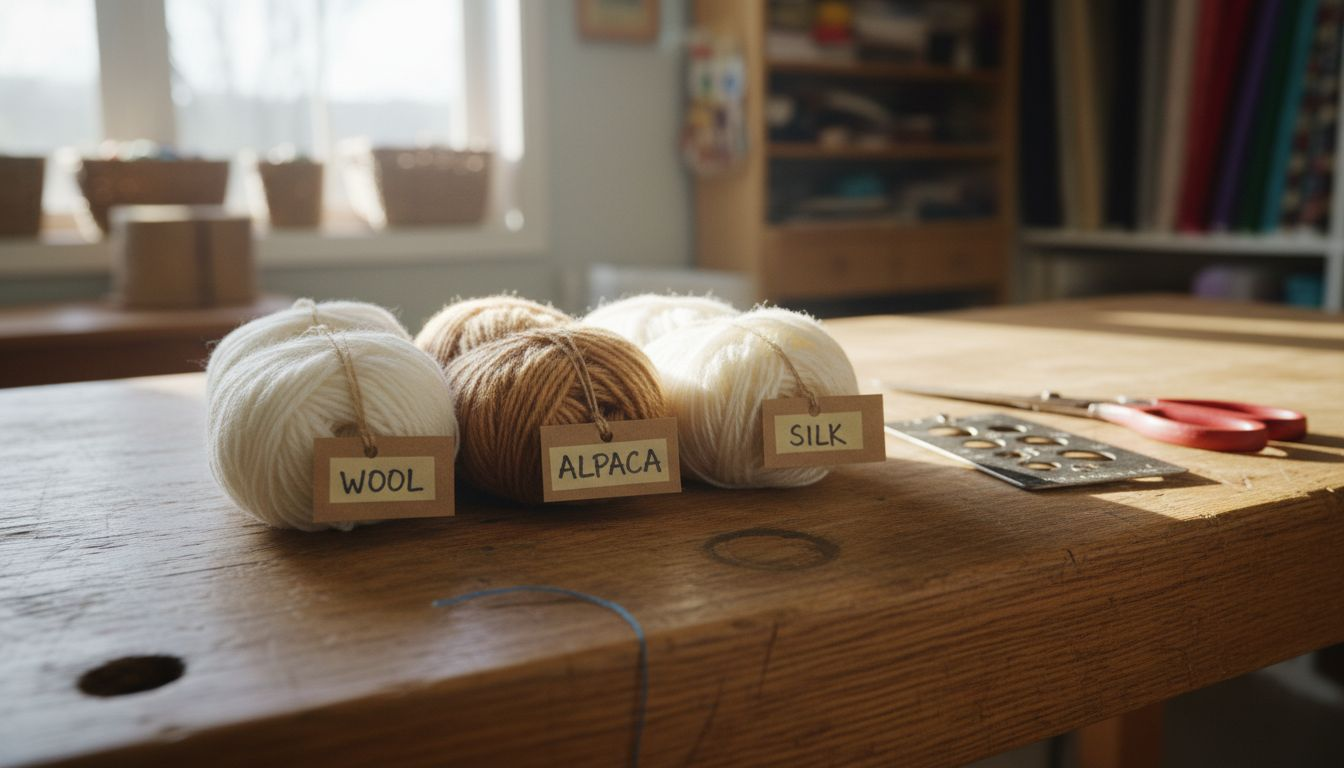
Natural fibers like wool, alpaca, and silk demonstrate remarkable resilience. Wool, in particular, stands out for its exceptional elasticity and ability to retain strength even when wet. Animal fibers typically provide superior thermal regulation and natural stretch, making them ideal for garments requiring flexibility. Cotton and linen, while breathable, generally offer less tensile strength compared to their animal-based counterparts.
Synthetic fibers such as nylon, acrylic, and polyester have revolutionized yarn manufacturing by providing consistent performance and enhanced durability. These engineered fibers maintain strength under variable conditions, resisting moisture, UV exposure, and repeated use. Blended yarns combining natural and synthetic fibers often represent the best compromise, leveraging the comfort of natural fibers with the durability of synthetic materials.
Understanding fiber properties helps crafters select the most appropriate yarn for specific projects. Factors like intended use, desired texture, maintenance requirements, and expected wear all play crucial roles in determining the optimal fiber choice.
Pro tip: Always check the recommended fiber content and care instructions for your specific crochet project to ensure maximum yarn performance and longevity.
Here’s how common yarn fiber types compare in resilience and durability:
| Fiber Type | Resilience Level | Ideal Uses | Common Trade-offs |
|---|---|---|---|
| Wool | High | Garments, accessories | Prone to shrinkage, requires care |
| Cotton | Moderate | Home décor, lightwear | Weakens when wet, less elasticity |
| Acrylic | High | Heavy-use items | Less breathable, may pill |
| Polyester | High | Outdoor, sportswear | May feel artificial, lower comfort |
| Silk | Moderate to High | Luxury, delicate pieces | Expensive, sensitive to moisture |
| Blends | Varies (often high) | Versatile applications | Mix of strengths and weaknesses |
Key Traits of Resilient Yarns
Crochet enthusiasts seeking durable projects must understand the critical characteristics that define yarn resilience. High-performance yarns demonstrate exceptional mechanical properties that go beyond simple strength, encompassing a complex range of structural and performance attributes.
The primary traits of resilient yarns include high tensile strength, remarkable elongation capacity, and consistent performance under stress. Optimal yarns maintain their structural integrity through repeated stretching, compression, and environmental challenges. Balanced friction properties and low surface hairiness contribute significantly to a yarn’s ability to withstand wear and maintain its original shape, ensuring that crochet projects retain their intended design and aesthetic appeal.
Advanced textile research reveals that blended fibers often provide the most comprehensive resilience. Innovative combinations like cotton with regenerated natural fibers can enhance both strength and sustainability. Bacterial cellulose-based yarns demonstrate particularly promising mechanical characteristics, offering exceptional tenacity and adaptability that push the boundaries of traditional yarn performance.
Crafters should evaluate yarn resilience through multiple lenses: tensile strength, elongation potential, recovery speed, and resistance to environmental factors. Choosing yarns with superior mechanical properties ensures that your crochet projects will not only look beautiful but also withstand the test of time and repeated use.
Pro tip: Perform a simple stretch test on yarn samples before starting your project, observing how quickly the yarn returns to its original shape to assess its true resilience.
Impact on Crochet Project Longevity
Yarn resilience plays a critical role in determining the lifespan of crochet projects, directly influencing their structural integrity and aesthetic appeal. Physical properties like tenacity and elongation are fundamental to a project’s durability, transforming a simple handmade item into a long-lasting piece of craftsmanship.
The mechanical characteristics of yarn determine how well a crochet project will withstand repeated use, washing, and environmental stresses. High-resilience yarns maintain their shape, resist stretching and compression, and prevent premature wear. This means garments and accessories crafted with carefully selected yarns can potentially last years longer than those made with inferior materials, preserving the crafter’s time and creative investment.
Sustainable design principles extend beyond material selection, encouraging crafters to consider emotional attachment and potential repair strategies. By choosing yarns with superior resilience, crocheters can create pieces that not only endure physical challenges but also retain their original aesthetic and sentimental value. This approach transforms crochet from a temporary craft to a sustainable practice of creating meaningful, long-lasting textiles.
Different fiber types contribute uniquely to project longevity. Animal fibers like wool offer natural elasticity, synthetic blends provide enhanced durability, and carefully selected natural fibers can create projects that gracefully age while maintaining structural integrity. Understanding these nuanced characteristics helps crafters make informed choices that directly impact their creation’s lifespan.
Pro tip: Rotate your most-used crochet items and store them properly to minimize stress and extend their functional life.
Common Pitfalls and Fiber Alternatives
Crochet crafters frequently encounter yarn performance challenges that can compromise project quality and durability. Moisture conditioning plays a critical role in maintaining yarn resilience, with improper handling potentially leading to unexpected weaknesses in textile structures.
One significant pitfall is the presence of excessive short fibers, which can dramatically reduce yarn strength and create irregularities in texture. Fiber blends combining natural and synthetic materials offer promising alternatives that enhance tenacity and performance. Regenerated fibers and strategic synthetic blends can compensate for inherent limitations in traditional yarn compositions, providing increased durability and consistent structural integrity.
Different fiber types present unique challenges and opportunities. Cotton yarns, while popular, can be prone to weakening under stress, whereas synthetic blends might sacrifice breathability for strength. Wool offers natural elasticity but can be susceptible to shrinkage, while acrylic provides durability at the potential cost of reduced comfort. Understanding these trade-offs allows crafters to make informed selections that align with their specific project requirements.
Crafters should evaluate yarn alternatives by considering multiple factors: tensile strength, moisture retention, elasticity, and potential environmental conditions the finished project will encounter. Hybrid and innovative fiber technologies continue to emerge, offering increasingly sophisticated solutions to traditional yarn limitations.
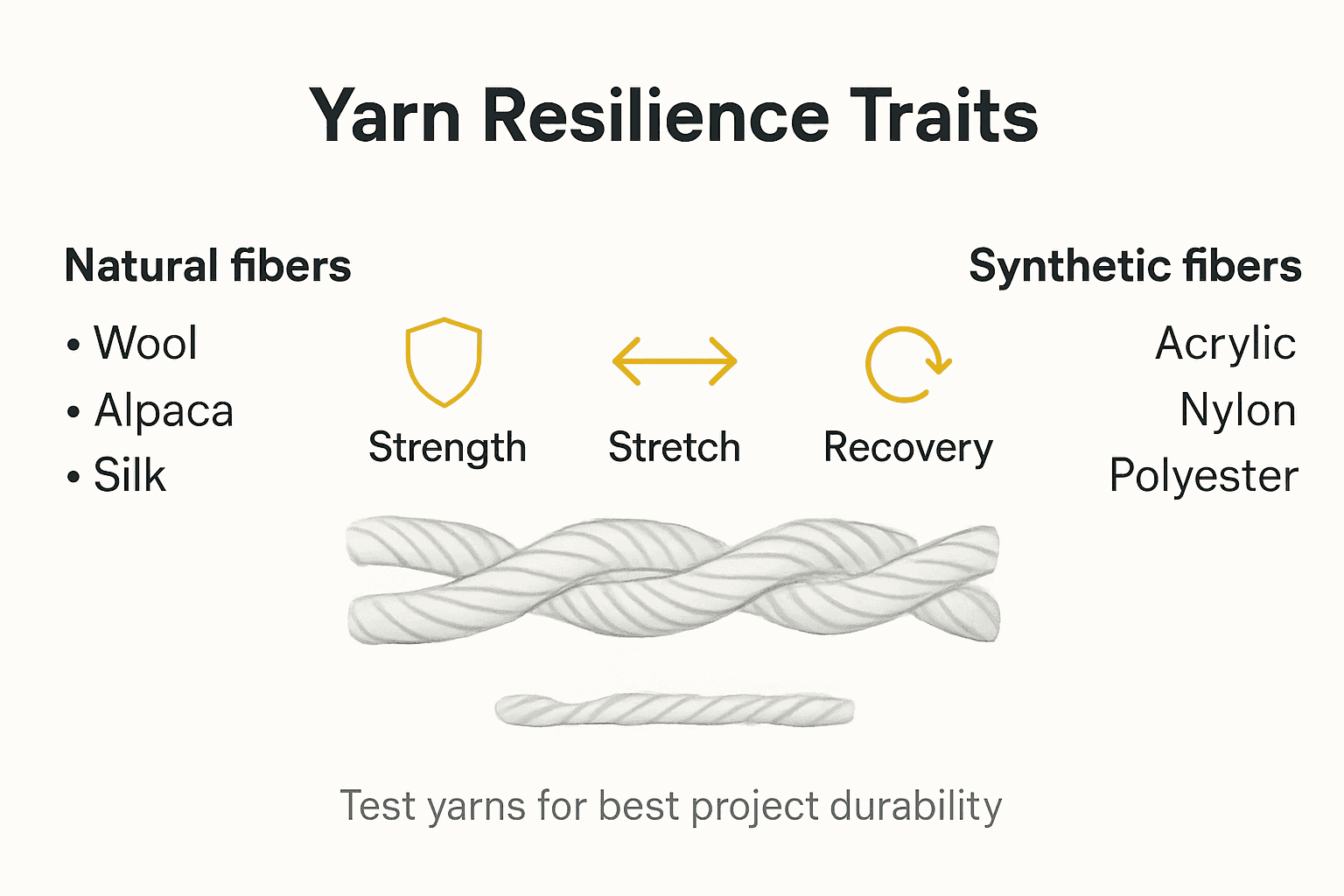
Key factors for evaluating yarn alternatives for project longevity:
| Evaluation Factor | Why It Matters | What to Check |
|---|---|---|
| Tensile Strength | Withstands pulling/stretching | Strong, holds shape under tension |
| Moisture Retention | Affects aging and comfort | Avoids weakening or mildew |
| Elasticity | Offers flexibility | Recovers shape after stretching |
| Environmental Fit | Ensures longevity | Stands up to sun, humidity, use |
Pro tip: Always conduct a small test swatch with your chosen yarn to assess its true performance characteristics before committing to a full project.
Enhance Your Crochet Projects with High-Resilience Yarn from CRAFTISS
Struggling with yarn that loses shape or wears out quickly? The article highlights the challenge of finding yarns with strong tensile strength, elasticity, and long-lasting durability to ensure your crochet creations maintain their beauty and form. At CRAFTISS, we understand the importance of yarn resilience to boost the longevity of your handmade projects and help you create pieces that stand the test of time.
Explore our premium Yarn collection designed for durability and comfort. Each skein is carefully selected to provide excellent recovery, resistance to pilling, and reliable performance under stress. Whether you craft garments, accessories, or home décor, choosing resilient yarns is a key step to protect your investment of time and creativity.
.png)
Ready to upgrade your materials and craft lasting crochet masterpieces? Visit CRAFTISS today to find yarns that meet your durability needs and browse our range of helpful tools for the dedicated crocheter. Don’t wait until your project starts showing wear. Act now and give your crochet work the strength it deserves.
Frequently Asked Questions
What is yarn resilience in crochet projects?
Yarn resilience refers to a fiber’s ability to withstand stress and retain its original shape and qualities after being manipulated, stretched, or washed. It ensures that crochet projects maintain their intended structure and appearance over time.
How can I test the resilience of yarn before starting a crochet project?
Perform a simple stretch test by gently pulling a small section of the yarn. Observe how quickly it returns to its original shape to gauge its resilience. A resilient yarn will recover quickly without permanent deformation.
What are the best yarn fibers for durability in crochet?
Natural fibers like wool and alpaca offer excellent resilience and durability, while synthetic fibers such as acrylic and nylon also provide remarkable strength. Blended yarns that combine natural and synthetic fibers often deliver the best performance in terms of both comfort and durability.
Why does yarn resilience impact the longevity of crochet projects?
Yarn resilience affects how well a crochet item can withstand repeated use, washing, and environmental stressors. High-resilience yarns maintain their shape and resist wear, leading to longer-lasting projects that retain their aesthetic appeal over time.
Recommended
- How to crochet with yarn: your ultimate beginner’s guide to mastering – CRAFTISS
- Understanding Why Yarn Quality Matters for Crafters – CRAFTISS
- Master Crochet Finishing Techniques Guide for Perfect Projects – CRAFTISS
- Role of Elastic Yarn: Enhancing Flexibility in Crafting – CRAFTISS
- 7 Key Elements That Make Quality T-Shirts Stand Out – Custom T-Shirts and Printed Merch in Utah | Pulse Merch