


Tensile Yarn Explained: Enhancing Crochet Durability
Every dedicated crochet enthusiast knows the frustration when a handmade project stretches out or loses shape after just a few uses. For Americans passionate about creating textiles that last, understanding tensile yarn properties becomes the difference between disappointment and long-lasting satisfaction. This guide uncovers what makes certain yarns stronger and more resilient, empowering you to select materials that match the demands of your favorite crochet patterns for truly durable results.
Table of Contents
- Defining Tensile Yarn And Core Concepts
- Types Of Tensile Yarn For Crochet Projects
- Key Properties Impacting Yarn Strength
- How Tensile Yarn Performs In Real Craft Projects
- Comparing Tensile Yarn With Other Options
- Common Mistakes When Choosing Tensile Yarn
Key Takeaways
| Point | Details |
|---|---|
| Understanding Tensile Yarn Properties | Key properties like breaking tenacity, elongation, and modulus are crucial for selecting durable yarn in crochet projects. |
| Choosing the Right Fiber | Synthetic yarns typically offer higher strength and durability compared to natural fibers, making them more suitable for high-stress applications. |
| Testing Yarn Performance | Conduct tension and stretch tests before starting projects to ensure the chosen yarn meets expectations for durability and elasticity. |
| Avoiding Common Selection Mistakes | Consider the specific mechanical properties and environmental factors to prevent premature failure of crochet items. |
Defining Tensile Yarn and Core Concepts
Tensile yarn represents a specialized textile material engineered to withstand significant mechanical stress while maintaining structural integrity. At its core, tensile yarn is defined by its ability to resist breaking or deforming under tension, making it crucial for creating durable crochet projects. Tensile properties of yarns are scientifically measured through specific mechanical tests that evaluate key performance characteristics.
The fundamental characteristics of tensile yarn include breaking tenacity, elongation, initial modulus, and breaking toughness. Breaking tenacity measures the yarn’s strength relative to its linear density, indicating how much tension a yarn can endure before failing. Elongation reflects the yarn’s capacity to stretch without permanent deformation, while initial modulus represents its resistance to extension. Breaking toughness quantifies the total work required to break the yarn, providing insights into its overall durability and resilience.
Understanding these properties is essential for crochet enthusiasts seeking to create long lasting, high performance textile products. Different yarn compositions will exhibit unique tensile characteristics, influenced by factors such as fiber type, spinning technique, and manufacturing process. Synthetic fibers like polyester and nylon often demonstrate higher tensile strength compared to natural fibers, offering enhanced durability and consistent performance across various crafting applications.
Pro tip: Always check the yarn label for tensile strength indicators and choose materials that match the specific requirements of your crochet project.
Recommended supplies for your project


Types of Tensile Yarn for Crochet Projects
Crochet enthusiasts have multiple tensile yarn options, each offering unique performance characteristics tailored to specific project requirements. Natural and synthetic fiber variations provide crafters with diverse choices that dramatically impact project durability, flexibility, and overall performance.
Natural fiber yarns like cotton, wool, and silk demonstrate moderate tensile strength with varying elasticity. Cotton yarn offers excellent breathability and moderate durability, making it ideal for summer garments and lightweight accessories. Wool yarns provide superior elasticity and natural temperature regulation, with enhanced resilience that helps projects maintain their shape. Silk yarns, while luxurious, typically have lower tensile strength and require more delicate handling.
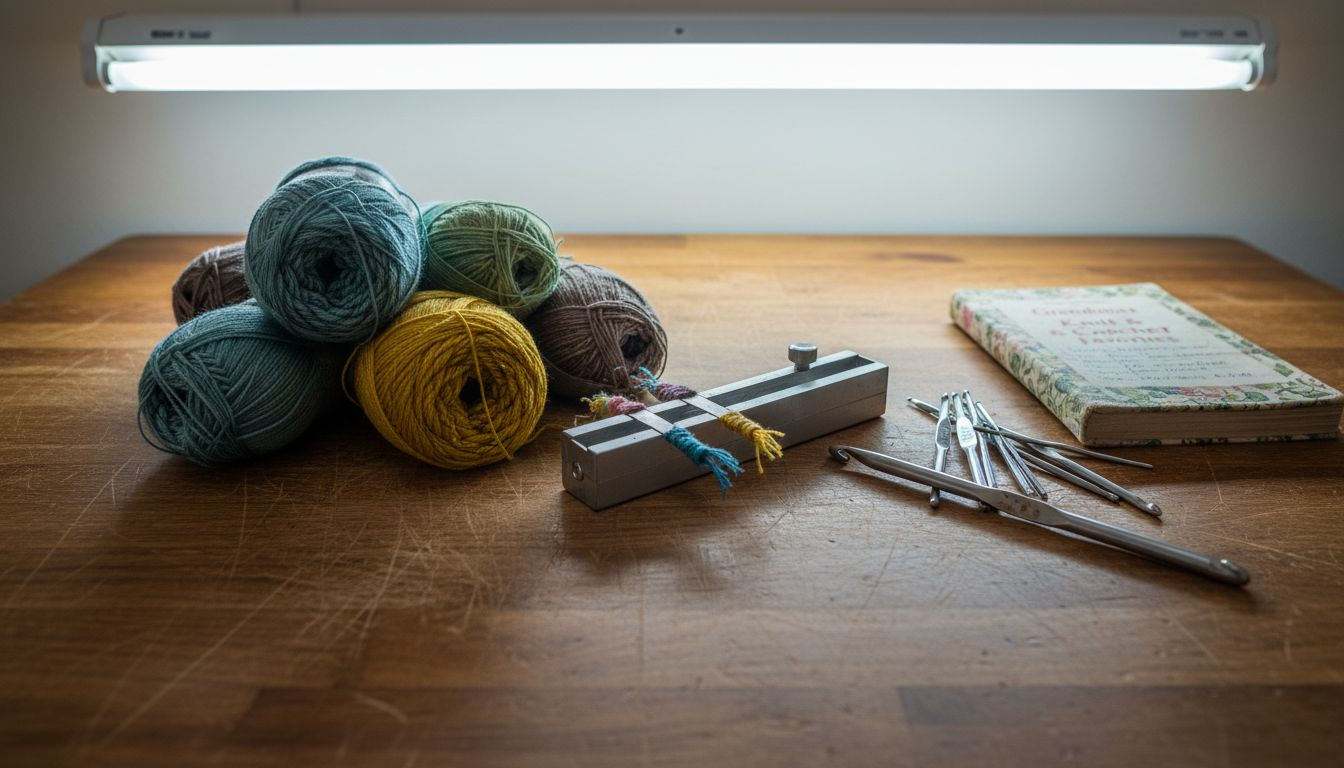
Synthetic fiber yarns, including polyester, nylon, and acrylic, represent the pinnacle of high-performance tensile materials. These engineered fibers consistently demonstrate superior strength, resistance to wear, and remarkable durability. Polyester yarns excel in maintaining structural integrity under repeated stress, while nylon offers exceptional stretch recovery and abrasion resistance. Acrylic yarns provide an affordable alternative with good tensile properties, making them popular for everyday crochet projects that demand reliability and consistent performance.
Pro tip: Select yarn fibers based on your project’s specific functional requirements, considering factors like expected wear, washing frequency, and desired aesthetic characteristics.
Here is a comparison of common natural and synthetic tensile yarns used in crochet projects:
| Yarn Type | Typical Tensile Strength | Elasticity Level | Common Applications |
|---|---|---|---|
| Cotton | Moderate | Low to moderate | Lightweight garments, accessories |
| Wool | Moderate | High | Sweaters, blankets, hats |
| Silk | Low | Moderate | Luxury items, delicate crafts |
| Polyester | High | Moderate | Durable outerwear, home decor |
| Nylon | Very high | Very high | Bags, sporty accessories |
| Acrylic | Moderate to high | Moderate | Everyday projects, baby items |
Key Properties Impacting Yarn Strength
Understanding the critical properties that determine yarn strength is essential for creating durable and reliable crochet projects. Tensile testing standards reveal several fundamental characteristics that directly influence a yarn’s performance and longevity. Breaking force, breaking tenacity, elongation, modulus, and toughness collectively define a yarn’s structural integrity and resistance to mechanical stress.
Breaking force represents the maximum load a yarn can withstand before failing, indicating its fundamental strength capacity. Breaking tenacity, which measures strength relative to the yarn’s linear density, provides a more nuanced assessment of performance across different yarn types and thicknesses. Elongation demonstrates a yarn’s ability to stretch without permanent deformation, with higher elongation percentages suggesting greater flexibility and resilience in crochet applications.
The modulus of elasticity plays a crucial role in determining a yarn’s stiffness and resistance to stretching. Yarns with higher modulus values maintain better structural integrity under repeated stress, making them ideal for projects requiring consistent shape and durability. Environmental factors such as temperature and moisture can significantly impact these mechanical properties, potentially altering a yarn’s strength characteristics during extended use or washing.
Pro tip: Always conduct a simple stretch test on a small yarn sample before beginning your project to assess its elasticity and potential performance under different stress conditions.
This summary highlights how key yarn strength properties affect your crochet project outcomes:
| Property | Impact on Project | Suitability for Crocheting |
|---|---|---|
| Breaking Force | Determines item lifespan | Crucial for heavy-use items |
| Elongation | Affects flexibility | Ideal for projects needing stretch |
| Modulus | Influences shape retention | Best for items requiring structure |
| Toughness | Enhances durability | Important for washable accessories |
How Tensile Yarn Performs in Real Craft Projects
Crochet projects demand yarn that can withstand repeated stress, stretching, and handling. Experimental fabric strength analyses reveal critical insights into how different yarn types perform under real-world crafting conditions. The practical performance of tensile yarn extends far beyond laboratory measurements, directly impacting the longevity and resilience of handmade items.
In everyday crochet applications, yarn tensile strength determines a project’s ability to maintain shape, resist stretching, and endure repeated use. Blankets, sweaters, and accessories experience continuous mechanical stress from wearing, washing, and handling. High-tensile yarns demonstrate superior resistance to breaking, maintaining their structural integrity even after multiple wash cycles and extended periods of wear. This means crafters can create items that not only look beautiful but also remain functional and visually appealing for significantly longer periods.
The interaction between yarn composition and crafting technique plays a crucial role in real-world performance. Tighter stitching methods and careful yarn selection can enhance a project’s durability, compensating for potential weaknesses in the yarn’s inherent tensile properties. Synthetic blends often outperform pure natural fibers in high-stress applications, offering enhanced stretch recovery and resistance to deformation. Wool and cotton yarns, while beautiful, may require more careful handling and maintenance to preserve their structural integrity over time.
Pro tip: Select yarns with a balanced combination of tensile strength and flexibility, and always create a small test swatch to evaluate its performance under simulated stress conditions before starting your main project.
Comparing Tensile Yarn With Other Options
Single-strand tensile testing methods reveal significant differences between various yarn types, providing crafters with critical insights into material performance. Traditional yarns vary dramatically in their mechanical properties, with synthetic and natural fibers presenting unique strengths and limitations in crochet applications.
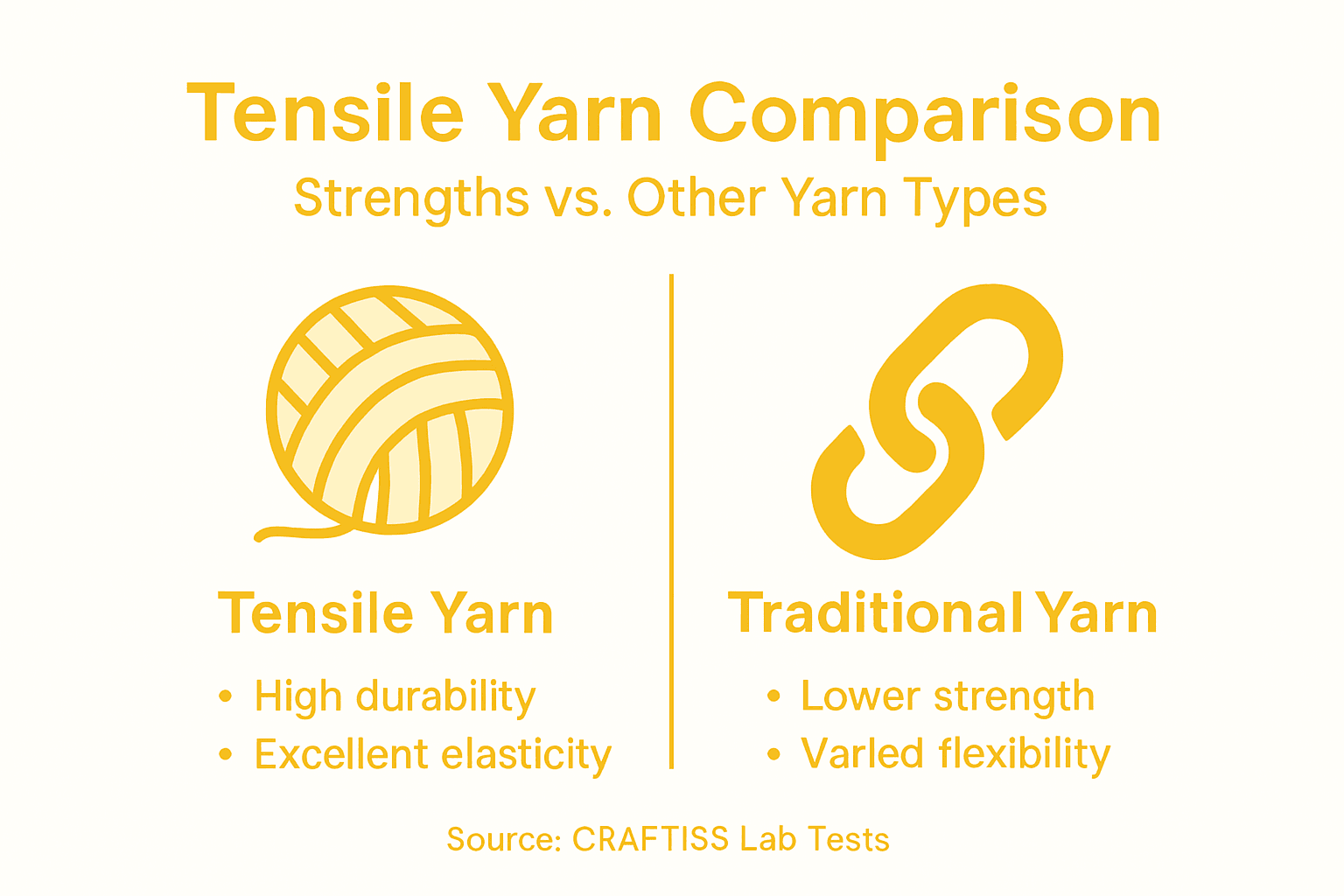
Synthetic yarns like polyester and nylon consistently outperform natural fibers in tensile strength and durability. Synthetic fibers demonstrate superior resistance to environmental stressors, maintaining structural integrity under repeated mechanical stress. Natural fibers such as cotton and wool, while softer and more breathable, typically exhibit lower tensile strength and greater susceptibility to stretching, moisture absorption, and degradation.
The comparative analysis of yarn types extends beyond simple strength measurements. Factors like elasticity, moisture resistance, and thermal stability play crucial roles in determining a yarn’s ultimate performance. Blended yarns offer a sophisticated compromise, combining the best characteristics of synthetic and natural fibers. For instance, a polyester-cotton blend might provide the strength of synthetic materials with the comfort and breathability of natural fibers, creating an optimal solution for diverse crochet projects.
Pro tip: When selecting yarn, prioritize projects that match the inherent characteristics of your chosen fiber, considering factors like intended use, washing frequency, and expected mechanical stress.
Common Mistakes When Choosing Tensile Yarn
Tensile testing standards reveal that many crafters unknowingly compromise their project’s durability by making critical errors in yarn selection. Understanding these common mistakes can dramatically improve the longevity and performance of crochet projects, preventing potential disappointment and wasted effort.
One fundamental error is neglecting to assess the yarn’s specific mechanical properties relative to project requirements. Tensile strength varies significantly across different fiber types, and selecting yarn without considering breaking force, elongation, and modulus can lead to premature project failure. Lightweight decorative items require different yarn characteristics compared to heavy-use garments or accessories subjected to repeated stretching and mechanical stress.
Environmental compatibility represents another crucial factor frequently overlooked by crafters. Yarns react differently to moisture, temperature fluctuations, and repeated washing. Synthetic fibers often demonstrate superior resistance to environmental stressors, while natural fibers may degrade more quickly under challenging conditions. Blended yarns can offer a strategic compromise, combining the best properties of different fiber types to create more robust and adaptable materials for diverse crafting applications.
Pro tip: Always perform a small tension test and wash sample before committing to a large project, evaluating how your chosen yarn responds to stress and cleaning conditions.
Elevate Your Crochet Projects with High-Strength Yarn
Crafting durable and resilient crochet pieces starts with selecting the right yarn that meets your project’s tensile strength needs. If you want to avoid common issues like premature stretching or breaking, exploring yarns with the right balance of breaking force, elongation, and modulus is essential. Our Yarn collection is thoughtfully curated to offer a variety of natural and synthetic fibers designed to enhance your crochet durability and performance.
.png)
Discover the difference that premium tensile yarn can make in your next project. Visit CRAFTISS today to find yarns that withstand stress and maintain their beauty after countless wears and washes. For convenient storage and protection of your valuable materials, check out our Yarn Bags. Take the first step to crafting stronger, longer-lasting treasures now.
Frequently Asked Questions
What is tensile yarn and why is it important for crochet projects?
Tensile yarn is a specialized textile material designed to withstand significant mechanical stress while maintaining its structural integrity. It’s crucial for creating durable crochet projects that require strength and longevity.
How do the properties of tensile yarn impact the durability of crochet items?
Properties like breaking tenacity, elongation, initial modulus, and breaking toughness determine how well the yarn can resist tension and deformation. Higher tensile strength results in more durable and long-lasting crochet items.
What types of fiber are used in tensile yarn, and how do they differ?
Tensile yarns can be made from natural fibers like cotton, wool, and silk, or synthetic fibers like polyester, nylon, and acrylic. Synthetic fibers typically offer superior strength and durability, while natural fibers provide breathability and unique textures.
How can I assess the tensile properties of yarn before starting a crochet project?
Always check the yarn label for tensile strength indicators and conduct simple stretch tests on small samples. Evaluating properties like breaking force, elongation, and modulus will help you select the right yarn for your project’s specific needs.
