


Yarn Twist: How It Shapes Crochet Results
Most American crocheters are surprised to learn that yarn twist can make or break their entire project outcome. A single twist direction affects everything from stitch definition to durability, and manufacturers calibrate twist levels carefully for distinct uses. By grasping the mechanics behind yarn twist, you unlock sharper stitch edges and more consistent textures in your crochet. This guide reveals how knowing the difference between S-twist and Z-twist directly impacts your results.
Table of Contents
- What Is Twist in Yarn and Why It Matters
- Common Yarn Twist Types and Directions
- How Yarn Twist Influences Stitch Definition
- Choosing the Right Twist for Your Project
- Common Mistakes and Tips for Crocheters
Key Takeaways
| Point | Details |
|---|---|
| Understanding Yarn Twist | Yarn twist is essential for transforming fibers into cohesive strands, affecting strength, elasticity, and texture. Choosing the right twist can enhance the durability and appearance of crochet projects. |
| Twist Types Impact Performance | S-twist and Z-twist yarns create different structural characteristics that influence stitch definition and overall fabric quality. Crocheters should select yarn based on twist direction for optimal results. |
| Twist Selection for Projects | Matching yarn twist to project type is crucial; higher twists are ideal for durability, while lower twists work better for softness. Always consider fiber content as it affects how twist influences texture. |
| Avoid Common Mistakes | Control tension and keep consistent gauge to enhance project quality. Always swatch samples to test yarn compatibility before committing to larger projects. |
What Is Twist in Yarn and Why It Matters
Yarn twist represents the fundamental mechanism that transforms loose fibers into a cohesive, strong strand ready for crocheting. When fibers are spun together, they are twisted in a specific direction—either S-twist or Z-twist—creating structural integrity that determines the yarn’s performance characteristics. Understanding yarn twist fundamentals reveals how this seemingly simple process dramatically impacts your crochet project’s final appearance and durability.
The twist in yarn serves multiple critical functions beyond mere fiber alignment. It determines the yarn’s strength, elasticity, and textural qualities. A higher twist creates a more compact yarn with increased durability, while a lower twist produces a softer, more relaxed strand. Manufacturers carefully calibrate twist levels depending on the intended use—whether for delicate shawls or sturdy winter sweaters. By measuring twists per inch (tpi), crafters can predict how a yarn will behave during crocheting and understand its potential performance characteristics.
Different fiber types respond uniquely to twisting processes. Wool, for instance, has natural crimp that allows more twist retention compared to smoother fibers like silk or bamboo. Fundamental spinning processes demonstrate how twist not only binds fibers but also influences the yarn’s final tactile and structural properties. Crocheters who understand these nuanced interactions can make more informed yarn selections, matching twist characteristics to their specific project requirements.
Pro tip: When selecting yarn, gently stretch a small section to assess its twist quality—a well-twisted yarn will maintain its structural integrity without unraveling or separating.
Common Yarn Twist Types and Directions
Yarn twist is fundamentally categorized into two primary directions: S-twist and Z-twist, named for their resemblance to the diagonal lines in these letters. Yarn twist classifications reveal intricate differences that significantly impact textile performance. S-twist yarns spiral to the left, while Z-twist yarns spiral to the right, creating unique structural characteristics that affect everything from yarn strength to stitch definition in crochet projects.
Here’s a quick comparison of S-twist and Z-twist yarns:
| Twist Type | Spiral Direction | Common Uses | Impact on Stitches |
|---|---|---|---|
| S-twist | Left diagonal | Traditional crochet, basic knitted fabrics | Reduces stitch splitting |
| Z-twist | Right diagonal | Embroidery, specialty yarns | May increase stitch definition |
The direction of twist plays a crucial role in textile crafting. Different fiber types and manufacturing techniques influence how fibers are spun, determining whether they create an S or Z twist. Twist direction dynamics become particularly important in specialized techniques like embroidery and crochet, where the wrong twist can cause threads to unravel or lose their structural integrity. Professional crafters learn to identify and select yarns based on their twist direction to ensure optimal project outcomes.
Understanding twist types goes beyond simple directional classification. The amount of twist—measured in twists per inch (tpi)—interacts with the twist direction to create yarns with distinct performance characteristics. Tightly twisted yarns tend to be more durable and have sharper stitch definition, while loosely twisted yarns offer softer texture and more drape. Wool, cotton, and synthetic fibers each respond differently to twisting processes, making yarn selection a nuanced art that requires careful consideration of project requirements.
Pro tip: When working with multicolored or variegated yarns, pay close attention to twist direction to maintain consistent stitch tension and prevent unexpected yarn behavior.
How Yarn Twist Influences Stitch Definition
The twist of yarn is a critical factor that dramatically transforms the visual and tactile qualities of crochet projects. Yarn characteristics fundamentally shape stitch appearance, with twist playing a pivotal role in determining how stitches ultimately look and feel. Tightly twisted yarns create crisp, well-defined stitches with sharp edges and clear geometric patterns, while loosely twisted yarns produce softer, more blended textures that blur stitch boundaries and create a more fluid, organic appearance.
Different twist levels produce remarkably distinct textural outcomes in crochet work. Highly twisted yarns tend to have excellent stitch definition, making intricate stitch patterns like cables, bobbles, and textured designs pop with remarkable clarity. These yarns maintain structural integrity, allowing each individual stitch to stand out with precision. Conversely, softly twisted yarns generate a more muted, gentle effect, where stitches seem to meld together, creating a softer, more relaxed fabric with less pronounced individual stitch characteristics.
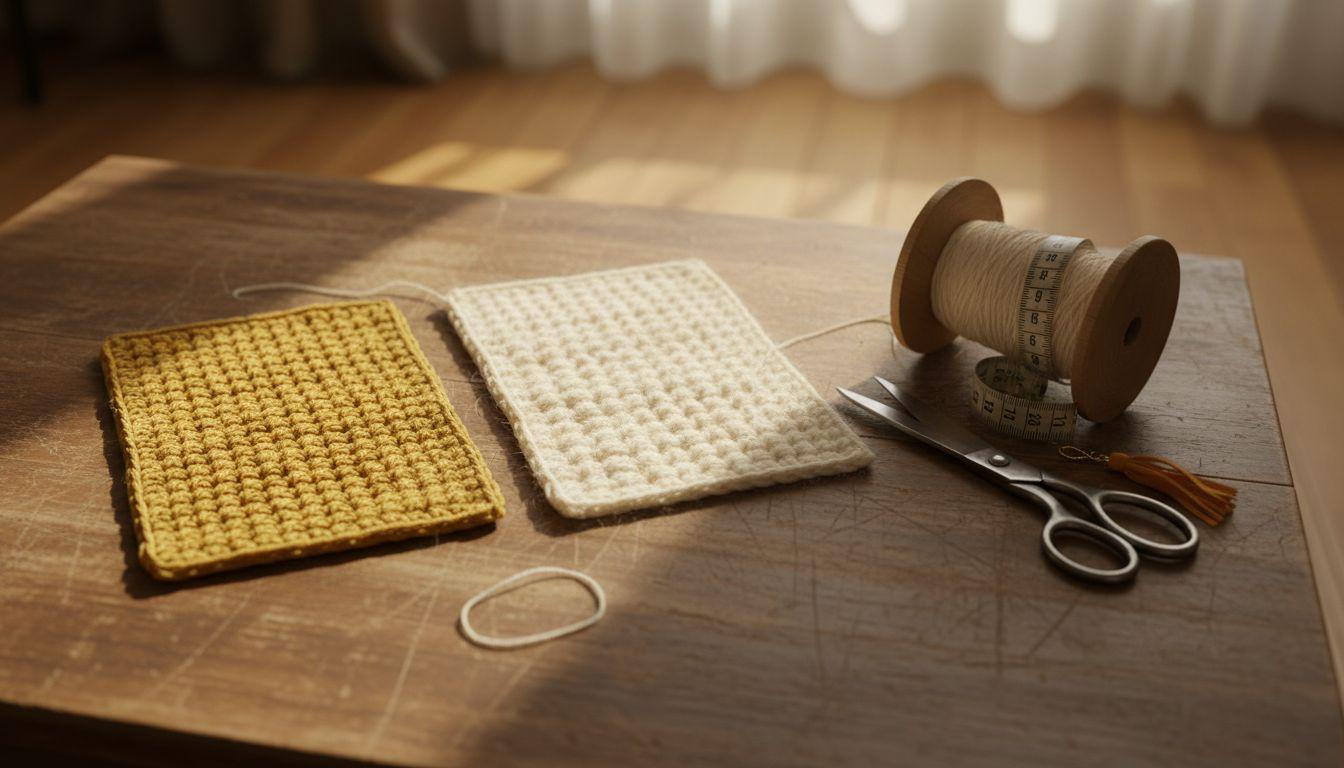
The interaction between yarn twist and fiber content adds another layer of complexity to stitch definition. Wool, with its natural crimp and elasticity, responds differently to twisting compared to smoother fibers like silk or cotton. Some fibers inherently create more pronounced stitch definition, while others require specific twist techniques to achieve desired textural effects. Professional crocheters carefully select yarn not just for color or weight, but for its twist properties that will best showcase their intended design and achieve the precise visual and tactile result they seek.
Pro tip: When selecting yarn for a project, always swatch a small sample to observe how the yarn’s twist impacts stitch definition and overall fabric appearance.
Choosing the Right Twist for Your Project
Yarn twist specifications play a pivotal role in determining the success of any crochet project. Selecting the right twist involves carefully balancing multiple factors, including project type, desired fabric texture, and intended functionality. Different twist levels dramatically alter yarn performance, making it crucial for crafters to understand how twist impacts their final product.
The twist density directly influences the yarn’s structural characteristics. Fine, delicate projects like lightweight shawls or baby blankets typically benefit from softer, lower-twist yarns that create a gentle, flowing fabric. In contrast, projects requiring durability—such as heavy-use items like rugs, bags, or outdoor accessories—demand higher-twist yarns that provide increased strength and resistance to wear. Professional crafters learn to match twist characteristics precisely to their project’s unique requirements.
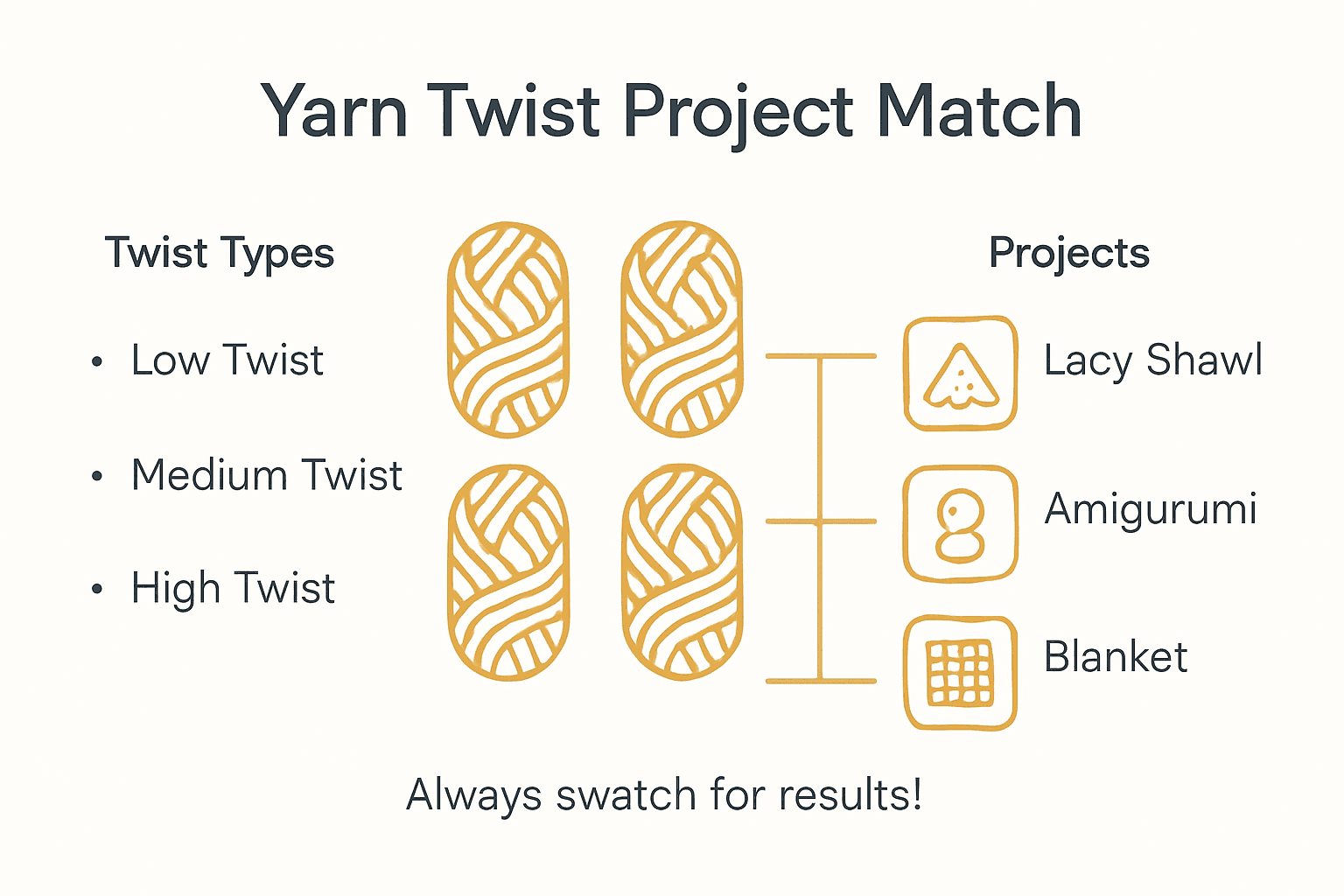
Summary of how twist density affects typical crochet projects:
| Project Type | Recommended Twist | Resulting Fabric Qualities |
|---|---|---|
| Lightweight shawl | Low twist | Soft, drapey, gentle texture |
| Durable bag or rug | High twist | Strong, structured, wear-resistant |
| Textured pillowcase | Medium twist | Moderate definition, comfortable |
Fiber content adds another critical dimension to twist selection. Wool, cotton, and synthetic fibers each respond differently to twisting processes, creating unique textural outcomes. Wool’s natural elasticity allows for more twist variation, while cotton tends to require specific twist techniques to maintain stitch definition. Synthetic fibers often provide more consistent twist characteristics, making them attractive for projects requiring predictable performance. By understanding these nuanced interactions between fiber type and twist, crocheters can make informed choices that elevate their crafting results.
Pro tip: Always swatch with multiple twist variations to understand how different yarn characteristics will impact your specific project’s final appearance and functionality.
Common Mistakes and Tips for Crocheters
Comprehensive crochet techniques reveal that many crafters struggle with consistent challenges that can significantly impact project quality. Tension control represents the most critical skill, with beginners often battling uneven stitches caused by fluctuating hand pressure and inexperienced yarn management. Maintaining a steady rhythm and practicing muscle memory can transform inconsistent work into professional-looking creations.
Beyond tension, several fundamental mistakes frequently derail crochet projects. Neglecting gauge swatches leads to unexpected sizing issues, while improper hook and yarn pairings can create structural weaknesses. Experienced crafters recommend creating small test samples before committing to large projects, allowing for adjustments in technique and material selection. Understanding how different yarn twists and fiber compositions interact with hook sizes becomes crucial for achieving desired texture and structural integrity.
Technical precision matters as much as creative passion in crochet. Rushing through complex stitch patterns, failing to count stitches accurately, and overlooking end-weaving techniques can compromise the entire project. Successful crocheters develop patience, embrace careful observation, and view each stitch as an opportunity for refinement. Learning to read patterns carefully, practicing new techniques incrementally, and maintaining focus during intricate sections separates amateur efforts from polished, professional-looking work.
Pro tip: Invest in a row counter or tally method to track your stitch count precisely, preventing unintentional increases or decreases that can distort your project’s shape.
Master Yarn Twist for Perfect Crochet Results
Understanding yarn twist is essential for achieving the strength, stitch definition, and texture you want in your crochet projects. Whether you aim for crisp patterns with a tightly twisted yarn or a soft drape with a gentle twist, selecting the right yarn can be challenging. Your projects deserve yarn that matches your twist needs precisely to avoid common pitfalls like unraveling or poor stitch clarity.
Explore our premium selection of Yarn designed with varied twist levels to suit every project type and fiber preference.
.png)
Don’t wait to elevate your crafting experience. Visit Craftiss now to find yarns tailored for perfect twist and texture, plus accessories like Yarn Bags to organize your materials professionally. Start creating with confidence and make your crochet work stand out today.
Frequently Asked Questions
What is yarn twist, and why is it important?
Yarn twist is the process of spinning fibers together to create a cohesive strand, influencing the yarn’s strength, elasticity, and texture. Understanding yarn twist is crucial as it dramatically affects the final appearance and durability of your crochet projects.
How do S-twist and Z-twist yarns differ?
S-twist yarn spirals to the left, while Z-twist yarn spirals to the right. This difference impacts their structural characteristics, strength, and suitability for various applications in crochet and embroidery.
How does yarn twist influence stitch definition in crochet?
Yarn twist affects how distinct or blurred the stitches appear in your finished piece. Tightly twisted yarns create crisp, well-defined stitches, while loosely twisted yarns contribute to softer, more fluid textures without pronounced stitch boundaries.
How do I choose the right twist for my crochet project?
Choosing the right twist involves considering the type of project and desired texture. Softer, lower-twist yarns are suitable for lightweight shawls, while higher-twist yarns work better for durable items like bags or rugs. Swatching with different twists can help determine the best option.
