


Yarn Bloom: Elevating Crochet Texture and Softness
Over sixty percent of American crochet crafters notice surprising changes in texture after finishing a project. This phenomenon, known as yarn bloom, transforms stiff stitches into a softer and more luxurious fabric, affecting both look and feel. Exploring how yarn bloom works helps intermediate crafters in the United States choose fibers confidently and apply techniques that optimize their finished pieces for comfort, drape, and appearance.
Table of Contents
- What Is Yarn Bloom In Crochet
- How Yarn Blooms: Causes And Results
- Types Of Yarn Prone To Blooming
- Techniques To Enhance Or Prevent Bloom
- Common Pitfalls And Expert Recommendations
Key Takeaways
| Point | Details |
|---|---|
| Understanding Yarn Bloom | Yarn bloom refers to the relaxation and softening of yarn fibers after initial crocheting, enhancing the texture of the finished project. |
| Fiber Type Matters | Different yarn types exhibit varying degrees of bloom, with natural fibers like wool showing the most significant transformations. |
| Techniques to Control Bloom | Gentle washing, wet blocking, and steam blocking can enhance bloom, while tighter tension and synthetic blends can minimize it. |
| Testing and Documentation | Creating test swatches and keeping detailed notes on yarn behavior helps predict and control blooming effects in projects. |
What Is Yarn Bloom in Crochet
Yarn bloom is a fascinating textile transformation process that occurs in crochet projects, where yarn fibers naturally expand and soften after initial creation. Textile experts describe this phenomenon as a complex interaction between fiber structure, tension, and handling that dramatically enhances a project’s texture and appearance.
At its core, yarn bloom represents the way yarn fibers relax and separate after initial work, creating a more fluid and soft fabric. When you complete a crochet project, the initial stitches might feel somewhat stiff or structured. However, through gentle handling, washing, or blocking, the yarn undergoes a remarkable transformation. The fibers gradually loosen, creating a more pliable and refined texture that significantly improves the overall feel of the textile.
Understanding yarn bloom is crucial for selecting appropriate yarn types and anticipating how your finished project will look and feel. Different fibers bloom differently – wool tends to expand more dramatically, while synthetic fibers might have minimal changes. Factors like yarn weight, fiber composition, and initial stitch tension all play critical roles in determining how much bloom a project will experience. Crochet techniques directly influence this textile development, making it essential for crafters to understand the nuanced relationship between their work and yarn behavior.
Pro tip: To maximize yarn bloom, allow your finished crochet project to rest and settle after initial creation, and always follow recommended washing instructions for your specific yarn type.
Recommended supplies for your project


How Yarn Blooms: Causes and Results
Yarn bloom is a complex process driven by multiple scientific interactions between fiber structure, moisture, and thermal properties. Yarn conditioning fundamentally transforms the textile’s physical characteristics through precise mechanisms that involve fiber relaxation and structural changes.
The primary causes of yarn bloom stem from three critical factors: moisture absorption, heat exposure, and fiber tension release. When yarn is initially crocheted, the fibers are tightly compressed and held under significant tension. As the project undergoes washing, blocking, or even natural handling, moisture acts as a plasticizer that allows fibers to expand and separate. Natural fibers like wool respond most dramatically to this process, with their protein-based structures enabling more significant transformation compared to synthetic alternatives.
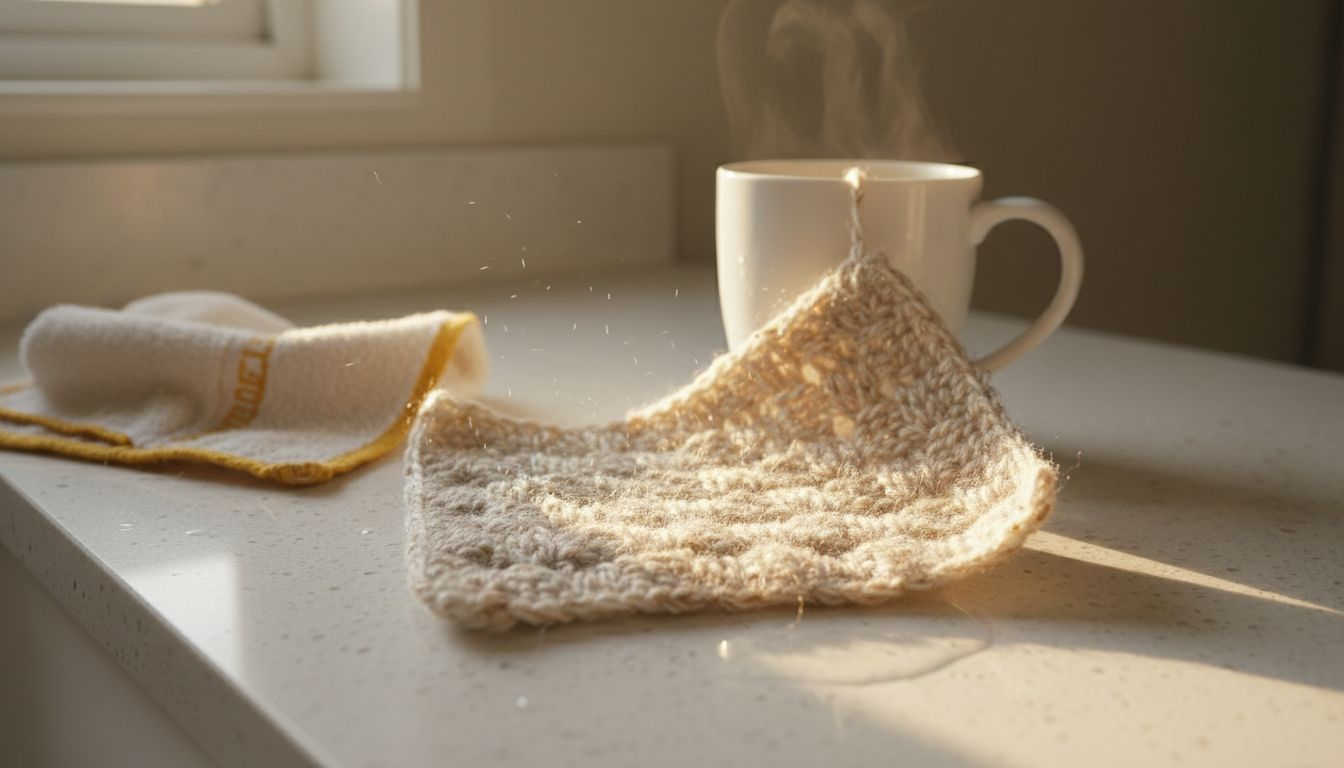
Different fiber types experience bloom uniquely, creating varied results across textile projects. Heat setting influences yarn strength and moisture absorption, which directly impacts how dramatically a yarn will bloom. Wool yarns typically exhibit the most pronounced bloom, expanding and softening substantially, while synthetic fibers like acrylic might show minimal changes. Factors such as initial stitch tension, yarn weight, and fiber composition all contribute to the specific bloom characteristics of a finished project.
Pro tip: Experiment with swatching different yarn types and blocking techniques to understand how specific fibers bloom and adjust your crochet technique accordingly.
Types of Yarn Prone to Blooming
Natural fiber yarns demonstrate the most remarkable blooming characteristics, with wool standing out as the premier candidate for dramatic textile transformation. Wool’s unique protein-based structure and inherent crimp allow fibers to expand, soften, and create incredible textural changes that make it the gold standard for bloom enthusiasts.
The spectrum of yarn bloom potential varies dramatically across different fiber types. Natural fibers like cotton, silk, and flax exhibit significant moisture absorption capabilities, enabling them to relax and expand more readily than their synthetic counterparts. Wool remains the champion of bloom, with its complex protein structure allowing unprecedented fiber movement and softening. Blended yarns present intriguing intermediate possibilities, with their bloom characteristics directly proportional to their natural fiber content.
Novelty yarns with irregular fiber distributions) offer unique blooming experiences for crafters. Slub yarns, characterized by their thickened or uneven sections, can produce particularly interesting textural results. Yarns constructed with short-staple fibers or featuring looser twists tend to bloom more dramatically. Textured silk variants like dupioni and shantung provide especially compelling examples of how fiber structure influences a yarn’s potential for dramatic transformation.
Pro tip: Always create a small swatch and block it before starting your main project to understand exactly how your chosen yarn will bloom and behave.
Here’s a comparison of how different yarn fibers respond to blooming:
| Yarn Type | Bloom Potential | Texture Change After Blocking | Durability Post-Bloom |
|---|---|---|---|
| Wool | Very high | Softens and expands markedly | Remains resilient |
| Cotton | Moderate | Becomes smoother and more supple | Loses some firmness |
| Silk | Moderate-high | Gains sheen and drape | Stays delicate |
| Acrylic | Low | Minimal softening or expansion | Shape remains stable |
| Linen/Flax | Moderate | Gets softer but keeps structure | Strong, retains shape |
| Wool Blends | Variable | Depends on natural/synthetic ratio | Varies by composition |
| Novelty Slub | High (irregular) | Unique thick-thin texture emerges | Can be unpredictable |
Techniques to Enhance or Prevent Bloom
Yarn conditioning techniques offer crocheters precise methods to control their project’s texture and softness. Strategic approaches can either amplify or minimize the natural blooming process, giving crafters unprecedented control over their final textile’s appearance and feel.
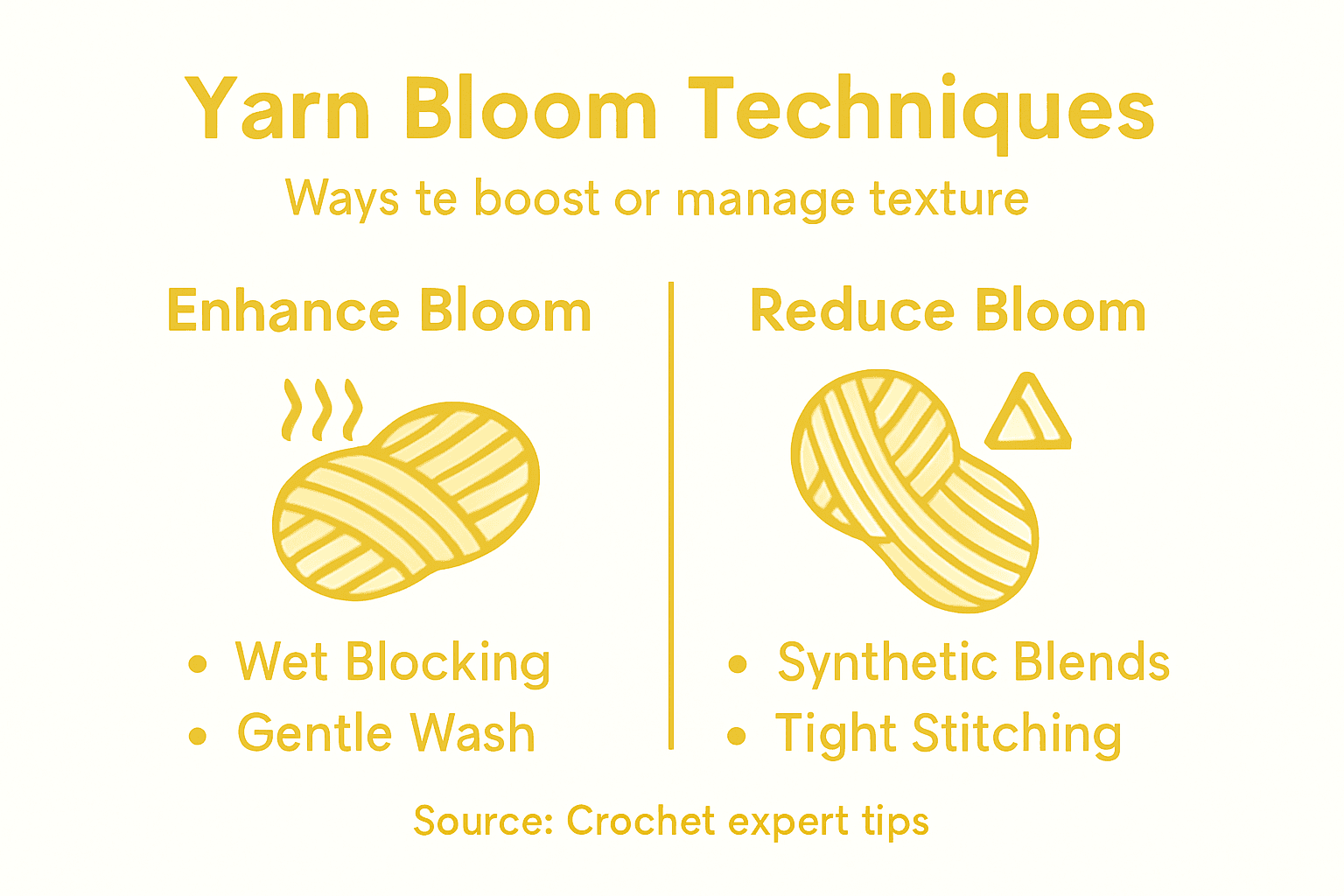
To enhance bloom, crafters can employ multiple targeted techniques. Gentle washing in warm water helps natural fibers relax and expand, creating a softer, more fluid fabric. Blocking becomes a critical strategy, where wet projects are stretched and shaped to encourage maximum fiber movement. Steam blocking provides additional controlled heat that accelerates fiber relaxation, particularly effective for wool and natural fiber projects. Humidity exposure can also dramatically influence bloom, with moist environments promoting fiber expansion.
Conversely, preventing excessive bloom requires equally deliberate techniques. Using synthetic fiber blends reduces natural fiber’s tendency to expand dramatically. Maintaining tighter spinning during yarn production and controlling crocheting tension can minimize unintended textural changes. Selecting yarns with higher twist rates or incorporating synthetic fibers creates more stable projects that resist significant bloom. Some crafters even choose specialized yarns engineered to maintain consistent dimensions, particularly for projects requiring precise sizing and shape retention.
Pro tip: Create multiple small swatches with different blocking techniques to understand exactly how your chosen yarn will respond before committing to your final project.
To help you manage yarn bloom, here’s a quick summary of techniques to enhance or control the effect:
| Technique | Effect on Bloom | Best Used For | Notes |
|---|---|---|---|
| Washing | Increases bloom | Wool, natural fibers | Use gentle, warm water |
| Wet Blocking | Maximizes bloom | Scarves, shawls | Offers precise shaping |
| Steam Blocking | Quick bloom control | Wool, blends | Avoid too much heat |
| Tight Tension | Reduces bloom | Synthetic projects | Maintains firm structure |
| High-Twist Yarn | Minimizes bloom | Precise garments | Limits unintended expansion |
Common Pitfalls and Expert Recommendations
Yarn conditioning techniques reveal numerous challenges that can dramatically impact a crafter’s final project. One of the most significant pitfalls involves underestimating how dramatically yarn will transform during blocking, which can lead to unexpected size changes and alterations in stitch definition.
Experienced crocheters consistently recommend creating multiple test swatches to understand precise yarn behavior before commencing a full project. These experimental samples help predict how different fibers will respond to moisture, heat, and stretching. Critical factors like initial yarn tension, hook size, and blocking technique can produce wildly different results. Wool yarns, for instance, might shrink or expand up to 20% during blocking, while synthetic blends remain comparatively stable.
Yarn conditioning processes highlight the importance of consistent moisture exposure and careful handling. Uneven blocking can create asymmetrical fabric distortions, while aggressive stretching might permanently alter yarn structure. Professional crafters suggest developing a systematic approach to testing and blocking, which involves measuring swatches before and after treatment, documenting technique variations, and maintaining meticulous records of yarn performance.
Pro tip: Keep a detailed notebook documenting each yarn’s unique bloom characteristics, including fiber content, initial and post-blocking measurements, and specific conditioning techniques used.
Discover the Secret to Perfect Yarn Bloom with Craftiss
Struggling to achieve the ideal softness and texture in your crochet projects because your yarn does not bloom as expected Yarn bloom plays a vital role in how your crochet creations feel and look after finishing Understanding and controlling this can transform your work from good to exceptional At Craftiss we offer a carefully curated selection of premium yarns designed to maximize blooming potential Whether you prefer natural fibers like wool that expand beautifully or innovative blends that maintain structure we have options to suit your unique style and technique
.png)
Explore our exclusive Yarn collection today and find the perfect fiber to elevate your crochet projects Do not miss out on enhancing your craftsmanship with yarns that bloom naturally and gently Plus check out our handy Yarn Bags to keep your materials organized as you perfect your skills Start your journey with Craftiss now for projects that feel as amazing as they look
Frequently Asked Questions
What is yarn bloom in crochet?
Yarn bloom is the process where yarn fibers naturally expand and soften after initial creation, enhancing the project’s texture and appearance.
How does the choice of yarn affect bloom?
Different fibers react differently to bloom; natural fibers like wool tend to expand more dramatically, while synthetic fibers like acrylic show minimal changes in texture and softness.
What techniques can enhance yarn bloom in crochet projects?
Techniques such as gentle washing, wet blocking, and steam blocking are effective in encouraging yarn fibers to relax and bloom, leading to a softer and more fluid fabric.
How can I prevent excessive yarn bloom in my crochet projects?
To minimize excessive bloom, maintain tighter tension during crocheting, choose synthetic blends or high-twist yarns, and perform careful blocking techniques to retain the project’s shape and structure.
