


Stitch Tension in Crochet: Achieving Professional Results
Most American crochet experts know the frustration when a project turns out uneven despite their best efforts. More than half of seasoned American crafters struggle with subtle tension issues that impact the polish of their work. Perfecting stitch tension is the key to transforming handmade pieces from homemade to professional-quality. This guide reveals how mastering these technical details produces flawless finishes and consistent results for the serious American crochet artist.
Table of Contents
- Defining Stitch Tension In Crochet Projects
- Types And Variations Of Crochet Tension
- How Stitch Tension Impacts Finished Pieces
- Measuring And Adjusting Your Stitch Tension
- Common Mistakes And Troubleshooting Tension Problems
Key Takeaways
| Point | Details |
|---|---|
| Understanding Stitch Tension | Stitch tension is crucial for achieving uniformity and quality in crochet projects, influencing fabric drape and structural integrity. |
| Types of Tension | Recognize three primary tension types: loose, standard, and tight, each affecting fabric characteristics significantly. |
| Measuring Tension | Accurate gauge swatches are essential for mastering stitch tension, ensuring your project meets intended specifications. |
| Addressing Tension Problems | Common tension mistakes arise from inconsistent yarn handling, and adjusting hook size can remedy issues effectively. |
Defining Stitch Tension in Crochet Projects
Stitch tension represents the fundamental consistency and uniformity of yarn placement during crocheting, which profoundly impacts the overall quality and appearance of handmade projects. Crochet projects fundamentally depend on tension as a critical technical skill that determines stitch size, fabric drape, and structural integrity.
At its core, stitch tension involves how tightly or loosely a crocheter holds the yarn while creating individual stitches. Professional crocheters understand that consistent tension requires maintaining steady hand movements, yarn grip, and hook angle. Variations in tension can result in uneven stitches, misshapen fabric, and projects that look amateur rather than polished.
The physical properties of crocheted fabric are directly influenced by tension techniques. Different tension levels create varied textures and shapes in the finished piece, making tension control a nuanced artistic skill. Advanced crafters learn to modulate their tension based on yarn weight, hook size, and specific project requirements, transforming basic stitching into a precise craft.
Pro tip: Practice consistent tension by creating small gauge swatches and measuring your stitches before starting larger projects to ensure uniform results.
Recommended supplies for your project


Types and Variations of Crochet Tension
Crochet tension encompasses a spectrum of techniques that dramatically influence the final appearance and structure of handmade projects. Yarn tension varies among individual crafters, creating distinct styles and fabric characteristics that range from delicate and airy to dense and structured.
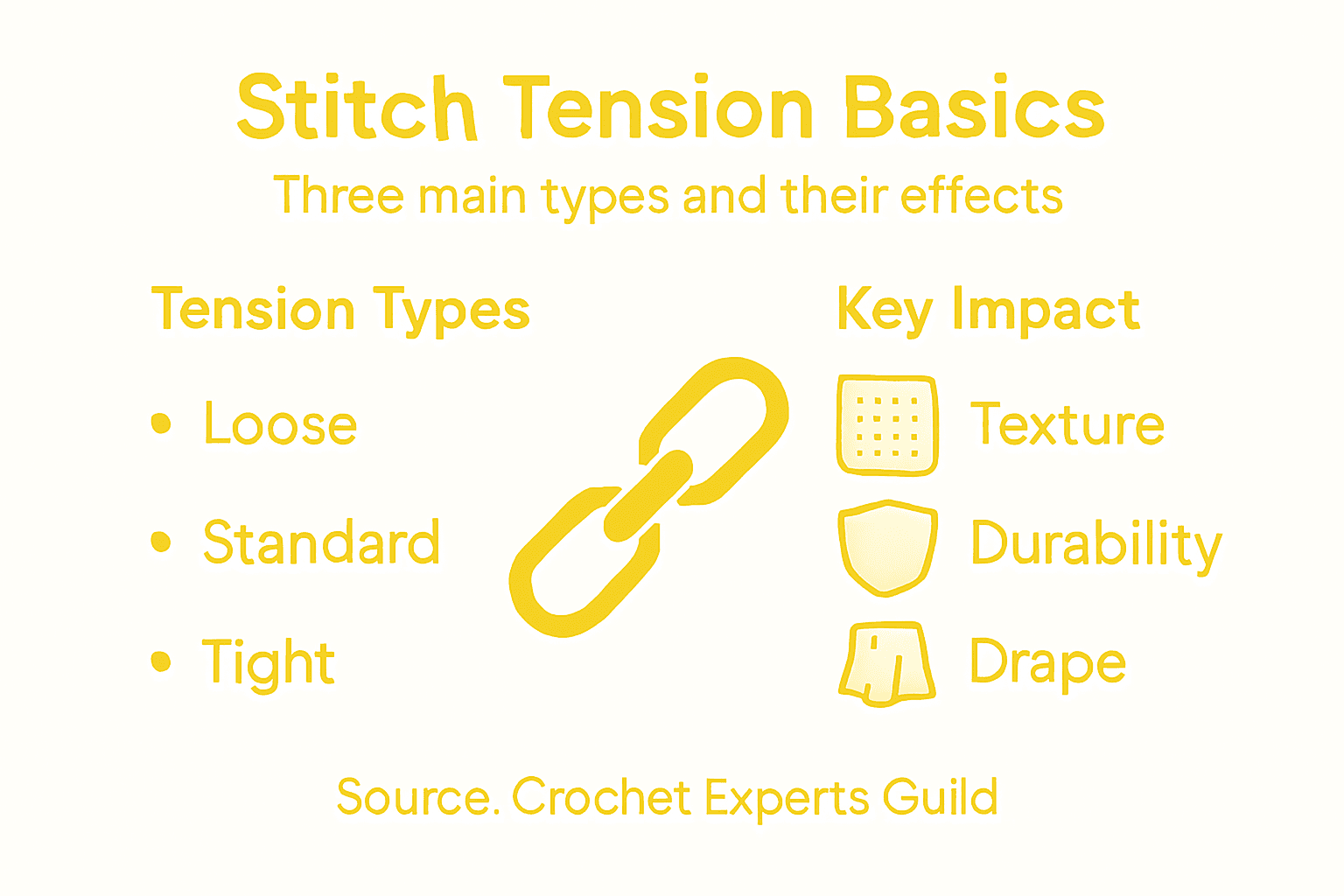
Three primary tension variations define most crochet work: loose tension, standard tension, and tight tension. Loose tension creates lightweight, breathable fabrics with significant drape and flexibility, ideal for shawls and summer garments. Standard tension provides consistent, uniform stitches typical of most patterns, while tight tension produces firm, structured fabrics perfect for items requiring stability like bags, baskets, and household accessories.
The nuanced art of tension control involves understanding how multiple factors interact. Crochet tension directly influences fabric characteristics, including stitch size, overall project dimensions, and textural qualities. Experienced crafters learn to adjust their technique by modifying hook size, yarn selection, and personal hand movements to achieve desired results. Factors like yarn weight, fiber content, and individual crocheting style all contribute to tension variations that make each handmade piece unique.
Pro tip: Create tension reference swatches using different hook sizes and grips to develop muscle memory and understand how slight adjustments impact your crochet fabric.
Here’s a quick reference comparing the effects of different crochet stitch tension levels:
| Tension Type | Typical Result | Best For | Drawback |
|---|---|---|---|
| Loose Tension | Lightweight, drapey fabric | Shawls, summer clothing | May lack stability and structure |
| Standard Tension | Consistent, uniform fabric | Most patterns, garments | Can be less expressive artistically |
| Tight Tension | Dense, firm texture | Bags, baskets, accessories | May feel rigid or inflexible |
How Stitch Tension Impacts Finished Pieces
Textile performance depends critically on precise stitch tension, transforming a simple collection of yarn loops into a structured, intentional piece of craftsmanship. Every stitch’s tension influences the project’s overall structural integrity, aesthetic appeal, and functional characteristics, making it far more than a technical detail.
The impact of stitch tension manifests through multiple dimensions of a finished crochet piece. Tight tension creates dense, rigid fabrics with minimal stretch, ideal for structured items like bags, coasters, and decorative elements that require stability. Conversely, loose tension produces soft, draping fabrics with significant flexibility, perfect for garments, shawls, and accessories that demand fluidity and movement. Standard tension delivers consistent, predictable results that match most pattern specifications and create balanced, uniform textiles.

Professional crocheters understand that stitch tension influences textile texture and visual characteristics beyond mere structural considerations. Intentional tension variations can create intricate visual effects, emphasize specific design elements, and communicate artistic intent through subtle fabric manipulations. Factors like yarn composition, hook size, and personal crocheting technique all contribute to these nuanced tension-driven transformations that distinguish handmade pieces.
Pro tip: Photograph your tension swatches under consistent lighting to objectively assess how different tension techniques affect your fabric’s appearance and structure.
Measuring and Adjusting Your Stitch Tension
Creating accurate gauge swatches helps master stitch tension by providing a precise method for evaluating yarn and hook interactions. The process involves systematically measuring stitch and row dimensions to ensure your finished project matches intended specifications, transforming tension from a mysterious skill into a controllable technique.
The fundamental process of tension measurement begins with crafting a gauge swatch, typically a 4x4 inch square that represents your unique crocheting style. By carefully counting stitches and rows within this standard area, crocheters can determine whether their tension matches pattern requirements. If the swatch differs from specifications, strategic adjustments become necessary. Tight tension requires switching to a larger hook to increase stitch size, while loose tension demands a smaller hook to create more compact stitches.
Consistent tension techniques require deliberate practice and mindful yarn handling. Professional crocheters develop muscle memory by maintaining consistent hand positioning, yarn wrap angle, and hook insertion depth. Advanced practitioners learn to recognize subtle tension variations through touch, visually assessing fabric drape, and understanding how different yarns and fibers respond to tension adjustments. This nuanced approach transforms tension control from a technical challenge into an intuitive craft skill.
Pro tip: Label your gauge swatches with hook size, yarn type, and date to track your tension development and create a personal reference library for future projects.
Common Mistakes and Troubleshooting Tension Problems
Tension problems undermine crochet project quality by creating uneven fabric, distorted shapes, and inconsistent stitch sizes. Recognizing and addressing these issues requires a systematic approach that combines technical understanding with patient practice.
The most frequent tension mistakes emerge from three primary sources: inconsistent yarn holding, inappropriate hook selection, and irregular hand movements. Tight tension typically produces rigid, inflexible fabric with minimal drape, often resulting from gripping the yarn too firmly or using hooks smaller than recommended. Loose tension creates saggy, unstable stitches that lack structural integrity, frequently caused by relaxed hand positioning or using hooks larger than pattern specifications. These variations can dramatically alter a project’s intended dimensions and aesthetic appeal.
Crochet tension errors significantly impact project durability and professional appearance. Advanced crafters develop diagnostic skills to identify tension problems by examining fabric characteristics such as stitch uniformity, edge straightness, and overall fabric behavior. Common troubleshooting techniques include creating multiple gauge swatches, experimenting with different hook sizes, and practicing consistent hand positioning. Experienced crocheters understand that tension control is a learned skill requiring continuous refinement and mindful attention to subtle yarn and hook interactions.
Pro tip: Create a tension journal documenting your gauge swatches, noting hook sizes, yarn types, and observed fabric characteristics to track your progression and develop muscle memory.
To help prevent common stitch tension errors, review these troubleshooting tips:
| Issue | Warning Sign | Adjustment Strategy |
|---|---|---|
| Inconsistent tension | Uneven stitches, wavy edges | Practice hand positioning |
| Fabric too rigid | Minimal drape, hard texture | Use a larger hook |
| Fabric too loose | Saggy, misshapen stitches | Switch to a smaller hook |
Master Your Crochet Stitch Tension with Expert Tools and Supplies
Struggling to achieve consistent stitch tension can turn your crochet projects into a frustrating experience. Whether you are aiming to perfect your gauge swatches or want to avoid uneven stitches and misshapen fabric, understanding and controlling tension is essential for professional results. At Craftiss, we know how critical factors like yarn quality, hook size, and materials are to maintaining the perfect balance between loose and tight tension.
.png)
Discover a curated selection of premium yarns and crochet hooks designed to help you effortlessly adjust your stitch tension. Start creating balanced, beautiful, and durable projects today by exploring Craftiss. Take control of your craft and bring your vision to life now by visiting our landing page, exploring helpful guides on stitch techniques, and browsing high-quality supplies to keep your tension steady and consistent.
Frequently Asked Questions
What is stitch tension in crochet?
Stitch tension refers to the consistency and uniformity of yarn placement while crocheting. It affects stitch size, fabric drape, and the overall quality of the finished project.
How can I measure my crochet stitch tension?
You can measure your crochet stitch tension by creating a gauge swatch, typically a 4x4 inch square, and counting the number of stitches and rows within that area to see if it matches pattern specifications.
What are the different types of crochet tension?
The main types of crochet tension are loose tension, standard tension, and tight tension. Each affects the final fabric differently, from lightweight and drapey to dense and rigid, influencing the suitability for various projects.
How can I fix tension problems in my crochet projects?
You can fix tension problems by adjusting your hook size, practicing consistent hand movements, and creating multiple gauge swatches to identify the best tension for your specific yarn and project.
