


Crochet Stitches Step by Step for Beginners
Most American beginners are surprised to learn that choosing the right yarn and hook can be the difference between frustration and crochet confidence. Over 60 percent of new crafters quit early because they struggle with the basic materials. For those starting their crochet journey, understanding how to select tools and follow easy stitches is key to building lasting skills and creating beautiful handmade items. This detailed guide breaks the process into simple, practical steps so every American can stitch with success.
Table of Contents
- Step 1: Choose Your Yarn And Hook
- Step 2: Create A Slip Knot And Foundation Chain
- Step 3: Learn Basic Crochet Stitches
- Step 4: Practice Combining Stitches For Texture
- Step 5: Check And Adjust Your Results
Quick Summary
| Essential Points | Detailed Explanation |
|---|---|
| 1. Choose Medium Worsted Weight Yarn | Opt for solid color acrylic yarn labeled weight 4 for clear stitch definition and ease of use as a beginner. |
| 2. Start with Basic Crochet Stitches | Learn the foundational stitches like chain, single, half double, and double crochet, as they are the building blocks for your projects. |
| 3. Practice Consistent Tension | Maintain even tension when creating stitches to ensure uniformity in your crochet work, which is crucial for a polished finish. |
| 4. Experiment with Stitch Combinations | Combine different stitch types to add texture and dimension to your projects, creating unique patterns and enhancing visual interest. |
| 5. Regularly Check Your Work | Use a gauge swatch to assess stitch consistency and adjust your hook size if necessary to achieve correct tension and even stitches. |
Step 1: Choose your yarn and hook
Your first step in learning crochet is selecting the right yarn and hook combination, which can make or break your crafting experience. Understanding how to match these two key elements will set you up for success as a beginner crafter.
For new crocheters, the best approach is to start with a medium worsted weight yarn in a solid color acrylic that provides clear stitch definition. Look for yarn labeled as weight 4, which is universally recommended for beginners because it is easy to work with and shows your stitches clearly. When selecting your hook, choose a medium size like H (5 mm) that pairs well with this yarn weight. Metal or bamboo hooks work well for beginners, offering good grip and smooth movement.
As you select your materials, remember that consistent tension starts with comfortable tools. Choose a hook that feels natural in your hand and yarn that does not split easily. Avoid complicated textured or fuzzy yarns until you have mastered basic techniques.
Here’s a comparison of common crochet hook materials and their benefits for beginners:
| Hook Material | Grip Quality | Ease of Use | Durability |
|---|---|---|---|
| Metal | Smooth glide | Beginner-friendly | Highly durable |
| Bamboo | Warm touch | Good for tension control | Lightweight, breakable |
| Plastic | Lightweight | Affordable and accessible | Less durable over time |
Pro tip: Purchase a light colored yarn when you are first learning so you can easily see your stitches and track your progress.
Recommended supplies for your project


Step 2: Create a slip knot and foundation chain
Creating a slip knot and foundation chain are the first essential techniques you will learn in crochet. These fundamental skills form the starting point for every crochet project and will become second nature with a bit of practice.
To begin, form a slip knot that creates an adjustable loop by making a pretzel shape with your yarn. Hold the yarn tail in your non dominant hand and the working yarn in your dominant hand. Create a loop large enough to insert your crochet hook, then pull the working yarn through the loop to create a comfortable knot that slides easily on the hook. Your slip knot should be snug but not tight enough to restrict movement.
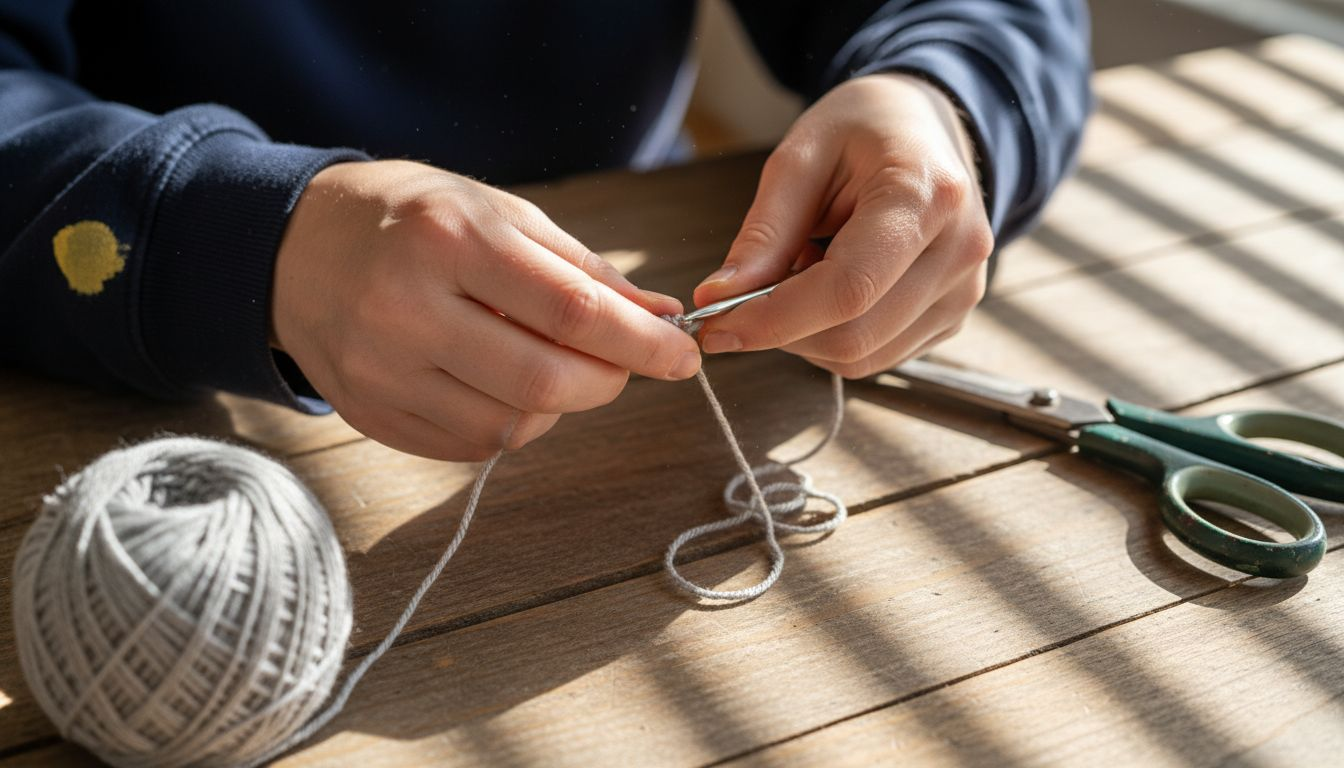
Next, you will create your foundation chain by yarning over (wrapping the yarn around your hook) and pulling it through the existing loop. Repeat this process to create a series of connected loops. Keep your tension consistent by maintaining the same amount of yarn tension with each chain stitch. Practice creating even chains by holding the yarn and hook at a comfortable angle and moving smoothly.
Pro tip: Practice your tension by creating a sample chain and checking that each loop looks uniform in size and shape.
Step 3: Learn basic crochet stitches
Mastering basic crochet stitches is your gateway to creating beautiful handmade projects. These foundational techniques will form the building blocks of your crocheting journey, allowing you to progress from simple designs to more complex patterns.
Start by learning the essential foundational crochet stitches, which include the chain stitch, single crochet, half double crochet, and double crochet. Each stitch builds upon the previous one, increasing in height and complexity. Begin with the single crochet, which is the shortest and most basic stitch. Insert your hook into the next stitch, yarn over, and pull through two loops. As you become more comfortable, practice the half double crochet by yarning over before inserting the hook, then pulling through all three loops on your hook.
The double crochet is slightly more advanced and adds more height to your work. Yarn over before inserting the hook into the stitch, then pull through two loops twice. Pay close attention to your tension and try to maintain consistent stitch sizes. Practice each stitch multiple times, creating small swatches to build muscle memory and improve your technique. Remember that every expert crafter started exactly where you are now learning these fundamental skills.
Pro tip: Create a practice swatch using different stitches to compare how they look and feel, helping you understand their unique characteristics.
This table summarizes the main characteristics of foundational crochet stitches:
| Stitch Type | Height | Typical Use |
|---|---|---|
| Chain Stitch | None | Project foundation row |
| Single Crochet | Short | Tight, dense fabric |
| Half Double Crochet | Medium | Versatile, textured look |
| Double Crochet | Tall | Lacy, openwork projects |

Step 4: Practice combining stitches for texture
Learning to combine different crochet stitches opens up a world of creative possibilities, allowing you to transform simple projects into textured masterpieces. By strategically mixing stitches, you can create unique patterns and add visual interest to your work.
Start experimenting with stitch combinations for varied textures. Begin by alternating basic stitches like single, half double, and double crochet within the same row. For example, create a row where you alternate between single and double crochet stitches, which will instantly add depth and dimension to your fabric. Pay attention to how each stitch height changes the overall appearance and feel of your project. Practice maintaining consistent tension when switching between different stitch types to ensure a neat and professional looking result.
As you become more comfortable, try more complex combinations like creating raised stitches, popcorn stitches, or textured patterns by strategically placing different stitches. Remember that texture is about both visual and tactile experience. Experiment with different yarn types and colors to enhance the textural effect. Your early attempts might look uneven, but consistent practice will help you develop the muscle memory and skill to create beautifully textured crochet pieces.
Pro tip: Create small practice swatches with different stitch combinations to understand how they interact before starting a larger project.
Step 5: Check and adjust your results
Evaluating and refining your crochet work is a critical skill that separates amateur crafters from experienced artisans. Learning to critically assess your progress helps you improve technique and achieve professional looking results.
Start by creating a gauge swatch to measure stitch consistency. Measure the number of stitches and rows per inch, comparing them to your project pattern recommendations. If your swatch is too tight, switch to a larger hook to loosen the fabric. If it is too loose, use a smaller hook to create tighter, more compact stitches. Pay close attention to the overall evenness of your stitches, looking for variations in height or tension that could impact the final appearance of your project.
Regular checking helps prevent larger mistakes from developing. Count your stitches at the end of each row to ensure you are maintaining the correct stitch count. Look for signs of uneven tension like wavy edges or inconsistent stitch sizes. Dont be discouraged by initial imperfections these are part of the learning process. Each project is an opportunity to refine your skills and develop muscle memory for creating smooth, consistent crochet work.
Pro tip: Take a photo of your work periodically to help you objectively assess your progress and identify areas for improvement.
Master Your Crochet Skills with the Right Tools and Supplies
Starting to learn crochet stitches can feel overwhelming when choosing the right yarn and tools to create perfect tension and beautiful textures. You want to avoid frustration from uneven stitches or yarn that splits easily. That is why having high-quality materials designed for beginners helps make each step, from forming your slip knot to practicing versatile stitch combinations, much easier and more enjoyable.
Find everything you need to succeed in one place including beginner-friendly yarn and essential accessories like Yarn Bags to keep your supplies organized
.png)
Explore our carefully curated selection of soft, durable yarns perfect for practicing basic and advanced stitches at Yarn – CRAFTISS. Ready to take your crochet journey further? Visit CRAFTISS now and start crafting with confidence using premium materials made to support your growth as a crocheter.
Frequently Asked Questions
What type of yarn and hook should I use as a beginner in crochet?
To start crocheting, use medium worsted weight yarn, labeled as weight 4, and a hook size H (5 mm). Choose a solid color acrylic yarn for clear stitch definition, and practice using metal or bamboo hooks for better grip and smooth movement.
How do I create a slip knot and foundation chain in crochet?
To create a slip knot, make a pretzel shape with your yarn and pull the working yarn through the loop. Once you have the slip knot on your hook, yarn over and pull through to make a foundation chain; repeat this process to create connected loops, maintaining consistent tension.
Which basic crochet stitches should I learn first?
Start with the essential foundational stitches: chain stitch, single crochet, half double crochet, and double crochet. Practice each stitch multiple times to build your muscle memory, making small swatches to compare stitch sizes and techniques.
How can I combine different crochet stitches for texture?
Experiment by alternating basic stitches like single and double crochet within the same row to create texture. Start small, creating practice swatches that allow you to explore how these combinations affect the overall appearance of your work.
How do I check and adjust my crochet results for consistency?
Create a gauge swatch to measure the number of stitches and rows per inch in your work. Count your stitches regularly and assess for evenness to ensure you maintain the correct tension; adjust your hook size if your swatch is too tight or too loose.
What is the best way to practice crochet stitches for improvement?
Practice regularly by creating small swatches using various stitches and combinations. Aim for consistent tension and check your work visually and physically to build confidence and improve your technique over time.
Recommended
- How to crochet with yarn: your ultimate beginner’s guide to mastering – CRAFTISS
- 7 Essential Crochet Stitch Types Every Crafter Should Know – CRAFTISS
- Beginner Crochet Stitches Tutorial: Master Basic Techniques Fast – CRAFTISS
- 7 Essential Types of Crochet Stitches Every Crafter Should Know – CRAFTISS
