


Yarn Balling Explained: Streamlining Your Crafting Flow
Most American crafters know the struggle of wrestling with tangled yarn right in the middle of a promising project. Over 65 percent of intermediate crocheters and knitters admit that poorly balled yarn slows their creativity and causes unnecessary frustration. Mastering yarn balling is more than just tidying your stash, it means less time untangling and more time crafting beautiful pieces. Discover practical, reliable methods for transforming every skein into the perfect ball for your next American masterpiece.
Table of Contents
- What Is Yarn Balling And Why It Matters
- Types Of Yarn Balls And Their Uses
- Essential Tools For Efficient Yarn Balling
- Step-By-Step Yarn Balling Techniques
- Common Yarn Balling Mistakes To Avoid
Key Takeaways
| Point | Details |
|---|---|
| Importance of Yarn Balling | Yarn balling transforms loose skeins into manageable balls, preventing tangling and enhancing crafting efficiency. |
| Choosing the Right Yarn Ball | Different yarn types benefit from specific balling methods; choose based on project requirements. |
| Essential Tools | Tools like yarn swifts and winders streamline the balling process, improving the quality of yarn preparation. |
| Common Mistakes to Avoid | Maintain consistent tension and handle delicate fibers gently to prevent yarn damage and frustration. |
What Is Yarn Balling and Why It Matters
Yarn balling represents a crucial technique in crafting that transforms loose yarn skeins into compact, manageable spheres ready for seamless knitting or crocheting. Fundamentals of yarn technology reveal that this process isn’t just about aesthetics, but about creating functional, easily workable yarn structures that enhance overall crafting efficiency.
At its core, yarn balling involves carefully winding yarn from its original skein or hank into a tightly wound ball that allows for smoother, tangle-free crafting. The process serves multiple practical purposes: preventing yarn from becoming tangled, reducing potential breakage, and creating a more portable crafting medium. Crafters can manually ball yarn using their hands or leverage specialized tools like yarn winders that streamline the process.
The significance of proper yarn balling extends beyond mere organization. Consistent and careful balling helps maintain yarn integrity, prevents potential stretching or distortion, and ensures your yarn remains in optimal condition from storage to project completion. Different yarn types require slightly different balling techniques, with delicate fibers like mohair or silk demanding gentler handling compared to more robust wool or acrylic yarns.
Pro Tip: Invest in a simple yarn winder to create uniform, professional-looking yarn balls that minimize tangling and maximize your crafting efficiency.
Additional Insight: Not all yarns are created equal. Understanding the role of yarn weight can help you select the most appropriate balling technique for your specific project requirements.
Types of Yarn Balls and Their Uses
Diverse yarn ball configurations play a critical role in crafting, with each type offering unique advantages for different textile projects. Understanding these variations helps crafters select the most appropriate yarn format for their specific needs, ensuring optimal performance and ease of use.
The primary types of yarn balls include:
-
Classic Wound Ball: The traditional hand-wound spherical ball, created by manually wrapping yarn around your hand or fingers. This format works well for smaller projects and provides excellent portability. Comprehensive yarn research reveals that classic wound balls are particularly suitable for techniques requiring direct yarn manipulation.
-
Center-Pull Ball: Designed with an internal core that allows yarn to be pulled from the center, reducing tangling and providing smoother yarn flow. This format is ideal for larger projects and works exceptionally well with mechanical yarn winders.
-
Yarn Cake: A cylindrical ball typically created using a yarn winder, offering a flat bottom for stable storage and easy yarn access. Yarn cakes are particularly popular among knitters and crocheters working on complex, multi-skein projects.
-
Nested Ball: A specialized format where smaller balls are wound within larger ones, useful for color work and projects requiring precise yarn management.
Pro Tip: Match your yarn ball type to your specific project requirements, considering factors like yarn weight, fiber type, and intended crafting technique.
Additional Insight: Essential yarn types can significantly impact your ball formation and overall crafting experience.
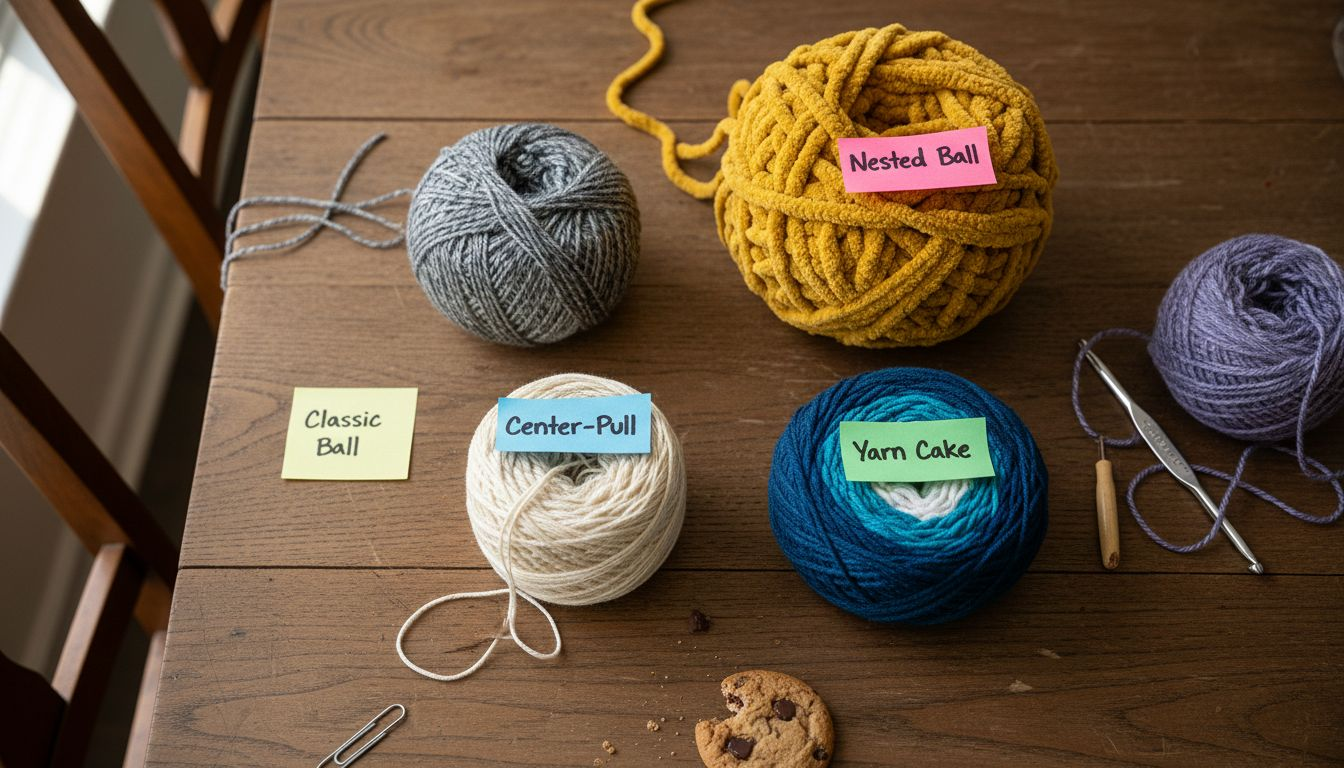
Here’s how different yarn ball types compare in terms of use and recommended projects:
| Yarn Ball Type | Ideal Use Case | Recommended Projects | Stability During Crafting |
|---|---|---|---|
| Classic Wound Ball | Small, portable projects | Quick scarves, baby items | Moderate, can roll easily |
| Center-Pull Ball | Long sessions, large skeins | Sweaters, blankets | High, reduces tangling |
| Yarn Cake | Multi-skein, complex work | Colorwork, large shawls | Very stable, flat base |
| Nested Ball | Multi-color management | Mosaic crochet, intarsia | Varies, depends on technique |
Essential Tools for Efficient Yarn Balling
Textile tool technologies have revolutionized yarn handling, offering crafters a range of sophisticated tools to transform their yarn balling process from tedious task to precise craft. Modern yarn enthusiasts have multiple options for creating perfectly wound yarn balls that maintain tension and prevent frustrating tangles.
The essential tools for efficient yarn balling include:
-
Yarn Swift: A adjustable umbrella-like device that holds yarn skeins open, allowing for smooth and consistent unwinding. Swifts prevent yarn from tangling and provide steady tension during the winding process.
-
Yarn Winder: A mechanical tool that transforms skeins into perfectly uniform center-pull balls. Historical textile tool research demonstrates how winders have streamlined yarn preparation across generations of crafters.
-
Manual Ball Winder: A hand-operated device that creates compact, consistent yarn balls without requiring complex machinery. Ideal for crafters who prefer a more hands-on approach and want precise control over their yarn winding.
-
Yarn Bowl: While not a winding tool, yarn bowls help manage yarn during projects, preventing tangling and providing a stable resting place for your yarn ball during crafting.
Each tool offers unique advantages, and the best choice depends on your specific crafting style, budget, and the types of yarn you typically work with.
Pro Tip: Invest in a quality yarn swift and winder combo to dramatically reduce yarn preparation time and minimize potential damage to delicate fibers.
Additional Insight: Understanding yarn bowls can complement your yarn balling toolkit and enhance your overall crafting experience.
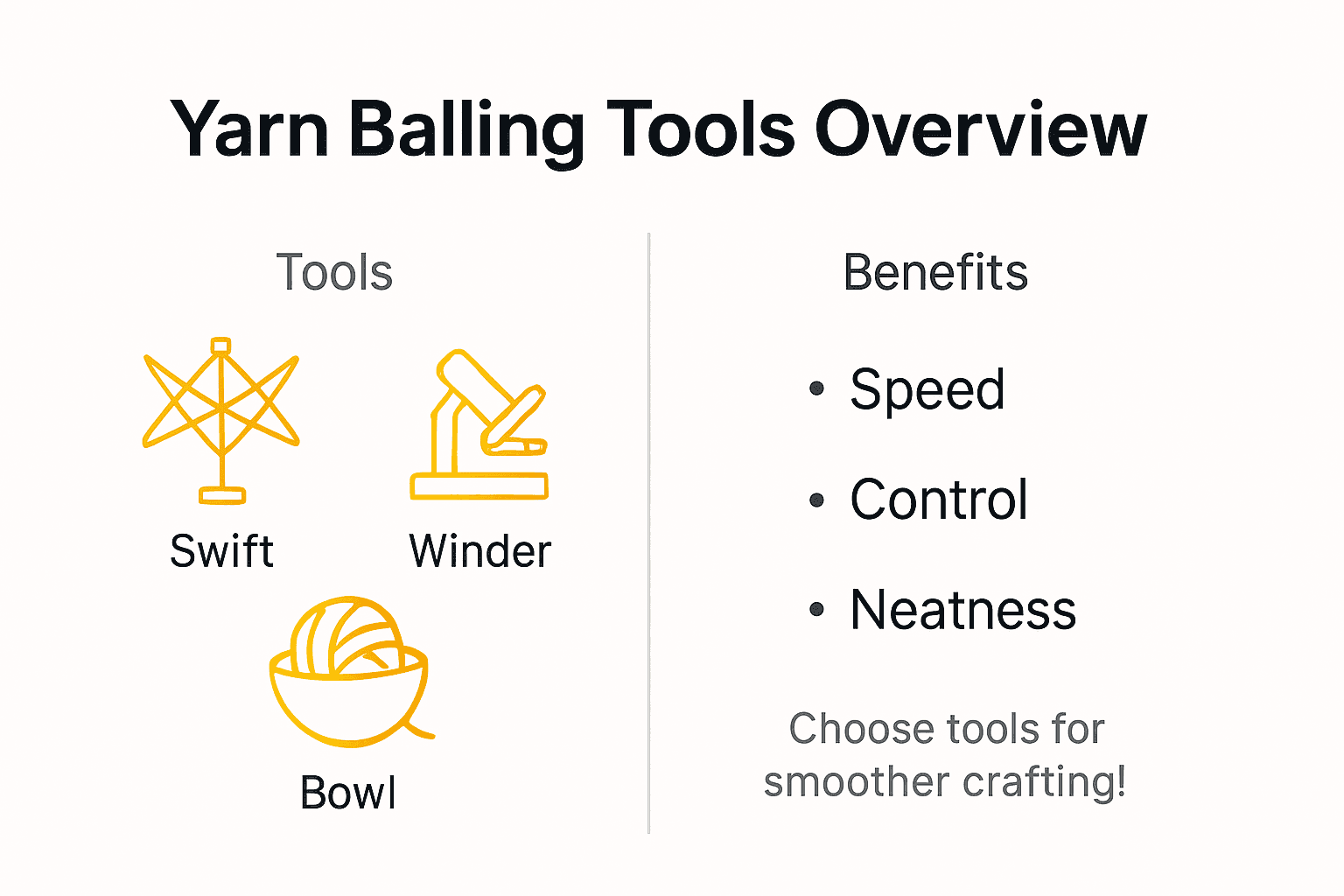
For quick reference, here is a summary of essential yarn balling tools and their benefits:
| Tool | Key Benefit | Ideal Yarn Type |
|---|---|---|
| Yarn Swift | Provides consistent tension | Any, especially delicate |
| Yarn Winder | Makes uniform yarn balls | Medium to bulky |
| Manual Ball Winder | Hands-on control | Specialty, small skeins |
| Yarn Bowl | Keeps yarn tangle-free | Pre-balled or wound balls |
Step-by-Step Yarn Balling Techniques
Yarn preparation techniques require precision and attention to detail to transform raw fibers into perfectly wound yarn balls. Understanding the fundamental steps can dramatically improve your crafting efficiency and yarn quality.
The comprehensive yarn balling process involves several key stages:
- Preparation
- Untangle the yarn skein completely
- Locate the end of the yarn strand
- Set up your yarn swift or holding mechanism
- Initial Winding
- Attach the yarn end to your ball winder or begin manual winding
- Maintain consistent tension throughout the process
- Create a small starter core by winding yarn evenly
- Developing the Ball
- Rotate the winder or use your hand to create a symmetrical ball
- Ensure each wrap crosses the previous layer at a slight angle
- Spinning and winding techniques) recommend maintaining uniform pressure to prevent loose or tight sections
- Finishing
- Secure the final yarn end by tucking it into the ball
- Check the ball’s overall shape and compactness
- Store in a cool, dry location to maintain yarn integrity
Different yarn types may require slight variations in these techniques, so always consider your specific yarn’s characteristics and fragility.
Pro Tip: Practice consistent tension and gentle handling to create perfectly wound yarn balls that prevent tangling and maintain yarn quality.
Additional Insight: Exploring yarn twisting techniques can further enhance your understanding of yarn preparation and handling.
Common Yarn Balling Mistakes to Avoid
Yarn winding defects can seriously compromise your crafting experience, turning a potentially smooth project into a frustrating endeavor. Understanding these common mistakes helps crafters proactively prevent issues that could damage yarn or disrupt their creative workflow.
The most critical yarn balling mistakes include:
- Inconsistent Tension
- Pulling yarn too tightly during winding
- Creating uneven sections within the ball
- Stretching delicate fibers beyond their natural elasticity
- Poor Initial Core Formation
- Starting with a loose or irregular center
- Failing to create a compact, stable foundation
- Risking ball collapse during later project stages
- Improper Handling of Delicate Yarns
- Using aggressive winding techniques
- Neglecting yarn’s specific material characteristics
- Critical yarn handling strategies recommend gentle manipulation for specialty fibers
- Neglecting Storage Conditions
- Exposing wound yarn balls to direct sunlight
- Storing in high-humidity environments
- Leaving balls in areas with temperature fluctuations
These mistakes can lead to yarn degradation, reduced project quality, and increased frustration during crafting.
Pro Tip: Always wind yarn slowly and consistently, paying close attention to maintaining uniform tension and protecting the yarn’s natural characteristics.
Additional Insight: Choosing the right yarn can significantly impact your balling and crafting success.
Simplify Your Crafting with Perfectly Prepared Yarn
Struggling with tangled yarn or uneven tension can slow your creative process and cause frustration. This article highlights the importance of yarn balling, revealing how proper winding techniques and tools protect your yarn’s integrity and streamline your crafting flow. Whether you are managing delicate fibers or bulky skeins, having the right yarn and accessories is essential to avoid common pitfalls like inconsistent tension or poorly formed cores.
Discover premium yarn options designed for easy balling and flawless projects on Yarn – CRAFTISS.
.png)
Unlock smoother crafting sessions by exploring our carefully curated collection at https://craftiss.com. Complement your yarn with storage solutions from Yarn Bags – CRAFTISS to keep your projects tangle-free and portable. Don’t let improperly wound yarn hold back your creativity. Shop now and transform your crafting experience with high-quality yarn and tools built for your success.
Frequently Asked Questions
What is yarn balling and why is it important?
Yarn balling is the process of winding loose yarn skeins into compact balls to prevent tangling and enhance crafting efficiency. It helps maintain yarn integrity and ensures a smoother crafting experience.
How do I properly ball yarn using a yarn winder?
To ball yarn with a yarn winder, attach the yarn end to the winder, maintain consistent tension, and create a small starter core. Continue winding at a slight angle to form a symmetrical ball, ensuring that the final yarn end is secured within the ball.
What are the different types of yarn balls and their uses?
The main types of yarn balls include the classic wound ball, center-pull ball, yarn cake, and nested ball. Each type serves different purposes, such as portability, reducing tangling, or facilitating complex projects involving multiple colors.
What common mistakes should I avoid when balling yarn?
Avoid inconsistent tension, poor initial core formation, improper handling of delicate yarns, and neglecting storage conditions. These mistakes can lead to yarn damage and crafting difficulties.
