


Surface Crochet Techniques: Transforming Crochet Projects
Trying to break out of the routine of basic crochet projects can leave even the most passionate crafters searching for fresh ways to express their creativity. For American enthusiasts looking to move beyond standard stitches, surface crochet opens up a world of possibility. This technique transforms plain fabric into vibrant, textured art by adding decorative stitches and designs on top of existing pieces. Discover how mastering surface crochet can bring new depth, color, and character to your growing collection of handmade projects by exploring this bold expansion of your skills.
Table of Contents
- Surface Crochet Defined and Common Misconceptions
- Core Surface Crochet Stitches and Variations
- How Surface Crochet Enhances Textures and Patterns
- Best Projects and Practical Use Cases
- Avoiding Common Mistakes in Surface Crochet
Key Takeaways
| Point | Details |
|---|---|
| Surface Crochet Technique | Surface crochet adds decorative elements to existing fabric without creating new pieces, enhancing visual complexity. |
| Core Stitch Variations | Key surface crochet stitches like slip, single, chain, and post stitches allow for a variety of textures and designs. |
| Project Applications | Surface crochet can beautify clothing, home decor, and accessories, making projects more personalized and striking. |
| Common Mistakes | Control tension and ensure correct design placement to avoid uneven stitches and maintain project quality. |
Surface Crochet Defined and Common Misconceptions
Surface crochet represents a specialized technique that allows crafters to add decorative elements and textures directly onto existing fabric without creating an entirely new piece. Unlike traditional crochet methods that build fabric from the ground up, surface crochet works by adding decorative stitches and designs across the top of an already completed project.
At its core, surface crochet involves creating loops and stitches that sit on top of an existing crocheted or knitted background, transforming plain fabric into something more visually intricate. Crochet techniques involve complex fabric creation using interlocking loops of yarn, and surface crochet expands on this foundational understanding by introducing dimensional embellishment.
Common misconceptions about surface crochet often stem from misunderstandings about its purpose and application. Many crafters initially believe that surface crochet is just another standard crochet technique, but it’s actually a unique method for adding depth, texture, and visual interest to projects. Here are some key misunderstandings:
- Surface crochet is NOT the same as standard crochet techniques
- It does NOT require creating an entirely new fabric piece
- Surface crochet can be applied to both handmade and store-bought items
- The technique is NOT limited to specific yarn types or project sizes
Professional crocheters use surface crochet as a powerful embellishment tool, allowing them to transform simple projects into complex, visually stunning pieces. The technique requires precision, an understanding of yarn tension, and a creative approach to design. By working surface stitches across an existing fabric’s surface, crafters can add intricate patterns, create raised designs, and introduce multiple color variations without reconstructing the entire project.
Pro tip: Practice surface crochet on scrap fabric first to understand how different yarn tensions and hook sizes impact the final design.
Recommended supplies for your project


Core Surface Crochet Stitches and Variations
Surface crochet encompasses several core stitch types that crafters can use to add intricate designs and textures to existing fabric. These specialized techniques allow for incredible creative expression, transforming ordinary projects into extraordinary works of art. Essential crochet stitch types provide the foundation for understanding these advanced embellishment methods.
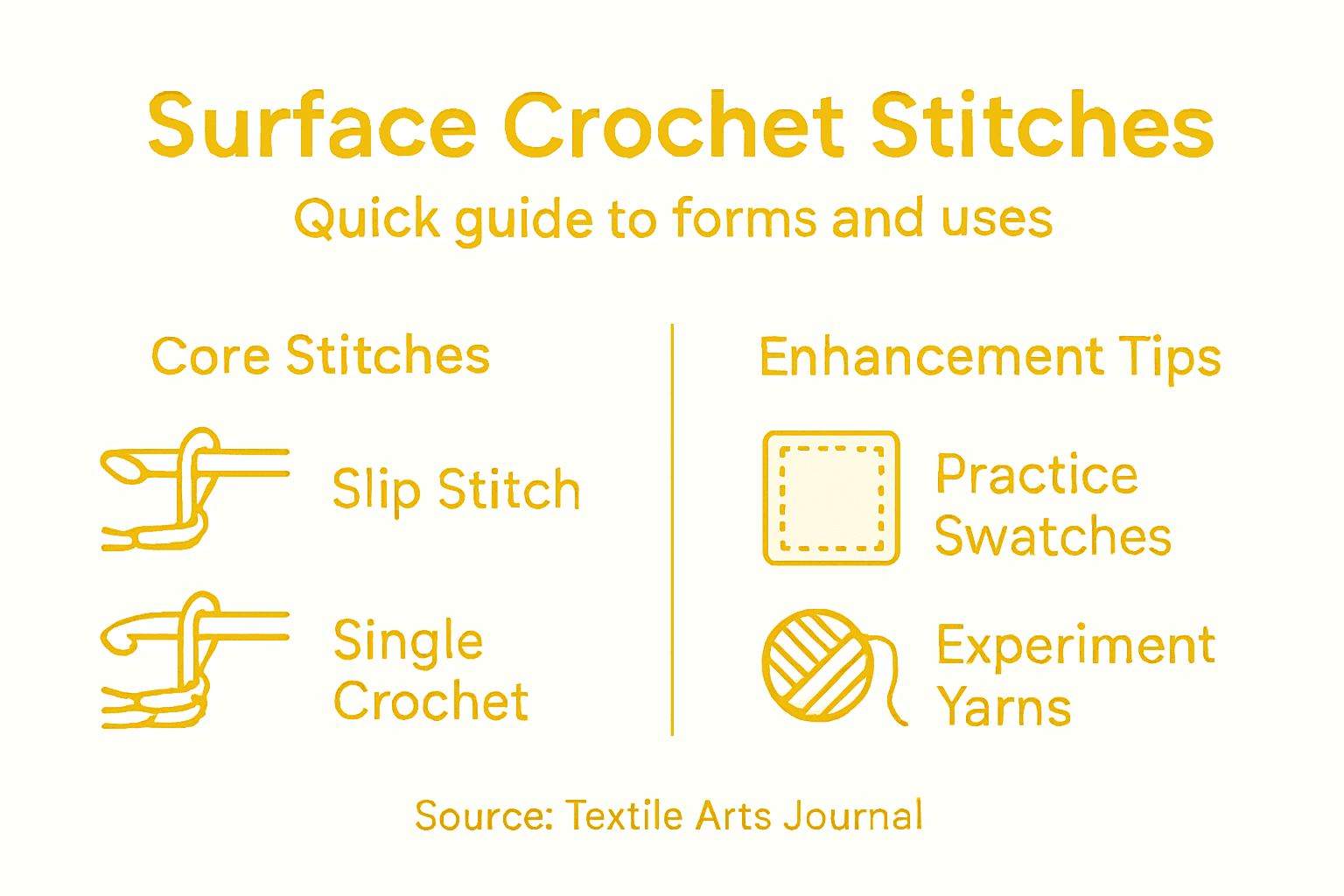
Surface slip stitch represents one of the most fundamental techniques in surface crochet. This method involves creating decorative lines or patterns by working loops across the top of an existing fabric, requiring minimal yarn and providing precise, clean lines. Crafters typically use a contrasting yarn color to make these surface stitches stand out, creating visual interest and defining specific design elements.
The core variations of surface crochet stitches include:
- Surface slip stitch: Creates thin, precise lines across fabric
- Surface single crochet: Builds slightly raised, textured designs
- Surface chain stitch: Produces delicate, flowing decorative elements
- Surface post stitch: Generates three-dimensional, raised patterns
Professional crocheters often combine these surface stitch techniques to create complex, multi-dimensional designs. By strategically working these stitches across different fabric backgrounds, crafters can generate intricate patterns that seemingly emerge from the original fabric. The technique requires careful tension control and a keen eye for design placement.
Pro tip: Experiment with different yarn weights and hook sizes to discover unique surface crochet effects that add depth and character to your projects.
Here’s a comparison of core surface crochet stitches and their typical design effects:
| Stitch Type | Visual Impact | Typical Use Case |
|---|---|---|
| Surface Slip Stitch | Thin, crisp lines | Outlining shapes and patterns |
| Surface Single Crochet | Raised textures | Creating bold decorative accents |
| Surface Chain Stitch | Flowing, delicate motifs | Adding curves and soft embellishment |
| Surface Post Stitch | Strong 3D effect | Sculpting raised, dramatic designs |
How Surface Crochet Enhances Textures and Patterns
Surface crochet is a transformative technique that dramatically elevates textile design by introducing complex surface texturing techniques that modify fabric properties and visual appeal. Unlike traditional crochet methods that build fabric from scratch, surface crochet allows crafters to add intricate layers of texture and dimension to existing projects, creating stunning visual and tactile experiences.
The primary mechanism of texture enhancement in surface crochet involves strategic stitch placement and yarn manipulation. Dimensional layering becomes possible by working stitches across the surface of a base fabric, which creates raised patterns, intricate lines, and three-dimensional effects. Crafters can generate incredible textural variations by carefully controlling stitch height, tension, and yarn selection.
Key ways surface crochet enhances textures include:
- Creating raised design elements that stand out from base fabric
- Introducing contrasting yarn colors for visual complexity
- Generating tactile patterns through strategic stitch placement
- Building multi-dimensional surfaces with varying heights
- Transforming flat fabrics into sculptural textile art
Professional textile artists leverage surface crochet as a sophisticated method of visual storytelling. By understanding how different stitches interact with underlying fabric, crafters can create incredibly nuanced textural landscapes that transform ordinary projects into extraordinary works of art. The technique requires a keen eye for design, precise hand movements, and an intuitive understanding of yarn behavior.
Pro tip: Practice surface crochet techniques on sample swatches to understand how different yarn weights and stitch types create unique textural effects.
Best Projects and Practical Use Cases
Surface crochet techniques open up a world of creative possibilities, transforming ordinary projects into extraordinary textural masterpieces. Crochet pattern models demonstrate how crafters can use surface crochet to create intricate, three-dimensional objects that serve both decorative and functional purposes. From home decor to wearable art, the versatility of surface crochet allows crafters to add unique personal touches to a wide range of projects.
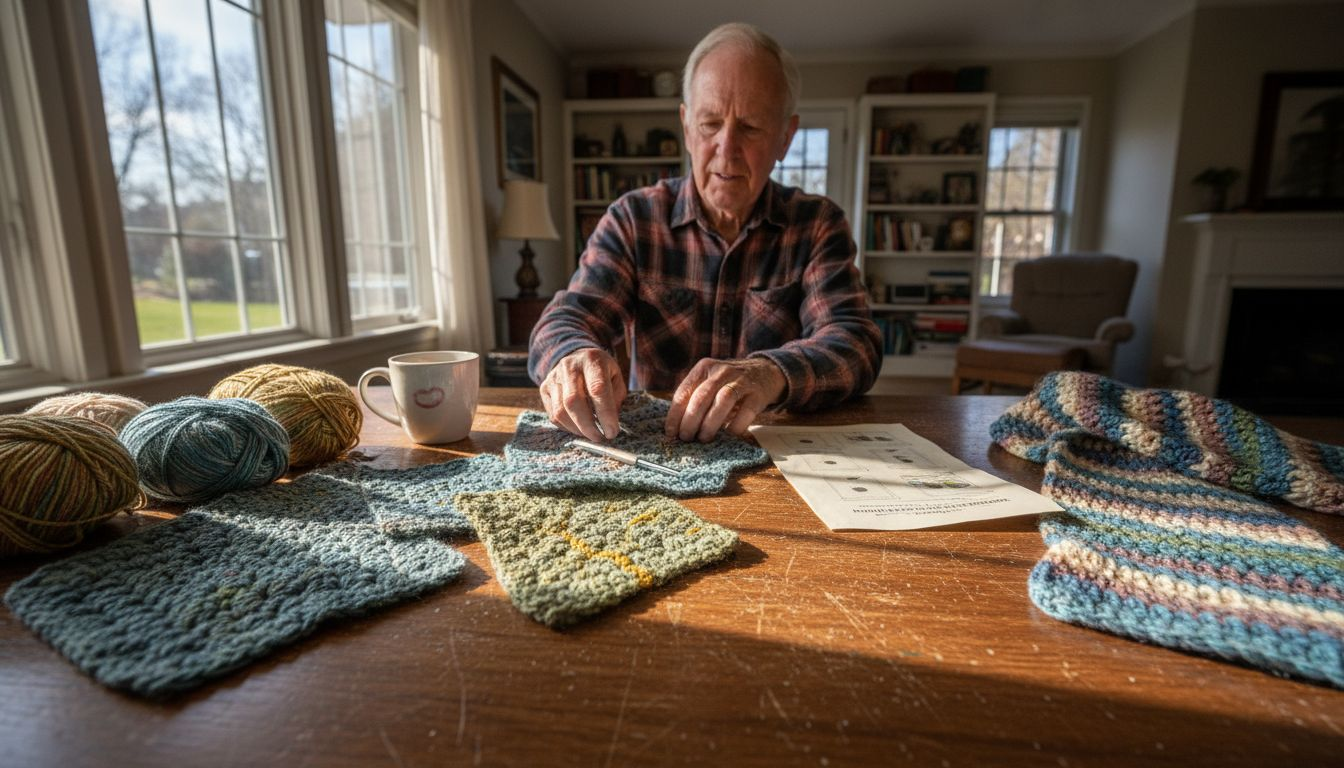
Practical project applications for surface crochet span multiple domains, offering crafters innovative ways to enhance their textile creations. Clothing and accessories become canvases for artistic expression, with surface crochet techniques allowing intricate design elements to be added to existing garments, bags, and accessories. Home decor items like throw pillows, blankets, and wall hangings can be dramatically transformed by introducing surface crochet embellishments.
Top project categories for surface crochet include:
-
Wearable Art
- Embellishing sweaters and jackets
- Adding decorative elements to scarves and shawls
- Creating unique patches for denim and leather
-
Home Decor
- Enhancing throw pillow designs
- Adding texture to blankets and throws
- Creating wall art and decorative hangings
-
Accessories
- Personalizing bags and purses
- Designing unique hat and glove details
- Creating custom jewelry pieces
Professional crafters and textile artists recognize surface crochet as a powerful technique for elevating projects beyond traditional boundaries. By strategically applying surface stitches, artists can create complex visual narratives, transform simple fabrics into intricate art pieces, and push the boundaries of traditional textile design.
Pro tip: Start with small, low-stakes projects to build confidence and experiment with different surface crochet techniques before attempting more complex designs.
Below is a summary of how surface crochet can elevate common textile projects:
| Project Type | Enhancement Technique | Resulting Design Benefit |
|---|---|---|
| Clothing | Add decorative stitching | Personalized, artistic garments |
| Home Decor | Layer textured embellishments | Unique, tactile interior accents |
| Accessories | Combine color and dimension | Distinctive, eye-catching details |
Avoiding Common Mistakes in Surface Crochet
Surface crochet demands precision and careful technique, with many crafters encountering challenges that can compromise their project’s final appearance. Fabric attachment techniques require meticulous attention to detail to prevent common pitfalls that can undermine the entire creative process. Understanding these potential errors is crucial for achieving professional-looking surface crochet designs.
Tension control represents one of the most critical aspects of successful surface crochet. Inconsistent tension can lead to uneven stitches, distorted patterns, and an unprofessional finish. Crafters must maintain uniform yarn tension throughout the project, ensuring each surface stitch sits perfectly against the base fabric without pulling or sagging.
Common mistakes in surface crochet include:
-
Tension Errors
- Inconsistent stitch height
- Uneven yarn pulling
- Overly tight or loose surface stitches
-
Design Placement
- Incorrect positioning of surface stitches
- Misaligned decorative elements
- Unbalanced textural patterns
-
Material Selection
- Using incompatible yarn weights
- Choosing yarns with different stretch characteristics
- Neglecting base fabric compatibility
Professional crafters recognize that mastering surface crochet requires patience, practice, and a willingness to learn from mistakes. Each error provides an opportunity to refine technique, understand yarn behavior, and develop a more nuanced approach to textile embellishment. Successful surface crochet is as much about understanding material limitations as it is about creative vision.
Pro tip: Create practice swatches using different yarn types and tension levels to develop muscle memory and improve your surface crochet technique.
Elevate Your Surface Crochet Projects with Premium Yarn and Expert Supplies
Mastering surface crochet techniques requires more than skill it demands the right materials to bring your creative vision to life. Struggling with tension control or texture depth can often come down to using inconsistent yarn types or unsuitable crochet tools. At CRAFTISS, we understand that every stitch matters which is why we offer a carefully curated selection of Yarn perfect for achieving those raised textures and intricate surface stitches featured in your projects.
.png)
Ready to transform your crochet work now? Explore our Bundles for Crochet and Knitting Beginners to get started with high-quality yarn and all the essentials designed to help you nail every surface stitch and embellishment. Visit CRAFTISS today and turn your surface crochet challenges into stunning, textured masterpieces.
Frequently Asked Questions
What is surface crochet?
Surface crochet is a specialized technique that allows crafters to add decorative elements and textures directly onto existing fabric, enhancing the visual appeal without creating a new piece.
How does surface crochet differ from standard crochet techniques?
Surface crochet focuses on adding decorative stitches on top of an existing fabric, while standard crochet techniques create fabric from scratch using interlocking loops of yarn.
What are some core surface crochet stitches and their effects?
Core stitches include surface slip stitch (creates thin lines), surface single crochet (adds raised textures), surface chain stitch (yields delicate motifs), and surface post stitch (forms strong 3D patterns).
How can I avoid common mistakes in surface crochet?
To avoid common mistakes, focus on maintaining consistent tension, ensuring correct design placement, and selecting compatible yarn weights to achieve a professional finish.
