


Understanding the Role of Granny Squares in Crochet
Granny squares are topping Pinterest boards and Instagram feeds everywhere. The classic crochet square dates back to the mid-19th century and was born from leftover yarn and pure creativity. Most people expect granny squares to belong to old-fashioned afghans and nostalgia-soaked DIY projects. Instead, these little fabric blocks have exploded into bold fashion, high art, and sustainable design statements that defy their humble beginnings.
Table of Contents
- What Are Granny Squares And Their Origins?
- Why Granny Squares Matter In Crochet Culture
- How Granny Squares Enable Creativity And Customization
- Key Techniques And Concepts Related To Granny Squares
- Real-World Applications Of Granny Squares In Modern Crafting
Quick Summary
| Takeaway | Explanation |
|---|---|
| Granny squares are versatile crafting units | These modular squares can be combined in countless ways, making them ideal for various crochet projects like blankets and clothing. |
| Embrace sustainability through leftover yarn | Granny squares allow crafters to utilize yarn scraps, promoting resourcefulness and reducing waste in textile crafts. |
| Granny squares foster community and connection | Crafting in groups or online encourages skill sharing, collaboration, and builds relationships among crafters of all ages. |
| Encourage personal expression in designs | Each square can reflect personal style through color, stitch patterns, and design choices, allowing individual creativity to shine. |
| Learn foundational and advanced crochet techniques | Working on granny squares introduces essential skills and enables experimentation with complex techniques, enhancing overall crafting proficiency. |
What Are Granny Squares and Their Origins?
Granny squares represent one of the most beloved and versatile techniques in crochet, transforming simple yarn loops into intricate geometric designs that hold both practical and artistic significance. These distinctive squares are more than just a crafting technique - they are a cultural artifact that represents creativity, resourcefulness, and generational craft knowledge.
The Fundamental Structure of Granny Squares
At its core, a granny square is a small, typically square-shaped piece of crocheted fabric created by working in concentric rounds from the center outward. Each square is constructed using basic crochet stitches like chain stitches and double crochet, allowing crafters to build complex patterns through repetitive geometric techniques. Learn how to create your first granny square with our comprehensive beginner’s guide.
The beauty of granny squares lies in their modularity. Crafters can create individual squares with different colors, yarn types, and stitch combinations, then join them together to form larger projects like blankets, shawls, and clothing items. This approach allows for incredible creative flexibility and personal expression.
Historical Context and Cultural Significance
According to the Smithsonian Institution, granny squares emerged during a period of significant social and economic transformation. Originally, these squares were a practical solution for utilizing leftover yarn scraps, reflecting the resourceful spirit of early 20th-century crafters who believed in minimizing waste.
Key characteristics of traditional granny squares include:
- Compact design allowing easy storage and transportation of work
- Ability to mix and match colors and yarn weights
- Potential for creating complex, visually stunning patterns
- Flexibility in project scale from small accessories to large blankets
While the exact origin remains somewhat mysterious, crochet historians trace the technique to mid-19th century Europe, where it quickly spread as a practical and artistic craft. Women would gather to share techniques, exchange patterns, and create functional art that served both decorative and utilitarian purposes.
Today, granny squares continue to evolve, with modern crafters pushing boundaries by incorporating innovative techniques, experimenting with unconventional materials, and using digital platforms to share and learn complex designs. They represent a beautiful intersection of tradition, creativity, and personal expression in the world of textile arts.
To highlight key distinctions, the following table compares traditional and modern approaches to granny squares in crochet, focusing on origins, design, materials, and uses.
| Aspect | Traditional Granny Squares | Modern Granny Squares |
|---|---|---|
| Historical Origin | Mid-19th century Europe | Evolved worldwide, influenced by digital media |
| Primary Materials | Leftover yarn, natural fibers | Diverse yarns, including synthetic blends |
| Design Approach | Functional, patchwork color use | Artistic, experimental color and texture |
| Primary Uses | Afghans, home essentials | Fashion, decor, statement art, accessories |
| Community Engagement | Local, in-person craft circles | Global online communities and workshops |
| Focus | Resourcefulness, minimal waste | Creativity, customization, sustainability |
Recommended supplies for your project


Why Granny Squares Matter in Crochet Culture
Granny squares transcend their basic function as a crochet technique, emerging as a powerful form of artistic expression, cultural preservation, and community connection. These seemingly simple geometric textile pieces carry profound significance within fiber arts, representing far more than just a crafting method.
Creative Expression and Personal Storytelling
In the realm of textile arts, granny squares serve as miniature canvases for individual creativity. Crafters use color combinations, yarn textures, and intricate stitch patterns to communicate personal narratives and emotional experiences. Each square becomes a microcosm of artistic intent, allowing makers to experiment with design elements and share their unique aesthetic perspectives. Learn more about advanced crochet techniques to elevate your crafting skills.
The modular nature of granny squares enables crafters to create pieces that are simultaneously personal and collaborative. By combining individual squares, artists can construct larger narratives, transforming individual creative expressions into collective art forms.
Community Building and Social Connection
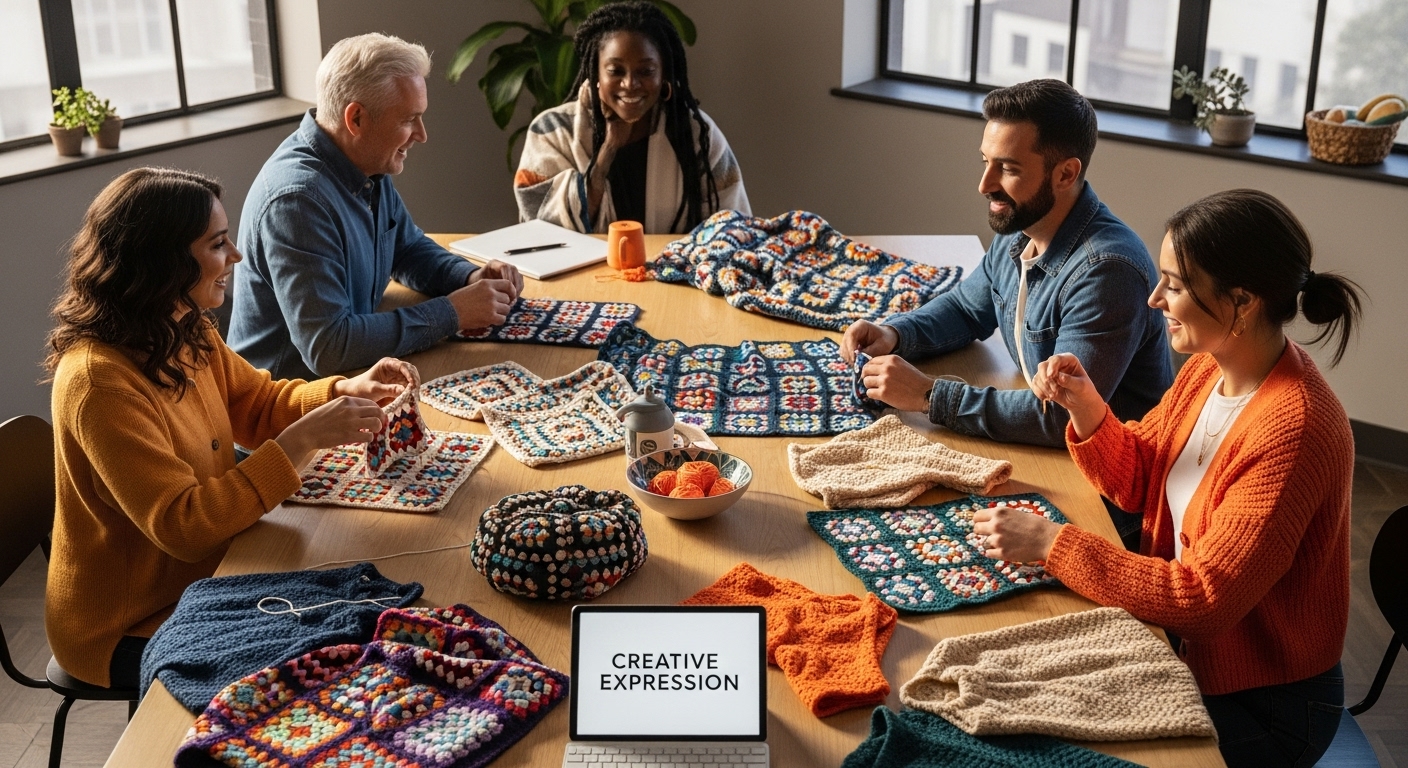
According to Vanderbilt University’s Community Arts Program, granny squares have become powerful tools for social engagement and community building. Craft circles, workshops, and online communities frequently use granny square projects as mechanisms for bringing people together, sharing skills, and fostering intergenerational connections.
Key social aspects of granny squares include:
- Creating opportunities for skill sharing and mentorship
- Facilitating cross-generational creative interactions
- Providing therapeutic and meditative crafting experiences
- Enabling collaborative community art projects
Sustainability and Resourceful Crafting
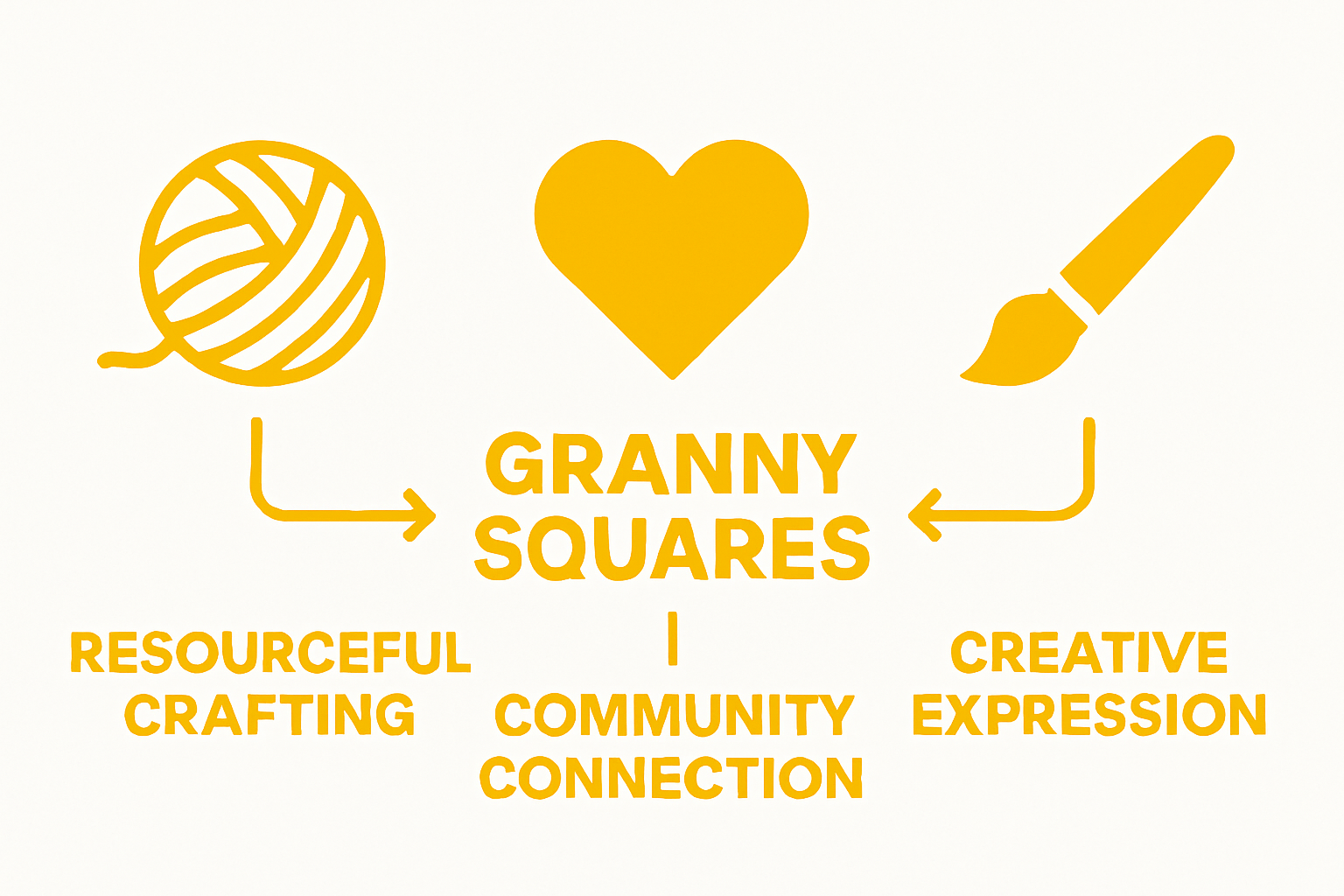
Granny squares embody sustainable crafting principles by encouraging resourcefulness and minimizing textile waste. Crafters can utilize yarn remnants, repurpose old materials, and create functional art that reduces environmental impact. This approach transforms what might be considered waste into beautiful, meaningful textile pieces.
By embracing imperfection, celebrating individual creativity, and promoting sustainable practices, granny squares represent more than just a crochet technique. They are a testament to human creativity, resilience, and the power of transforming simple materials into extraordinary expressions of art and community connection.
How Granny Squares Enable Creativity and Customization
Granny squares represent an extraordinary canvas for creative expression, offering crafters unprecedented flexibility in design, color selection, and project conception. These modular textile components transform traditional crochet techniques into dynamic, personalized artistic endeavors that celebrate individual imagination and technical skill.
Design Flexibility and Artistic Exploration
The inherent structure of granny squares allows crafters to experiment with virtually limitless design possibilities. Each square functions as an independent artistic unit, enabling makers to play with color gradients, texture variations, and complex stitch combinations. Explore inspiring color combinations to elevate your granny square designs and unlock creative potential.
Crafters can manipulate multiple design elements within a single square, including:
- Yarn weight and texture variations
- Complex color transitions
- Intricate stitch pattern combinations
- Geometric shape modifications
Personalization Through Modular Construction
According to University of Wisconsin-Milwaukee’s Studio Arts Program, granny squares provide unparalleled opportunities for personalized crafting. The modular nature allows individuals to create unique pieces that reflect personal aesthetic preferences, skill levels, and creative visions.
This approach enables crafters to develop projects that are:
- Completely customizable in size and design
- Adaptable to individual skill progression
- Scalable from small accessories to large blankets
- Easily modified during the creative process
Technical Innovation and Skill Development
Granny squares serve as dynamic learning tools that encourage technical skill enhancement and creative problem solving. By working with small, manageable units, crafters can experiment with complex techniques without committing to large, intimidating projects. Each square becomes an opportunity to refine skills, test new methods, and push personal creative boundaries.
The beauty of granny squares lies in their democratic nature - they welcome crafters of all skill levels, from absolute beginners to advanced artisans. Whether creating a simple monochromatic blanket or a complex, multi-textured art piece, granny squares provide a versatile medium for continuous creative exploration and personal expression.
Key Techniques and Concepts Related to Granny Squares
Granny squares represent a sophisticated textile technique that combines mathematical precision with creative expression. While appearing deceptively simple, these crochet constructions require understanding complex structural principles and nuanced crafting techniques that transform basic yarn into intricate geometric art.
Foundational Construction Principles
The core of granny square creation lies in concentric geometric expansion, beginning from a central point and radiating outward through strategic stitch placement. Learn foundational crochet techniques to build your understanding of these fundamental skills. Crafters utilize specific stitch combinations to create structural integrity and visual complexity, with each round building upon the previous one through carefully planned increases and stitch variations.
Key structural elements include:
- Central ring formation
- Corner space management
- Consistent stitch tension
- Symmetrical geometric progression
Advanced Design Manipulation Techniques
According to The Textile Museum’s Crochet Research Division, advanced granny square techniques involve sophisticated design manipulation strategies. Crafters can transform basic square structures through intentional variations in yarn weight, color transitions, and stitch complexity.
Design manipulation strategies encompass:
- Yarn weight transitions
- Color gradient implementations
- Texture variation techniques
- Geometric shape modifications
Technical Skill Progression and Complexity
Granny squares serve as an exceptional framework for skill development, offering crafters a structured approach to mastering increasingly complex textile techniques. By working with modular units, creators can incrementally enhance their technical proficiency, experimenting with intricate design elements without committing to large-scale projects.
The true artistry of granny squares emerges from the delicate balance between technical precision and creative intuition.
The following table summarizes some of the main techniques and manipulation strategies mentioned in the article, helping readers quickly understand the technical possibilities within granny square projects.
| Technique or Concept | Description |
|---|---|
| Concentric Round Construction | Building from the center outward in expanding rounds |
| Corner Space Management | Creating and maintaining corners for a square shape |
| Yarn Weight Transition | Changing yarn thickness for texture or structural interest |
| Color Gradients | Varying colors between or within rounds for visual complexity |
| Texture Variation Techniques | Mixing stitch types for tactile and visual diversity |
| Geometric Shape Modification | Altering square into other shapes, like rectangles or hexagons |
| Modular Assembly | Joining multiple squares for larger, customizable projects |
| Each square becomes a miniature canvas where mathematical calculation meets artistic expression, allowing crafters to develop a nuanced understanding of textile construction while exploring personal creative boundaries. |
Real-World Applications of Granny Squares in Modern Crafting
Granny squares have evolved far beyond traditional blanket making, emerging as a versatile textile technique with contemporary applications spanning fashion, home decor, accessories, and artistic expression. These modular crochet units offer unprecedented flexibility in creating functional and decorative items across multiple creative domains.
Fashion and Wearable Art
Granny squares transform ordinary clothing into personalized artistic statements, enabling crafters to design unique garments that blend traditional techniques with modern style. Explore advanced crochet finishing techniques to elevate your wearable art projects. Fashion designers and individual makers leverage these squares to create distinctive pieces like:
- Bohemian-style sweaters and cardigans
- Statement shawls and wraps
- Unique summer tops and vests
- Intricate accessories like handbags and tote bags
Home Decor and Interior Design
According to University of Wisconsin-Milwaukee’s Studio Arts Program, granny squares offer remarkable versatility in home decoration. Crafters can transform these textile units into functional and aesthetic home elements that reflect personal style and creative vision.
Potential home decor applications include:
- Decorative throw pillows
- Wall hangings and textile art
- Table runners and placemats
- Unique area rugs and floor coverings
- Furniture upholstery accents
Functional Accessories and Practical Crafting
Beyond aesthetic applications, granny squares serve practical purposes in creating functional accessories and everyday items. Their modular nature allows crafters to design objects that are both utilitarian and visually appealing. From organizational tools to personal accessories, these textile units provide endless creative possibilities.
The contemporary craft landscape demonstrates that granny squares are more than a nostalgic technique - they represent a dynamic, adaptable medium for creative expression. By combining traditional crafting skills with innovative design approaches, makers can transform simple yarn and fundamental crochet techniques into sophisticated, personalized objects that blur the lines between functional craft and artistic statement.
Elevate Your Granny Square Mastery With Premium Yarn Solutions
You have discovered how granny squares can unleash creativity, build community, and honor crochet tradition. But getting your projects to look and feel professional can be tough when you lack the right materials. Many crafters struggle with inconsistent yarn quality, mismatched colors, or disorganized tools that slow down their creative flow. Imagine what you could make if you had the perfect yarn and storage at your fingertips.
.png)
Get started today and turn every granny square into a masterpiece. Explore our wide range of Yarn options ideal for vibrant, durable squares. Keep your projects organized and travel-ready with our practical Yarn Bags. Visit CRAFTISS now to find tools and inspiration that help you bring your crochet vision to life. Don’t wait—your next creative breakthrough could be one square away.
Frequently Asked Questions
What are granny squares in crochet?
Granny squares are small, typically square-shaped pieces of crocheted fabric created by working in concentric rounds from the center outward using basic crochet stitches like chain stitches and double crochet.
What is the historical significance of granny squares?
Granny squares emerged in mid-19th century Europe, reflecting the resourcefulness of early crafters who used leftover yarn scraps to create functional and artistic pieces, embodying creativity and cultural craft knowledge.
How can I incorporate granny squares into my crochet projects?
Granny squares can be joined together in various ways to create larger projects such as blankets, shawls, and clothing items. Their modularity allows for flexibility in color, design, and scale of the finished piece.
What skills can I develop by working with granny squares?
Working with granny squares allows crafters to enhance their technical skills, experiment with colorful patterns, and learn advanced techniques while producing smaller, manageable projects that build confidence and creativity.
