


What Is Tunisian Crochet and Why It Matters
Exploring a new approach can make your yarn projects feel fresh and exciting, especially when Tunisian crochet opens the door to endless creative possibilities. Unlike traditional crochet, this technique calls for a longer hook and combines the best traits of both crocheting and knitting, offering you a way to produce fabrics with distinctive woven-like textures. Whether you are looking to expand your crafting skills or want materials that range from airy lace to sturdy jackets, Tunisian crochet provides the versatility and unique results to level up your handmade creations.
Table of Contents
- Tunisian Crochet Basics And Key Features
- Essential Tools And Common Stitches
- Popular Tunisian Crochet Project Types
- Tips To Prevent Common Mistakes
- Tunisian Crochet Compared To Standard Crochet
Key Takeaways
| Point | Details |
|---|---|
| Unique Technique | Tunisian crochet combines elements of crocheting and knitting, requiring specialized elongated hooks to create distinctive textures. |
| Fabric Characteristics | The fabric produced is denser and less elastic than traditional crochet, often featuring a woven-like appearance. |
| Common Mistakes | Maintaining consistent tension and managing stitch counts are crucial to avoid errors and achieve desired results. |
| Versatile Projects | Tunisian crochet supports a wide range of projects, from delicate shawls to structured garments, offering significant creative flexibility. |
Tunisian Crochet Basics and Key Features
Tunisian crochet represents a fascinating hybrid craft technique that bridges traditional crocheting and knitting. Originating in the 19th century, this unique method utilizes a specialized elongated hook called an Afghan hook to create distinctive textile fabrics with extraordinary characteristics.
Unlike standard crochet techniques, Tunisian crochet involves a distinctive two-pass process that creates exceptional fabric textures. Here are the key features that set it apart:
- Uses an extra-long hook to hold multiple loops simultaneously
- Creates a denser, less elastic fabric compared to traditional crochet
- Produces a distinctive woven-like appearance
- Allows for complex stitch variations and intricate patterns
Technique Overview
The core process involves two primary passes: a forward pass where loops are collected on the hook, and a return pass where these loops are worked off. This unique method produces fabrics with distinctive draping properties, ranging from delicate lace-like textures to structured, firm materials.
Crafters can work Tunisian crochet flat or in the round, offering remarkable versatility for creating everything from lightweight shawls to structured jackets. The technique requires specific hooks and a slightly different approach compared to traditional crochet methods.
Fabric Characteristics
Tunisian crochet fabric has several remarkable qualities that distinguish it from other textile techniques:
- Thicker texture
- Less stretchy compared to standard crochet
- Often requires blocking to prevent edge curling
- Can create both lightweight and structured fabrics
Pro tip: Invest in a specialized Tunisian crochet hook with a flexible cable for more complex projects and smoother fabric creation.
Recommended supplies for your project


Essential Tools and Common Stitches
Tunisian crochet requires specialized tools that distinguish it from traditional crochet techniques. Specialized hooks are critical for this unique craft, with lengths and designs specifically engineered to handle multiple loops simultaneously.
The essential tools for Tunisian crochet include:
- Tunisian/Afghan hooks with extra-long shaft
- Hooks with flexible cables for larger projects
- Yarn in various weights appropriate for specific techniques
- Stitch markers for tracking complex patterns
- Blocking mats for finishing projects
Hook Characteristics
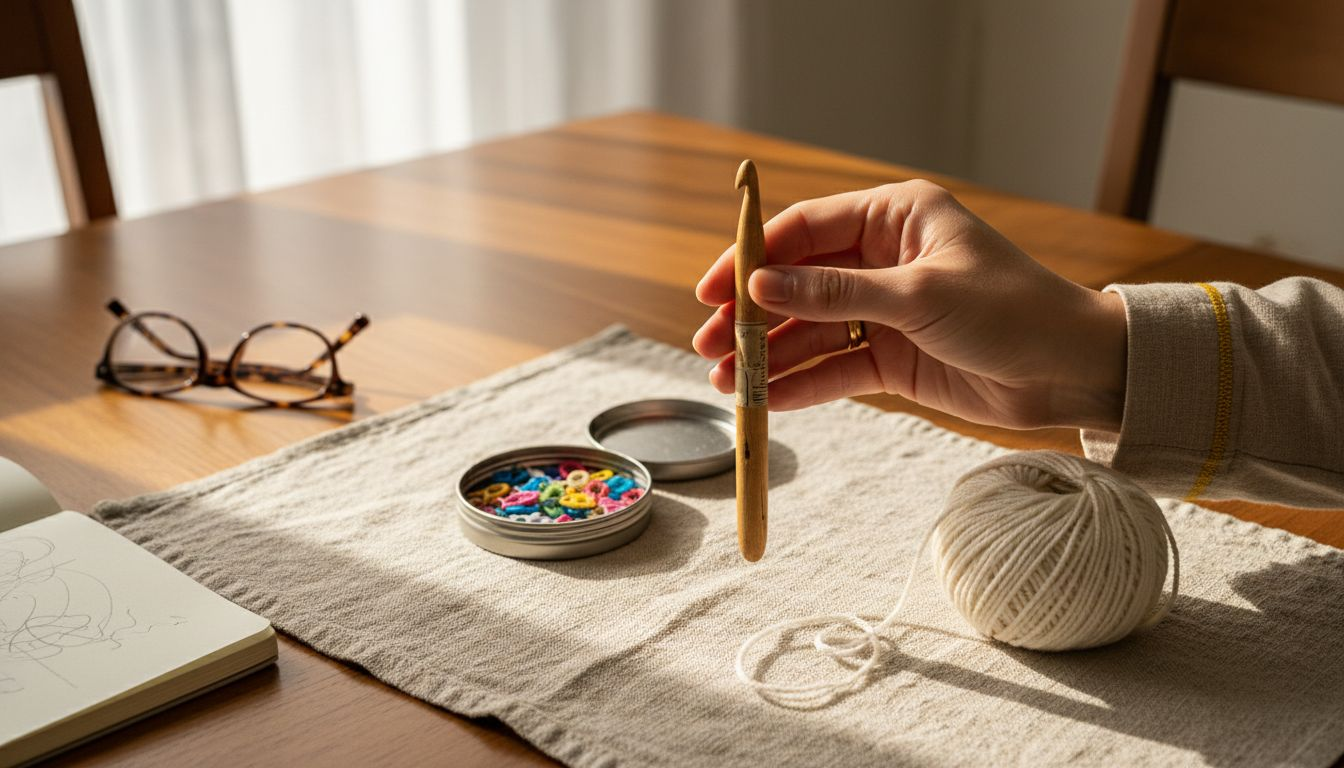
Tunisian crochet hooks differ significantly from standard crochet hooks. These unique hooks enable complex stitch manipulation, allowing crafters to hold multiple loops across an entire row before working them off.
Common Stitches
The most fundamental Tunisian crochet stitches provide a rich foundation for creating intricate textiles:
- Tunisian Simple Stitch (TSS)
- Tunisian Knit Stitch (TKS)
- Tunisian Purl Stitch (TPS)
- Tunisian Reverse Stitch
- Tunisian Double Crochet Stitch
Stitch Techniques
Each Tunisian crochet stitch involves a two-step process: the forward pass, where loops are collected, and the return pass, where loops are worked off the hook. This unique approach creates fabrics with distinctive textures and characteristics.
Here’s a quick reference to common Tunisian crochet stitches and their visual effects:
| Stitch Name | Texture Produced | Best Uses |
|---|---|---|
| Simple Stitch (TSS) | Dense, grid-like | Blankets, scarves |
| Knit Stitch (TKS) | Looks like knitting | Sweaters, jackets |
| Purl Stitch (TPS) | Ribbed, bumpy | Decorative borders |
| Reverse Stitch | Textured, back-loop | Reversible patterns |
| Double Crochet | Airy, openwork | Lightweight shawls |
Pro tip: Practice maintaining consistent tension with your Tunisian hook, as loop uniformity significantly impacts the final fabric’s appearance and drape.
Popular Tunisian Crochet Project Types
Tunisian crochet offers incredible versatility for creating a wide range of textile projects. Contemporary designers continue exploring innovative applications, transforming traditional techniques into modern crafting expressions.
The most popular Tunisian crochet project types include:
- Lightweight shawls and wraps
- Warm winter accessories
- Home decor items
- Structured garments
- Textured blankets and afghans
Wearable Projects
Crafters can create an impressive array of clothing and accessories using Tunisian crochet techniques. Advanced stitch techniques enable precise garment shaping, making items like socks, hats, and mittens particularly appealing.
Detailed Project Categories
Tunisian crochet supports multiple project types with unique fabric characteristics:
- Accessories (scarves, shawls, hats)
- Clothing items (sweaters, jackets, skirts)
- Home decor (blankets, cushion covers, throws)
- Footwear (socks, slippers)
- Decorative items (wall hangings, table runners)
Fabric Versatility
Each project benefits from Tunisian crochet’s distinctive texture, which can range from lightweight and delicate to dense and warm. The technique allows crafters to create fabrics with remarkable depth and visual interest.
Pro tip: Experiment with different yarn weights and hook sizes to discover the unique drape and texture possibilities in your Tunisian crochet projects.
Tips to Prevent Common Mistakes
Tunisian crochet demands precision and careful technique. Maintaining consistent tension is crucial for successful projects, as even slight variations can dramatically impact your final fabric.
Common mistakes to watch for include:
- Uneven stitch tension
- Missed loops during forward passes
- Incorrect hook size selection
- Improper edge management
- Neglecting blocking techniques
Tension Management
Tension control represents the most challenging aspect for beginners. Proper hook size selection helps prevent fabric distortion, with most crafters needing hooks two sizes larger than standard crochet hooks.
Specific Error Prevention Strategies
To maintain high-quality Tunisian crochet projects, consider these targeted approaches:
- Count stitches after each row
- Use stitch markers to track complex patterns
- Practice consistent loop pickup techniques
- Keep first and last stitches slightly tighter
- Block finished items to correct fabric shape
Technical Considerations
Successful Tunisian crochet requires attention to subtle details. Understanding how different stitches interact and maintaining uniform technique can transform your crafting experience from frustrating to fantastic.
Pro tip: Practice your tension on small swatches before starting complex projects to develop muscle memory and consistent stitch quality.
Tunisian Crochet Compared to Standard Crochet
Tunisian crochet represents a unique textile technique that distinctly differs from traditional crochet methods. The construction method creates fundamentally different fabric characteristics, offering crafters an entirely new approach to creating textiles.
Key differences between Tunisian and standard crochet include:
- Multiple loops held simultaneously
- Longer specialized hooks
- Denser fabric production
- Unique stitch manipulation techniques
- Less elastic final fabric
Technique Variations
Unlike standard crochet, Tunisian crochet involves a two-pass technique that transforms fabric creation. The method combines elements of knitting and traditional crochet, producing textures impossible with conventional approaches.
Fabric and Performance Comparison
Tunisian crochet distinguishes itself through several performance characteristics:
- More structured fabric
- Less stretch compared to standard crochet
- Thicker textile production
- Requires specialized blocking techniques
- Produces squarer, more uniform edges
Visual and Structural Differences
Each technique offers unique advantages, with Tunisian crochet providing enhanced fabric control and distinctive textural possibilities that standard crochet cannot replicate.
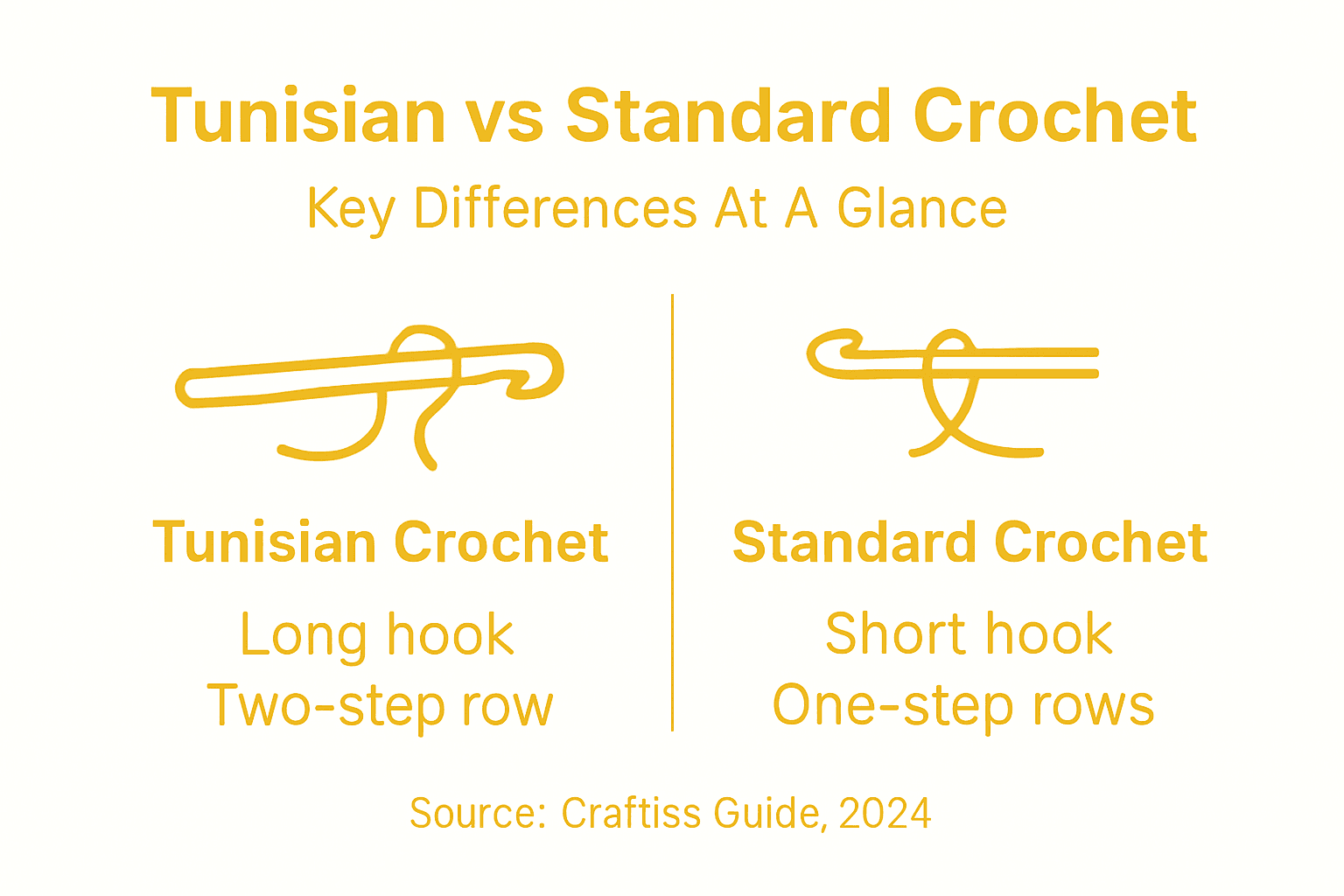
To better understand the differences between Tunisian crochet and standard crochet, here’s a side-by-side comparison.
| Aspect | Tunisian Crochet | Standard Crochet |
|---|---|---|
| Hook Type | Long Afghan hook | Regular single hook |
| Loop Handling | Multiple loops held simultaneously | One loop at a time |
| Texture Appearance | Woven, denser, less elastic | Looser, more elastic |
| Project Complexity | Suited for intricate patterns | Best for basic and textured designs |
| Fabric Edges | Squarer, prone to curling | Rounded, less curling |
Pro tip: Practice switching between standard and Tunisian hooks to develop a nuanced understanding of their distinct crafting techniques.
Elevate Your Tunisian Crochet Experience with the Right Tools and Accessories
Mastering Tunisian Crochet means controlling unique stitches and managing multiple loops on a long Afghan hook. The article highlights key challenges such as maintaining consistent tension and preventing edge curling. These common hurdles can be frustrating but are easier to overcome with the right setup and organization.
Discover how specialized accessories can help you transform your crafting. Keep your yarn perfectly organized and accessible with our premium Yarn Bags, designed to prevent tangles and simplify your workflow.
.png)
Don’t let confusing loops or tangled yarn interrupt your creativity. Visit Craftiss today to explore carefully selected tools and accessories that support your Tunisian crochet journey. Take control of your projects and create beautiful, consistent fabrics with confidence and ease.
Frequently Asked Questions
What is Tunisian crochet and how does it differ from traditional crochet?
Tunisian crochet is a unique technique that combines elements of both crochet and knitting. It uses an elongated hook to hold multiple loops at once, creating a denser, less elastic fabric compared to traditional crochet.
What are some common tools needed for Tunisian crochet?
Essential tools for Tunisian crochet include specialized Tunisian or Afghan hooks, yarn in various weights, stitch markers, and blocking mats for finishing projects. Hooks with flexible cables are also useful for larger projects.
What makes Tunisian crochet fabric unique?
Tunisian crochet fabric has distinct characteristics, including a thicker texture, reduced elasticity, and a unique woven-like appearance. It often requires blocking to prevent edges from curling and can create both lightweight and structured fabrics.
How can I maintain consistent tension in Tunisian crochet projects?
To maintain consistent tension, it’s important to practice loop pickup techniques, count stitches after each row, and possibly use a hook size that is two sizes larger than what you would use for standard crochet. Practicing on small swatches can help develop your technique.
