


Role of Crochet in Fashion 2025: Trends and Innovations
Nearly 63 percent of American consumers now seek fashion with both personal meaning and artisan flair. As crochet surges onto runways and into ready-to-wear, it is no longer just a nostalgic pastime but a defining element in contemporary style. If you are passionate about blending handcrafted texture with modern silhouettes, discover how crochet is transforming the American wardrobe in 2025 with originality, sustainability, and creative innovation.
Table of Contents
- Defining Crochet’s Place In 2025 Fashion
- Types Of Crochet In Contemporary Apparel
- Innovative Crochet Techniques And Materials
- Sustainability And Ethical Sourcing In Crochet
- Common Pitfalls And Maximizing Wardrobe Versatility
Key Takeaways
| Point | Details |
|---|---|
| Crochet as a Fashion Medium | Crochet is evolving into a significant fashion statement, merging traditional craft with modern aesthetics to create personalized garments. |
| Emotional Connections | Consumers are increasingly valuing crochet garments that express personal identity and evoke emotional responses, shifting fashion from mere utility to storytelling. |
| Innovative Techniques and Materials | Advances in materials and techniques are redefining crochet, emphasizing sustainability and functionality through smart and biodegradable yarns. |
| Wardrobe Versatility | Successful crochet designs feature modular components and neutral colors to enhance adaptability, allowing garments to serve multiple styling needs across seasons. |
Defining Crochet’s Place in 2025 Fashion
Crochet is transforming from a traditional craft into a dynamic fashion statement, emerging as a powerful design medium that blends artisan techniques with contemporary aesthetic sensibilities. In 2025, the textile art form is redefining its role through innovative techniques and creative applications that challenge conventional fashion boundaries. Crochet’s distinctive ability to create varied fabric textures enables designers to construct intricate, personalized garments that communicate individual style and cultural narratives.
The emotional and experiential dimensions of crochet have become increasingly significant in fashion design. Modern consumers seek clothing that not only looks appealing but also tells a story and connects with their personal identity. Crochet garments are now evaluated for their ability to evoke specific emotional responses, transforming them from simple textile constructions into complex communication tools. This shift reflects a broader trend where fashion is viewed as an extension of personal expression rather than just functional attire.
Key characteristics defining crochet’s place in 2025 fashion include:
- Sustainability through handcrafted techniques
- Customizable design possibilities
- Versatility across different fashion segments
- Intersection of traditional craft and modern aesthetic
- Emotional resonance with consumers seeking authentic experiences
Pro tip: Experiment with combining crochet techniques from different cultural traditions to create unique, personalized fashion pieces that stand out in 2025’s design landscape.
Recommended supplies for your project


Types of Crochet in Contemporary Apparel
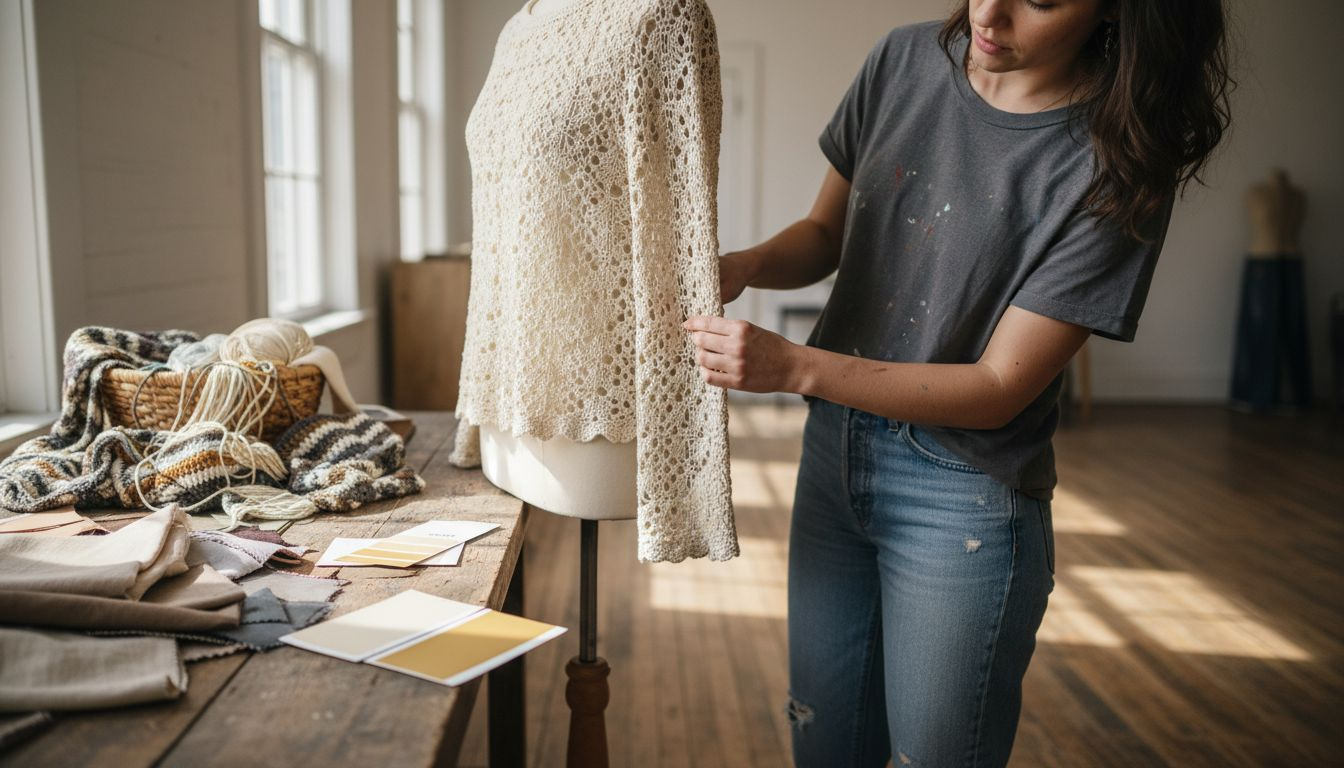
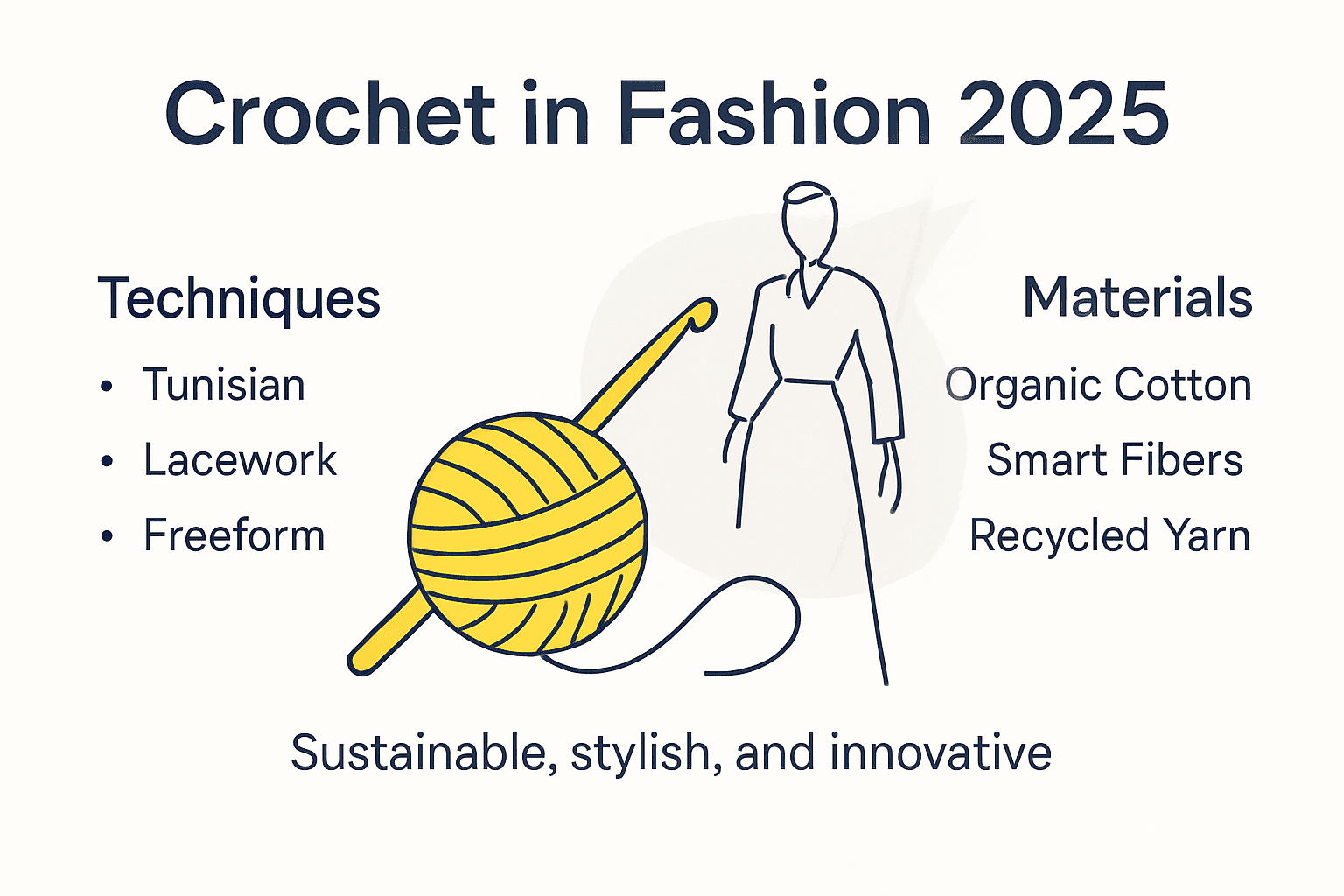
Contemporary fashion in 2025 showcases an extraordinary diversity of crochet techniques that span traditional and innovative approaches, transforming this textile art into a dynamic design medium. Designers are now exploring multiple crochet styles that range from delicate openwork to dense, structured fabrics, each offering unique aesthetic and functional possibilities. Traditional methods like Tunisian, broomstick lace, and classic crochet are being reimagined with modern sensibilities, creating garments that blur the lines between craft and high fashion.
The spectrum of contemporary crochet styles includes intricate techniques that serve different design objectives. Specific stitch variations demonstrate the craftsmanship underlying modern apparel production, with designers selecting particular methods to achieve precise textural and structural effects. Some prominent crochet types emerging in 2025 fashion include:
- Tunisian Crochet: Creating dense, knit-like fabric with enhanced structure
- Broomstick Lace: Producing lightweight, airy designs with dramatic visual texture
- Filet Crochet: Generating intricate, geometric patterns suitable for sheer garments
- Free-form Crochet: Enabling experimental, sculptural clothing designs
- Overlay Crochet: Developing complex, multi-dimensional textile surfaces
These diverse crochet approaches reflect a broader trend of personalization and artistic expression in fashion, where garment construction becomes a form of storytelling. Designers are no longer viewing crochet as a traditional craft but as a sophisticated design language that can communicate cultural narratives, individual creativity, and aesthetic innovation.
Pro tip: Master multiple crochet techniques to expand your design vocabulary and create truly unique, multidimensional fashion pieces that stand out in 2025’s competitive design landscape.
Innovative Crochet Techniques and Materials
The landscape of crochet is undergoing a dramatic transformation, driven by advanced computational design and materials research that pushes the boundaries of traditional textile creation. Cutting-edge innovations are reimagining crochet as a sophisticated intersection of craft, technology, and sustainable design, with designers exploring unprecedented yarn compositions and stitch structures that challenge conventional manufacturing approaches.
Bioengineered materials are revolutionizing crochet’s potential, introducing fibers with extraordinary properties that extend far beyond aesthetic considerations. Biomaterial technologies now enable the development of yarns with enhanced durability, biodegradability, and functional characteristics, allowing fashion designers to create garments that are simultaneously environmentally responsible and technologically advanced. These breakthrough materials include:
- Smart Fibers: Responsive textiles that adapt to temperature and environmental conditions
- Biodegradable Synthetics: Eco-friendly yarns that decompose without environmental harm
- Hybrid Composites: Materials combining natural and engineered fibers for optimal performance
- Recycled Polymers: Sustainable yarn alternatives derived from post-consumer waste
- Nano-engineered Textiles: Fabrics with enhanced strength and microscopic structural innovations
The convergence of traditional craftsmanship and scientific innovation represents a profound shift in textile design. Crochet is no longer viewed as a static craft but as a dynamic, evolving medium that can address complex challenges in sustainability, functionality, and aesthetic expression. Designers are now approaching crochet as a sophisticated design language capable of communicating complex narratives about technology, environment, and human creativity.
Here’s how leading innovative crochet materials compare in 2025 fashion:
| Material Type | Main Advantage | Sustainability Impact |
|---|---|---|
| Smart Fibers | Adjusts to temperature | Reduces energy consumption |
| Biodegradable Synthetics | Decompose safely after use | Limits long-term waste buildup |
| Hybrid Composites | Balances durability and feel | Lowers overall resource use |
| Recycled Polymers | Gives waste new life | Minimizes landfill demand |
| Nano-engineered Textiles | Exceptional strength, lightness | Extends garment longevity |
Pro tip: Experiment with combining multiple yarn types and innovative techniques to develop unique textile compositions that showcase the intersection of traditional craft and cutting-edge material science.
Sustainability and Ethical Sourcing in Crochet
The crochet industry is experiencing a profound transformation, driven by an urgent need to address environmental and social challenges in textile production. Sustainable supply chain management has become critical in ensuring that crochet materials meet rigorous ecological, social, and economic sustainability criteria, fundamentally reshaping how designers and manufacturers approach textile creation in 2025.
Sustainable fashion principles now extend deeply into crochet production, emphasizing transparency, fair labor practices, and environmental responsibility. This holistic approach encompasses multiple critical dimensions:
- Fiber Selection: Prioritizing organic, recycled, and low-impact materials
- Labor Practices: Ensuring fair wages and safe working conditions for artisans
- Production Transparency: Tracking material origins and manufacturing processes
- Waste Reduction: Minimizing environmental footprint through responsible manufacturing
- Cultural Preservation: Respecting traditional craftsmanship and indigenous textile techniques
The integration of sustainability in crochet represents more than an aesthetic choice - it’s a comprehensive commitment to ethical production. Designers and manufacturers are now viewed as stewards of both environmental and social ecosystems, responsible for creating textiles that honor both human creativity and planetary well-being. This approach transforms crochet from a simple craft into a powerful medium for social and environmental storytelling.
Pro tip: Research the specific sustainability practices of your yarn suppliers and prioritize those demonstrating genuine commitment to ethical and environmental standards.
Common Pitfalls and Maximizing Wardrobe Versatility
Navigating the challenges of crochet garment integration requires strategic design and thoughtful approach to textile functionality. Modern wardrobes demand pieces that can seamlessly transition across multiple contexts, requiring crochet designers to move beyond traditional limitations and create truly adaptable clothing. The key lies in understanding how handcrafted items can be engineered for maximum utility and emotional resonance.
Emotional and social versatility are critical factors in extending the wearability of crochet garments, transforming them from single-purpose items to dynamic wardrobe staples. The most successful crochet pieces in 2025 will demonstrate remarkable adaptability through these strategic design considerations:
- Modular Construction: Allowing interchangeable components
- Neutral Color Palettes: Enabling easy mixing and matching
- Layerable Designs: Supporting multiple styling approaches
- Texture Diversity: Creating visual interest across different outfits
- Lightweight, Adaptable Fabrics: Supporting year-round wear
Successful wardrobe integration requires transcending traditional craft limitations, viewing crochet as a sophisticated design language rather than a restrictive technique. Designers must anticipate how garments will function across various social contexts, emotional states, and personal style expressions. This approach transforms crochet from a niche craft to a flexible, responsive fashion medium that speaks to individual creativity and practical needs.
The table below highlights strategies for maximizing crochet wardrobe versatility:
| Strategy | Style Benefit | Practical Impact |
|---|---|---|
| Modular Construction | Easy style updates | More outfit combinations |
| Neutral Color Palette | Mixes with various garments | Increases daily use |
| Layerable Design | Adapts to seasons | Greater year-round wear |
| Texture Diversity | Adds visual interest | Works for many occasions |
| Lightweight Fabrics | Comfortable for layering | Suitable in all climates |
Pro tip: Invest in crochet pieces with neutral tones and modular design elements that can be easily styled across multiple occasions and emotional contexts.
Elevate Your Crochet Creations with Premium Yarns and Tools
In 2025’s evolving fashion landscape, mastering innovative crochet techniques and sustainable materials is essential to stand out. Whether you are exploring intricate stitch variations or developing modular, versatile pieces, having access to top-quality yarn empowers your creativity and craftsmanship. At CRAFTISS, we understand the challenges designers face when integrating traditional artisan methods with cutting-edge trends and sustainability goals.
.png)
Discover our wide selection of premium Yarn that supports durability, aesthetic appeal, and environmental responsibility. Protect and organize your materials in stylish and functional Yarn Bags designed to keep your workspace efficient. Visit CRAFTISS now and unlock resources that help transform your crochet projects into fashion-forward statements that resonate with today’s conscious consumers.
Frequently Asked Questions
What are the key trends in crochet for fashion in 2025?
Key trends in crochet for 2025 include a focus on sustainability, customizable design possibilities, versatility across different fashion segments, and the integration of traditional craft techniques with modern aesthetics.
How are innovative materials changing crochet in contemporary fashion?
Innovative materials, such as smart fibers, biodegradable synthetics, and nano-engineered textiles, are transforming crochet by enhancing durability, functionality, and environmental responsibility, paving the way for advanced textile designs.
What crochet techniques are most popular in contemporary apparel?
Popular crochet techniques in 2025 fashion include Tunisian crochet for structured fabrics, broomstick lace for lightweight designs, filet crochet for intricate patterns, and free-form crochet for experimental designs, allowing for a wide range of creative expression.
How can crochet garments maximize wardrobe versatility?
Crochet garments can maximize wardrobe versatility through strategies like modular construction, neutral color palettes, layerable designs, texture diversity, and lightweight, adaptable fabrics, making them suitable for various occasions and emotional contexts.
