


How to Crochet a Blanket: Step-by-Step for Beginners
Starting your first crochet blanket can feel overwhelming when faced with rows of yarn choices and tools at the craft store. Many American beginners worry about spending too much on supplies or picking the wrong materials. By focusing on affordable yarn materials like acrylic in light colors, you can keep costs low and spot your stitches easily. This straightforward guide walks you through every step, helping you confidently gather what you need to create a cozy blanket on a budget.
Table of Contents
- Step 1: Gather Materials And Choose Affordable Yarn
- Step 2: Measure And Set Up Your Foundation Chain
- Step 3: Crochet Your Blanket Using Basic Stitches
- Step 4: Check Your Blanket For Consistency And Quality
- Step 5: Finish Edges And Secure Loose Ends
Quick Summary
| Key Takeaway | Explanation |
|---|---|
| 1. Choose Budget-Friendly Yarn | Opt for acrylic yarn in medium weight for affordability and ease of use. Light colors help visibility while crocheting. |
| 2. Master the Foundation Chain | Create a slip knot and maintain consistent tension for a strong foundation chain. It should be slightly looser than subsequent rows. |
| 3. Focus on Basic Stitches | Start with single, double, and half double crochet stitches to build your blanket, ensuring uniform tension for a professional finish. |
| 4. Regularly Check Consistency | Inspect stitch size, edge straightness, and overall tension to catch issues early and maintain quality throughout your project. |
| 5. Finish Edges Cleanly | Create a border, weave in ends securely, and block your blanket for a polished, professional appearance before completing your project. |
Step 1: Gather Materials and Choose Affordable Yarn
Starting your first crochet blanket requires gathering the right materials without breaking the bank. You’ll need just a few essential items to begin your crafting journey, focusing on selecting budget-friendly supplies that will help you learn effectively.
To get started, you’ll want to select affordable yarn materials that are beginner-friendly. Choosing the right yarn type involves understanding a few key considerations:
- Acrylic yarn: Best for beginners due to low cost and easy maintenance
- Medium weight yarn (worsted weight): Ideal for blanket projects
- Light colors: Makes seeing stitches and tracking progress easier
When selecting your crochet hook, look for a standard size that feels comfortable in your hand. Most beginners start with a hook sized between 5mm and 6mm, which works well with medium weight yarn. Budget-conscious crafters can find affordable hook sets that include multiple sizes for around $10-$15.
Here’s how popular yarn types compare for beginner crochet blankets:
| Yarn Type | Cost | Ease of Use | Durability |
|---|---|---|---|
| Acrylic | Very low | Excellent for all | Machine washable |
| Cotton | Moderate | Good, can split | Strong, less stretch |
| Wool Blend | Higher | May snag easily | Warm and resilient |
Tip: Invest in basic, versatile materials that allow you to practice without significant financial commitment.
Pro tip: Check local craft stores for sales or discount bins where you can find discounted yarn and hooks to keep your initial investment low.
Recommended supplies for your project


Step 2: Measure and Set Up Your Foundation Chain
Creating a strong foundation chain is crucial for your crochet blanket project, as it determines the overall width and structure of your final piece. Measuring your foundation chain requires careful attention to tension and stitch count.
To begin, you’ll need to follow these key steps for setting up your foundation:
- Create a slip knot: Form the initial loop that anchors your first stitch
- Maintain consistent tension: Keep your yarn and hook movements smooth and even
- Count stitches carefully: Follow your specific blanket pattern’s recommended chain length
When creating your foundation chain, focus on keeping your stitches uniform and relaxed. Beginners often make the mistake of crocheting too tightly, which can make subsequent rows difficult to work. Practice creating loose, even chains that allow flexibility in your work.
Tip: Your foundation chain should be slightly looser than your subsequent rows to prevent the blanket’s edge from becoming too tight and restrictive.
Measure your foundation chain against your pattern’s specified width, ensuring you’ve created the correct number of stitches. If your chain seems too tight, try using a hook one size larger for the foundation row.
Pro tip: Practice your foundation chain on scrap yarn first to develop a consistent tension before starting your actual blanket project.
Step 3: Crochet Your Blanket Using Basic Stitches
Now that you’ve set up your foundation chain, it’s time to start creating the actual fabric of your blanket using basic crochet stitches. The key to a successful blanket is mastering a few fundamental techniques that will help you create a consistent and even fabric.
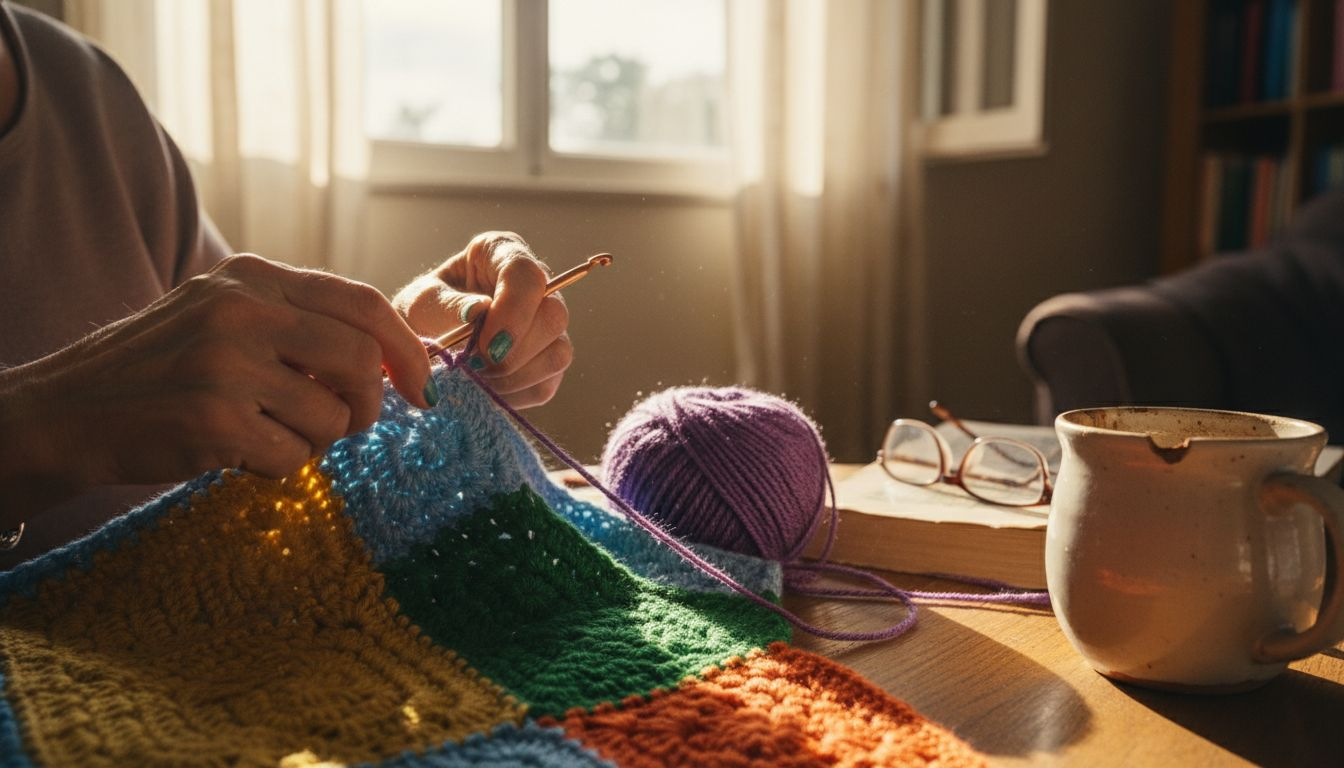
Beginners will want to focus on these essential stitches:
Here is a summary of three basic crochet stitches for blanket projects:
| Stitch Name | Texture Result | Common Use |
|---|---|---|
| Single Crochet | Dense and firm | Borders, structure |
| Double Crochet | Soft and stretchy | Main blanket body |
| Half Double Crochet | Medium thickness | Baby blankets, mix |
- Single crochet: Creates a dense, tight fabric
- Double crochet: Produces a looser, more flexible texture
- Half double crochet: Offers a medium-weight option between single and double crochet
When working your first rows, pay close attention to maintaining consistent tension. Each stitch should be roughly the same size, which helps create a smooth and professional-looking blanket. Practice keeping your yarn and hook movements steady and relaxed.
Tip: Count your stitches at the end of each row to ensure you’re maintaining the same number of stitches across your work.
As you progress through your blanket, you’ll need to learn how to turn your work at the end of each row. This involves creating a turning chain that helps maintain the correct height for your next row of stitches. Most beginner-friendly patterns use double crochet, which provides quick progress and a soft, comfortable texture.
Pro tip: Watch online video tutorials to see the exact hand movements for each stitch, as visual learning can significantly improve your technique.
Step 4: Check Your Blanket for Consistency and Quality
As you progress through your crochet project, regularly pausing to inspect your blanket’s consistency becomes crucial for creating a professional-looking final product. Careful examination helps you catch and correct potential issues before they become more significant problems.
Here are key areas to focus on during your quality check:
- Stitch uniformity: Ensure each row maintains consistent stitch size
- Edge straightness: Check that edges remain even and square
- Tension control: Look for areas where stitches appear looser or tighter
- Color consistency: Verify no unexpected color variations
Measuring your blanket periodically helps maintain the intended dimensions. Use a measuring tape to check width and length, ensuring you’re staying true to your original pattern. Pay special attention to the edges, which can sometimes stretch or become uneven during crocheting.
Tip: Lay your blanket flat on a smooth surface every few rows to get a true sense of its overall shape and consistency.
If you notice any irregularities, don’t be discouraged. Small imperfections can often be gently adjusted by slightly stretching or manipulating the fabric. For more significant issues, you might need to unravel a few rows and restart to maintain the blanket’s overall quality.
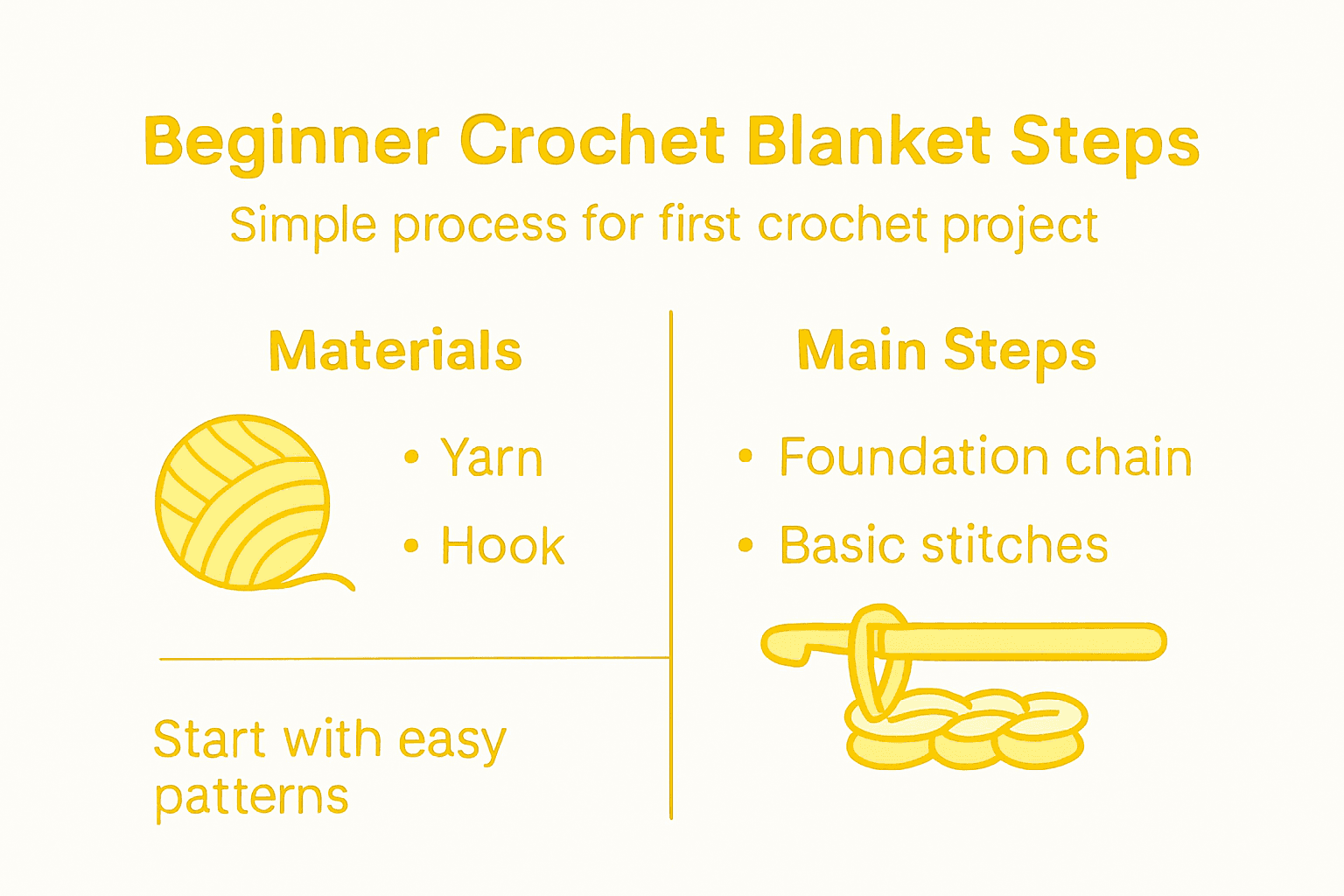
Pro tip: Take progress photos as you work, which can help you objectively assess your blanket’s consistency and track your improvement over time.
Step 5: Finish Edges and Secure Loose Ends
The final stage of your crochet blanket involves creating polished edges and ensuring all yarn ends are securely woven in. Finishing techniques transform your handmade blanket from a raw project to a professional-looking piece.
To complete your blanket, follow these essential steps:
- Add a border: Create a uniform edge using single crochet or decorative stitches
- Weave in loose ends: Use a tapestry needle to secure yarn tails
- Trim excess yarn: Carefully cut remaining yarn strands close to the fabric
- Block your blanket: Steam or lay flat to even out stitches
Weaving in ends requires patience and precision. Insert your tapestry needle through multiple existing stitches, moving in different directions to anchor the yarn securely. This prevents unraveling and gives your blanket a clean, professional appearance.
Tip: Always weave ends through the back side of the blanket to keep the front surface looking smooth and neat.
When adding a border, choose a stitch that complements your blanket’s texture. Single crochet works well for beginners, providing a clean and straightforward edge that helps stabilize the entire piece.
Pro tip: Use sharp scissors and make small, precise cuts when trimming yarn ends to avoid accidentally cutting into your blanket’s fabric.
Ready to Start Your First Crochet Blanket with Confidence
Learning how to crochet a blanket can feel overwhelming when choosing the right yarn, mastering foundation chains, and keeping consistent tension. If you want to avoid frustration and get professional results, having the right beginner-friendly materials at your fingertips will make all the difference. Whether you need affordable and soft yarn or helpful beginner bundles, finding trusted supplies is key to turning your creative ideas into cozy blankets.
.png)
Explore our carefully curated Bundles for Crochet and Knitting Beginners to get everything you need in one easy package. Get high-quality, budget-friendly Yarn designed to make stitching smoother and more enjoyable. Start your crochet journey on the right foot now at Craftiss and create beautiful blankets that you will be proud of. Don’t wait to turn your passion into gorgeous hand-made warmth today.
Frequently Asked Questions
What materials do I need to start crocheting a blanket?
To begin crocheting a blanket, you will need affordable yarn, a crochet hook, and possibly a tapestry needle for finishing. Start with medium weight acrylic yarn and a 5mm to 6mm crochet hook, which are beginner-friendly options.
How do I create the foundation chain for my blanket?
To create the foundation chain, form a slip knot and then chain the number of stitches required for your blanket width. Make sure to maintain consistent tension throughout to ensure the edges remain even and the stitches uniform.
What basic stitches should I learn for crocheting a blanket?
Focus on mastering the single crochet, double crochet, and half double crochet stitches. Each has its texture and purpose: single crochet provides a dense fabric, double crochet offers a softer texture, and half double crochet sits in between both.
How can I check the consistency of my blanket while crocheting?
Regularly inspect your blanket for stitch uniformity, edge straightness, and tension control. Lay your blanket flat every few rows to visually assess its shape and ensure the stitching is consistent throughout.
What finishing techniques should I use to complete my blanket?
To finish your blanket, add a border using a simple stitch, weave in all loose ends, and block the blanket to even out stitches. Ensure to securely anchor your yarn tails with a tapestry needle for a polished and professional look.
How do I prevent my stitches from becoming too tight or too loose?
Keep your yarn and hook movements smooth and relaxed while crocheting. Practice on scrap yarn to develop a consistent tension that works for you before starting your actual blanket project.
