


Crochet Hook Size Guide: Choose the Perfect Hook Every Time
Trying to crochet a cozy blanket or stylish scarf only to end up with uneven stitches can be frustrating for anyone learning the craft. Choosing the correct hook size for your yarn is a key factor for project success, impacting everything from fabric texture to ease of stitching. With so many options and recommendations, understanding how to match hooks and yarn weights helps American crafters confidently start each project. Discover clear steps for organizing your materials and pairing hook sizes to yarn weights for smoother, more enjoyable crochet sessions.
Table of Contents
- Step 1: Gather Your Yarn and Crochet Patterns
- Step 2: Identify Recommended Hook Sizes for Your Project
- Step 3: Match Crochet Hook Size to Yarn Weight
- Step 4: Test and Adjust Hook for Preferred Fabric
- Step 5: Verify Your Swatch for Accuracy
Quick Summary
| Key Point | Explanation |
|---|---|
| 1. Organize Yarn and Patterns | Gather all necessary materials and review yarn specifications before starting to avoid project complications. |
| 2. Select the Right Hook Size | Choose a crochet hook that matches your yarn weight and pattern recommendations for consistent tension and fabric quality. |
| 3. Test Hook and Yarn Compatibility | Create a gauge swatch to ensure your hook size and tension yield the correct dimensions and appearance for your project. |
| 4. Measure Gauge Swatch Accurately | Verify your swatch against the pattern’s gauge requirements; make adjustments to hook size as needed for precision. |
| 5. Document Your Swatch Results | Keep a record of your gauge swatch measurements and settings to streamline future projects and avoid repeated errors. |
Step 1: Gather Your Yarn and Crochet Patterns
Successful crochet projects begin with thoughtful preparation and selecting the right materials. In this step, you will collect everything needed to set yourself up for crafting success.
Start by reviewing your chosen pattern and gathering compatible yarns. The Crochet Guild of America recommends carefully organizing your supplies before beginning. Examine your pattern closely to understand its specific requirements for yarn weight, hook size, and gauge. Check the recommended yarn type matching your project some patterns specify exact yarn brands or fiber compositions.
Look for yarns that complement your pattern’s design and skill level. Consider factors like fiber content, color consistency, and texture. If you are substituting yarns, ensure they have similar characteristics to those originally suggested. Pay attention to yardage requirements running short midway through a project can be frustrating. Organize your chosen yarn and pattern together, keeping project details and materials in one convenient location.
Pro tip: Always purchase an extra skein of yarn beyond the pattern’s recommendation to account for potential variations in tension or unexpected project needs.
Recommended supplies for your project


Step 2: Identify Recommended Hook Sizes for Your Project
Selecting the right crochet hook size is crucial for achieving your project’s desired texture and appearance. This step will help you match the perfect hook to your yarn and pattern requirements.
Crochet hook sizes vary based on shaft diameter, with specific recommendations depending on your project’s yarn weight and stitch type. Start by checking your pattern’s suggested hook size most patterns provide a recommended size that ensures consistent fabric tension. Steel hooks under 2.0 mm are typically used for fine thread work, while larger hooks work best for standard yarn projects. Compare the yarn label’s recommended hook size with your pattern’s specifications to ensure compatibility.
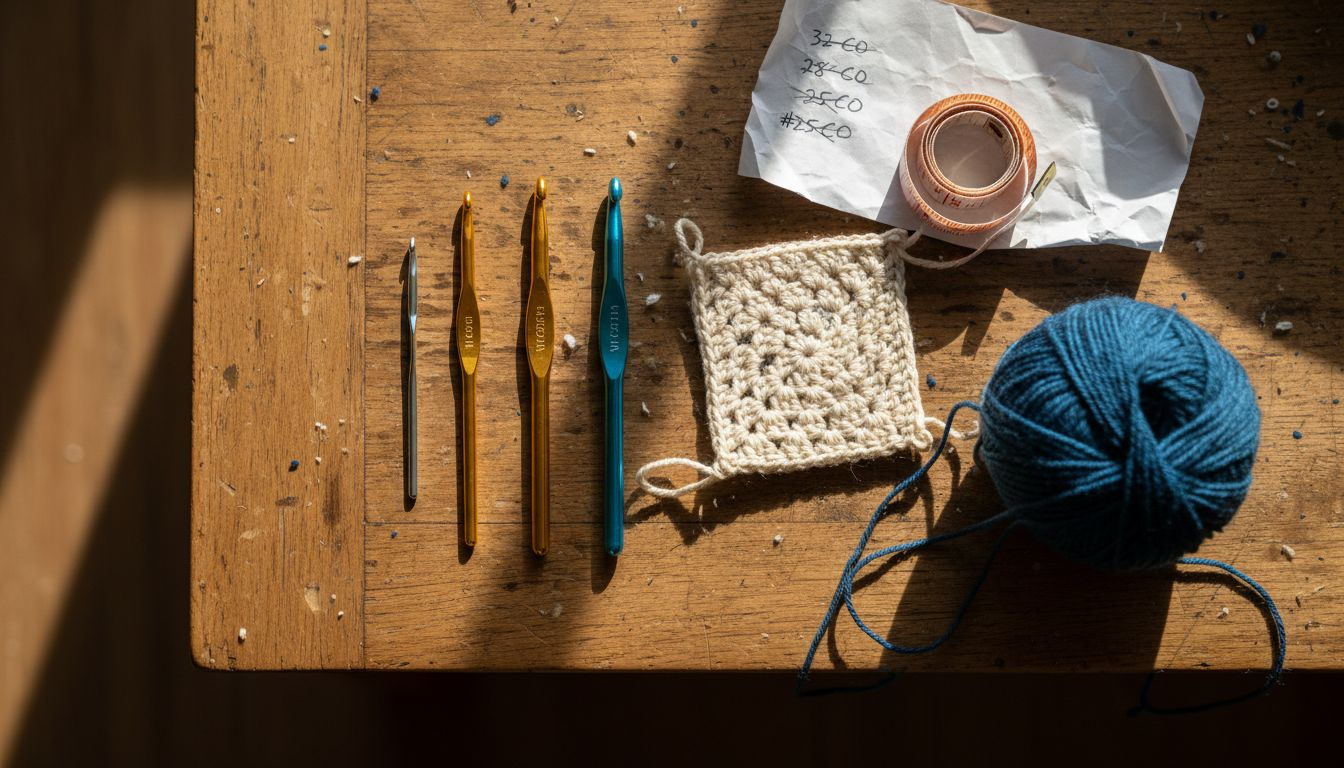
Consider additional factors beyond basic sizing. Hook material can impact your crafting experience aluminum hooks glide smoothly, while wooden hooks provide more grip. Ergonomic handle designs can reduce hand fatigue during longer projects. If you tend to crochet tightly, you might want to choose a hook one size larger than recommended to maintain proper stitch tension.
Below is a summary of how different hook materials can affect your crocheting experience:
| Hook Material | Feel in Hand | Best For |
|---|---|---|
| Aluminum | Smooth, lightweight | Fast stitching, slippery yarns |
| Wood | Warm, more grip | Natural fibers, relaxed tension |
| Plastic | Light, slightly flexible | Beginners, budget projects |
| Steel | Firm, precise | Fine thread work and detail |
Pro tip: Always make a small gauge swatch before starting your main project to confirm that your selected hook produces the correct stitch size and fabric density.
Step 3: Match Crochet Hook Size to Yarn Weight
Matching your crochet hook size to yarn weight is essential for creating a consistent and professional looking project. This step will help you understand how to pair your hooks and yarns perfectly.
Yarn weights are classified from fine to bulky, guiding your hook size selection. Generally lightweight yarns require smaller hooks to maintain proper fabric tension, while bulky yarns need larger hooks to create appropriate stitch definition. The Craft Yarn Council provides standardized weight categories that make this matching process easier. Start by checking your yarn label most include a recommended hook size range printed directly on the packaging. This recommended range ensures you will achieve the correct gauge and fabric texture.
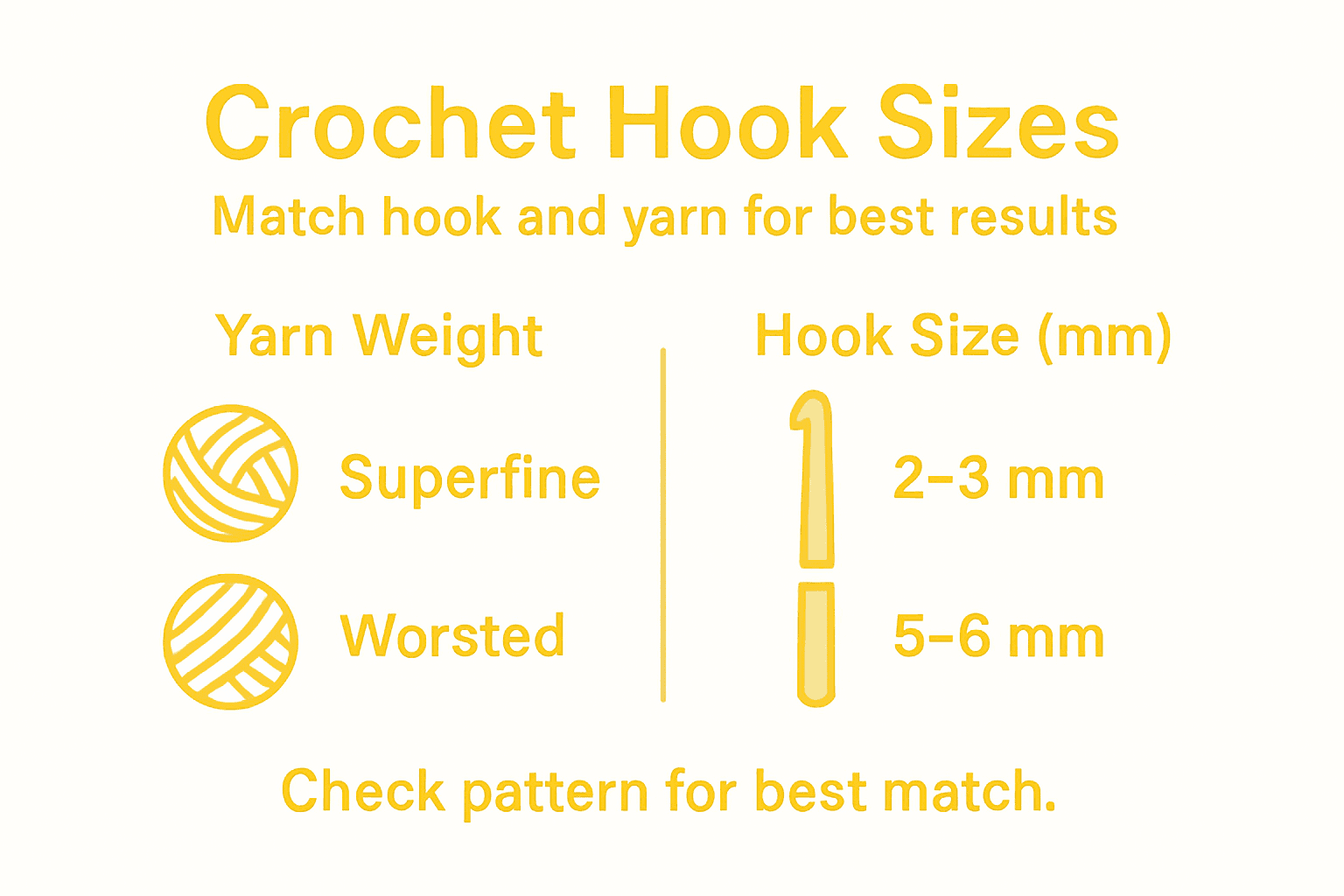
Understand how different yarn weights correspond to hook sizes. Superfine or fingering weight yarns typically use hooks between 1.6 mm to 2.25 mm. Light weight yarns work best with 2.25 mm to 3.5 mm hooks. Medium weight yarns the most common for beginners pair well with 3.5 mm to 4.5 mm hooks. Bulky and super bulky yarns require larger hooks between 5.5 mm to 9 mm to create loose, airy stitches. Always remember that individual crocheting tension can impact your final result.
This chart provides a quick reference for matching common yarn weights with suitable hook sizes:
| Yarn Weight | Typical Hook Size (mm) | Project Example |
|---|---|---|
| Superfine/Fingering | 1.6 – 2.25 | Lacy shawls, doilies |
| Lightweight (Sport) | 2.25 – 3.5 | Baby garments, socks |
| Medium (Worsted) | 3.5 – 4.5 | Blankets, scarves |
| Bulky/Super Bulky | 5.5 – 9 | Chunky hats, throws |
Pro tip: Invest in a hook sizing tool to quickly and accurately measure your existing hooks this prevents confusion and ensures precise matching.
Step 4: Test and Adjust Hook for Preferred Fabric
Creating the perfect crochet fabric requires careful testing and subtle adjustments to your hook and technique. This step helps you fine tune your stitches for optimal texture and appearance.
Crochet testing tools help visualize stitch tension before you complete an entire project. Begin by creating a small gauge swatch a 4 inch square sample that reveals how your chosen hook interacts with your selected yarn. Work the swatch using the same tension and technique you plan to use in your final project. Measure the swatch carefully, comparing its dimensions to your pattern’s recommended gauge. If your swatch is too tight, try a larger hook if it is too loose, switch to a smaller hook.
Look closely at your fabric characteristics. Ideal crochet fabric should have consistent stitch definition without visible gaps or extreme denseness. Yarn should move smoothly through your hook, creating even stitches with minimal resistance. Pay attention to how the fabric drapes some projects require firm structure while others need more flexibility. Experiment with slight tension adjustments by changing how you hold the yarn or modifying your hand positioning. Remember that personal crocheting style plays a significant role in achieving your desired fabric result.
Pro tip: Keep a notebook documenting your gauge swatches, noting hook sizes, yarn types, and resulting fabric characteristics for future reference.
Step 5: Verify Your Swatch for Accuracy
Creating an accurate gauge swatch is critical for ensuring your final crochet project matches the intended design. This step transforms your initial test into a precise measurement tool that validates your technique.
CrochetPARADE tools help debug stitch inconsistencies before you invest time in a full project. Carefully measure your swatch using a metal ruler fabric measuring tapes can stretch and provide inaccurate readings. Count the number of stitches and rows within a 4 inch square, comparing these exactly to your pattern’s recommended gauge. Check both horizontal and vertical measurements to ensure complete accuracy. Look for consistent stitch size variations indicate uneven tension that could impact your project’s final dimensions.
Analyze your swatch beyond simple measurements. Gently stretch the fabric to test its elasticity and drape. Confirm that the fabric feels appropriate for your project a blanket requires different characteristics compared to a delicate shawl. If your measurements do not match the pattern specifications, make small adjustments to your hook size or tension. Sometimes changing how you hold the yarn or adjusting your hand position can create more uniform stitches. Remember that precision in this step prevents potential frustration later in your project.
Pro tip: Photograph your gauge swatch with a ruler in the frame to create a permanent record of your tension and technique.
Find Your Perfect Crochet Hook Match and Yarn Today
Struggling to choose the right crochet hook size for your yarn weight and project goals can hold back your creativity and cause frustrating results. This guide helped you understand the importance of gauge swatches and selecting hooks that complement your yarn perfectly. To eliminate uncertainty and craft with confidence, start by exploring our carefully curated collection of premium yarns at Yarn – CRAFTISS where each skein is matched to popular hook sizes and project types.
.png)
Discover the satisfaction of pairing flawless yarn with the right tools on CRAFTISS. Shop now and take advantage of our quality yarn offerings designed to work beautifully with your chosen crochet hooks. Protect and organize your supplies with our stylish Yarn Bags – CRAFTISS so you can focus on creating your next perfect project today.
Frequently Asked Questions
How do I choose the right crochet hook size for my project?
To choose the right crochet hook size, refer to the yarn weight specified for your project and check your pattern’s recommended hook size. Start by looking at the yarn label for suggested hook sizes, and then select a hook that matches this guidance to achieve the correct gauge.
What should I do if my gauge swatch is too tight or too loose?
If your gauge swatch is too tight, use a larger hook to loosen your stitches, and if it’s too loose, switch to a smaller hook. After making these changes, crochet a new swatch to check if your new gauge aligns with the pattern specifications.
Can I use any type of crochet hook material for my project?
While any crochet hook material can be used, different materials can affect your crocheting experience. Choose aluminum hooks for smoothness, wooden hooks for grip, and ergonomic designs to reduce hand fatigue during long sessions.
How do I ensure that my crochet project matches the intended design?
To ensure your crochet project matches the intended design, create a gauge swatch and compare its measurements to the pattern’s requirements. Adjust your hook size or tension as needed, keeping careful notes for future reference to maintain accuracy.
What factors should I consider when substituting yarn in my crochet pattern?
When substituting yarn, consider the fiber content, texture, and yarn weight to ensure compatibility with your pattern. Always check the recommended yardage and choose a substitute that closely matches the original characteristics to avoid running short midway through your project.
