


Why Use Crochet Charts: Complete Guide to Benefits
Over 70 percent of american crocheters rely on visual aids to tackle complex patterns with confidence. Crochet charts have reshaped the way crafters of all skill levels approach their projects by translating intricate instructions into clear, easy-to-follow symbols. When you understand how these charts work, you unlock a new level of accuracy and creative freedom that written patterns alone rarely provide.
Table of Contents
- What Exactly Are Crochet Charts
- Different Types Of Crochet Charts
- How Crochet Charts Improve Accuracy
- Why Charts Beat Text Patterns
- When Charts May Be Less Ideal
Key Takeaways
| Point | Details |
|---|---|
| Understanding Crochet Charts | Crochet charts use universal symbols to visually convey stitch patterns, making it easier for crafters to follow designs regardless of language. |
| Types of Crochet Charts | Different chart formats, such as flat, circular, and mosaic, serve specific crafting needs and complexities, aiding in the creation of diverse projects. |
| Accuracy and Error Reduction | Charts enhance accuracy by providing a clear visual roadmap that helps minimize misinterpretation and errors during crocheting. |
| Learning Curve for Beginners | While charts offer many advantages, beginners may face challenges in reading them, necessitating a foundational understanding of crochet techniques first. |
What Exactly Are Crochet Charts
Crochet charts are specialized visual representations that transform complex stitch patterns into easy-to-understand graphic symbols. Unlike traditional written instructions, these diagrams use standardized international symbols that transcend language barriers, enabling crafters worldwide to follow intricate designs with remarkable precision.
At their core, crochet symbol diagrams communicate pattern instructions through a universal graphic language. Each symbol represents a specific type of stitch or technique, creating a visual blueprint that shows exactly how to construct a pattern. Think of them like architectural blueprints for yarn crafting - where every geometric shape corresponds to a particular crochet movement or stitch type.
The components of a crochet chart typically include:
- Standardized symbols representing individual stitches
- Directional arrows indicating stitch placement
- Grid-like layouts showing pattern progression
- Color-coded elements highlighting specific pattern sections
While written patterns provide step-by-step text instructions, crochet pattern types reveal that charts offer a complementary visual approach. They allow crafters to see the entire design’s structure at a glance, making complex patterns more accessible and easier to comprehend. Whether you are a beginner or an advanced crocheter, mastering chart reading can significantly enhance your crafting skills and expand your creative possibilities.
Different Types Of Crochet Charts
Crochet charts come in various specialized formats, each designed to address specific crafting needs and complexity levels. These visual guides range from simple stitch pattern representations to intricate design blueprints that help crafters navigate complex techniques with precision and clarity.

One distinctive style is the mosaic crochet chart, which creates stunning color-work patterns by strategically overlaying stitches. These specialized diagrams guide crafters through complex color changes and unique stitch placements, transforming traditional crochet into an art form that resembles intricate geometric designs. Mosaic charts typically use contrasting symbols and color blocks to indicate exactly how each row should be constructed.
The main types of crochet charts include:
- Flat Pattern Charts: Used for creating two-dimensional items like scarves, blankets, and rectangular garments
- Circular Pattern Charts: Designed for projects worked in the round, such as doilies, hats, and circular motifs
- Motif Charts: Specialized diagrams for creating individual crochet squares or geometric shapes
- Stitch Type Charts: Detailed visual guides showing specific stitch techniques and variations
Each chart type serves a unique purpose, providing visual instructions that transcend traditional written patterns. Advanced crafters often use these charts to understand complex stitch relationships, color transitions, and spatial arrangements that might be challenging to interpret through text alone. By mastering different chart styles, crocheters can expand their creative repertoire and tackle more sophisticated projects with confidence.
How Crochet Charts Improve Accuracy
Symbol diagrams in crochet revolutionize pattern interpretation by providing an unambiguous visual roadmap for crafters. Unlike written instructions that can be misinterpreted, these charts eliminate guesswork and significantly reduce the potential for errors during project creation.
The precision of crochet charts stems from their ability to represent complex stitch sequences through standardized symbols. Each geometric shape corresponds exactly to a specific stitch type, direction, and placement, creating a universal language that transcends written instructions. This visual representation allows crafters to understand the entire pattern’s structure before even picking up their yarn and hook.
Key ways crochet charts enhance accuracy include:
- Providing a complete visual overview of the entire pattern
- Showing exact stitch placement and connection points
- Representing color changes and texture transitions
- Enabling quick error identification and correction
- Allowing side-by-side comparison with actual project progress
Professional crafters recognize that crochet tension plays a crucial role in maintaining accuracy, and charts offer an additional layer of precision. By displaying each stitch’s relationship to surrounding stitches, these diagrams help crocheters maintain consistent tension, understand spatial relationships, and execute complex patterns with greater confidence and skill.
Why Charts Beat Text Patterns
Crochet symbol diagrams offer a revolutionary approach to pattern communication that dramatically outperforms traditional text-based instructions. Unlike written patterns that require complex linguistic interpretation, these visual guides provide an immediate, intuitive understanding of stitch placement and technique that transcends language barriers.
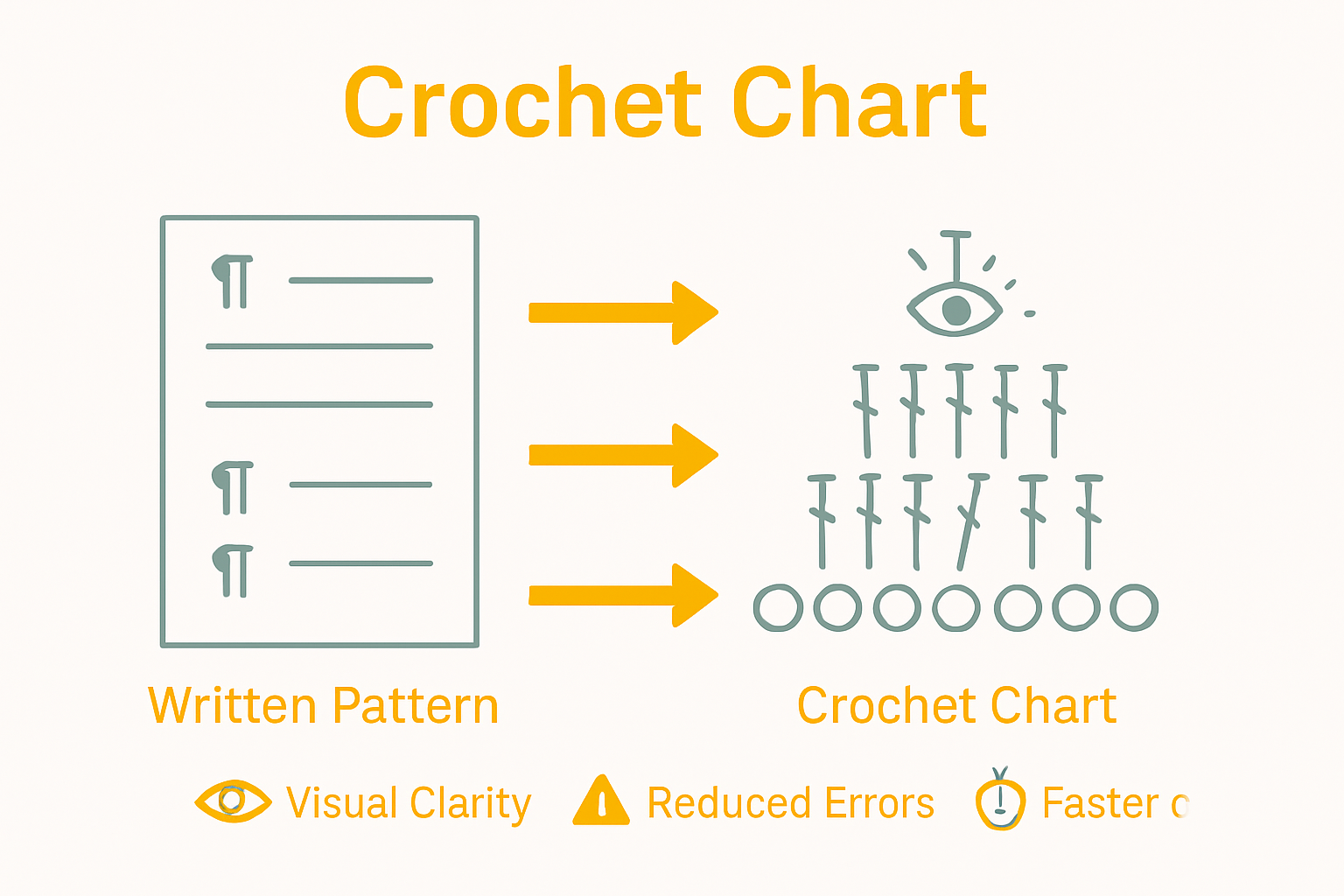
The universal nature of chart symbols creates a global language for crafters. A crochet symbol means the same thing whether you’re in Tokyo, Paris, or New York. This standardization eliminates the confusion and misinterpretation common with written instructions, which can vary dramatically based on regional terminology and translation nuances.
Key advantages of charts over text patterns include:
- Instant visual comprehension of pattern structure
- Elimination of linguistic translation challenges
- Precise representation of stitch relationships
- Easier tracking of complex pattern progressions
- Reduced potential for misunderstanding intricate techniques
Advanced crafters understand that crochet pattern types vary in complexity, but charts provide a consistent visual framework that works across skill levels. By presenting information graphically, these diagrams allow crocheters to see the entire project’s architecture at a glance, making them an indispensable tool for both beginners learning basic techniques and experienced artisans tackling sophisticated designs.
When Charts May Be Less Ideal
Crochet symbol diagrams are powerful tools, but they aren’t universally perfect for every crafting scenario. While these visual guides offer numerous advantages, certain situations can make them challenging or less effective for some crocheters.
Beginners often struggle with chart reading because the standardized symbols require a specific learning curve. Unlike straightforward written instructions, charts demand an initial investment of time to understand the graphic language. Each symbol represents a unique stitch type and technique, which can feel overwhelming for crafters just starting their crochet journey.
Potential limitations of crochet charts include:
- Complexity for novice crocheters
- Difficulty representing three-dimensional project structures
- Limited ability to convey detailed technique nuances
- Potential confusion with intricate color-change patterns
- Reduced effectiveness for highly textured or sculptural designs
Professional crafters recognize that beginner crochet tips often recommend mastering basic written patterns before transitioning to chart reading. While charts are incredibly useful, they work best when a crocheter has developed a foundational understanding of basic stitch techniques and pattern interpretation. This approach ensures that crafters can leverage charts as a complementary tool rather than a confusing initial learning method.
Master Your Crochet Projects with the Right Tools and Materials
Struggling to accurately follow complex crochet charts can hold back even the most dedicated crafter. This guide highlights how mastering crochet symbol diagrams can unlock your creative potential but also points out the challenge of maintaining consistent tension and precise stitch placement. To fully benefit from these visual patterns, having the right yarn and accessories is essential. High-quality materials help you achieve the accuracy and confidence needed to bring detailed patterns to life.
.png)
Discover premium options in our Yarn collection designed to complement your skill in reading crochet charts. Pair your yarn with a stylish and functional Yarn Bags tote to keep your crafting essentials organized and ready. Visit Craftiss today and take the first step towards elevating your crochet projects with top-notch supplies that empower your creativity. Start now and experience the satisfaction of flawless pattern execution.
Frequently Asked Questions
What are crochet charts?
Crochet charts are visual representations of stitch patterns that use standardized symbols to convey pattern instructions, allowing crafters to follow complex designs more easily.
How do crochet charts improve crafting accuracy?
Crochet charts provide a complete visual roadmap for patterns, showing exact stitch placement and reducing potential errors, ensuring more precise execution of designs.
What types of crochet charts are available?
There are several types of crochet charts, including flat pattern charts, circular pattern charts, motif charts, and stitch type charts, each serving different project needs and complexities.
Why might beginners struggle with crochet charts?
Beginners may find crochet charts challenging because they require an understanding of the specific symbols used, which can feel overwhelming without prior knowledge of crochet techniques.
Recommended
- Complete Guide to Crochet Pattern Types Explained – CRAFTISS
- History of Crochet: Everything You Need to Know – CRAFTISS
- Why Join Crochet Communities: Complete Guide for Crafters – CRAFTISS
- Understanding Why Crochet is Popular Among Crafters – CRAFTISS
- Understanding Why Use Chart of Accounts Cannabis - Cannabis Business Minds
