


Crochet Ergonomics Explained: Comfort for Crafters
More than fifty percent of American crocheters report experiencing hand pain during long crafting sessions, turning a relaxing hobby into a real struggle. As hand fatigue impacts enjoyment and progress, comfort becomes a priority for dedicated hobbyists. This guide unveils how ergonomic practices and smart tool choices can help American crafters reduce strain, preventing pain from overshadowing their creative passion.
Table of Contents
- What Crochet Ergonomics Means for Crafters
- Types of Ergonomic Crochet Tools and Handles
- Posture and Hand Position for Reduced Strain
- Warning Signs and Common Injuries in Crocheting
- Expert Tips to Enhance Comfort and Longevity
Key Takeaways
| Point | Details |
|---|---|
| Prioritize Ergonomics | Focus on ergonomic practices to minimize physical strain during crocheting sessions. |
| Select Appropriate Tools | Use ergonomic crochet hooks with cushioned grips and suitable materials for improved comfort. |
| Adopt Proper Posture | Maintain a neutral body alignment while crocheting to reduce the risk of injury. |
| Recognize Warning Signs | Be aware of symptoms related to repetitive strain injuries and take immediate action to prevent long-term damage. |
What Crochet Ergonomics Means for Crafters
Crochet ergonomics represents a strategic approach to crafting that prioritizes the physical well-being of crafters. By understanding how human interaction with tools and workspace impacts health, crafters can design a more comfortable and sustainable crafting experience.
At its core, crochet ergonomics focuses on reducing physical strain during prolonged crafting sessions. This involves carefully analyzing how crafters hold hooks, position their hands, manage yarn tension, and organize their workspace. Ergonomic principles aim to prevent musculoskeletal disorders caused by repetitive motions and awkward postures common in crocheting.
Key ergonomic considerations for crafters include selecting appropriate hook sizes, managing hand positioning, creating supportive work environments, and taking regular breaks. These strategies help prevent common issues like wrist strain, shoulder tension, and hand fatigue. By implementing thoughtful ergonomic techniques, crafters can transform their hobby from a potential source of physical discomfort to a sustainable and enjoyable practice.
Pro tip: Invest in an adjustable chair with proper lumbar support and position your workspace to maintain a neutral, relaxed arm position while crocheting.
Types of Ergonomic Crochet Tools and Handles
Ergonomic crochet tools are specialized crafting instruments designed to reduce physical strain and improve comfort during extended crocheting sessions. Ergonomic handle designs help minimize hand fatigue by incorporating specialized materials and shapes that support natural hand positioning and reduce stress on muscles and joints.
The primary types of ergonomic crochet hooks include handles made from diverse materials such as rubber, silicone, bamboo, aluminum, and steel. Non-powered hand tool design principles emphasize handle features that distribute force evenly and reduce gripping tension. These hooks typically feature three main design variations: tapered handles, in-line handles, and contoured handles, each addressing different hand shapes and crocheting styles.
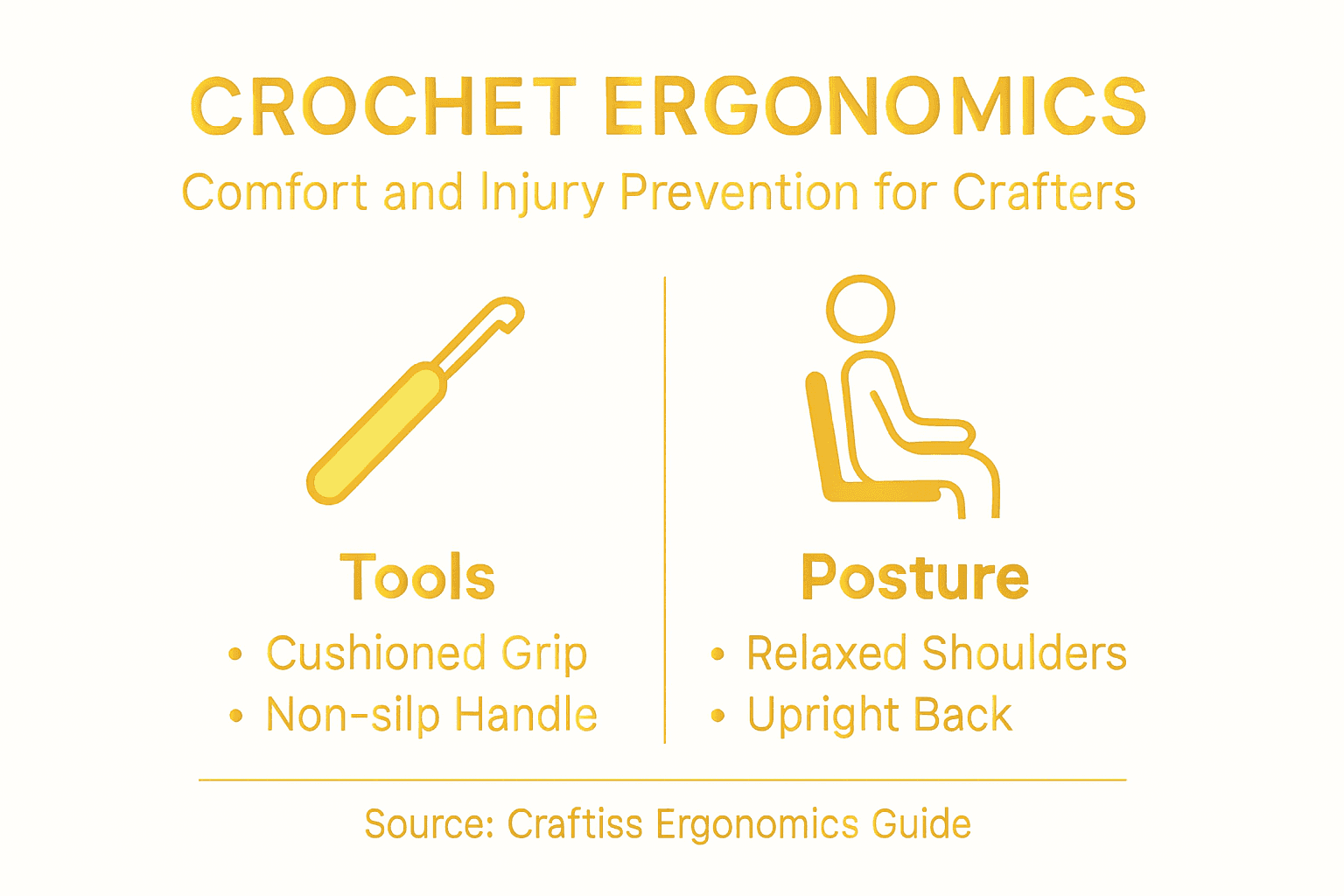
Key ergonomic features to consider when selecting crochet hooks include cushioned grips, non-slip surfaces, weight distribution, and handle circumference that matches the crafter’s hand size. Some advanced ergonomic hooks include additional design elements like thumb rests, textured surfaces for improved grip, and lightweight materials that reduce overall hand strain. Crafters with specific conditions like arthritis or carpal tunnel syndrome can particularly benefit from these specialized tools.
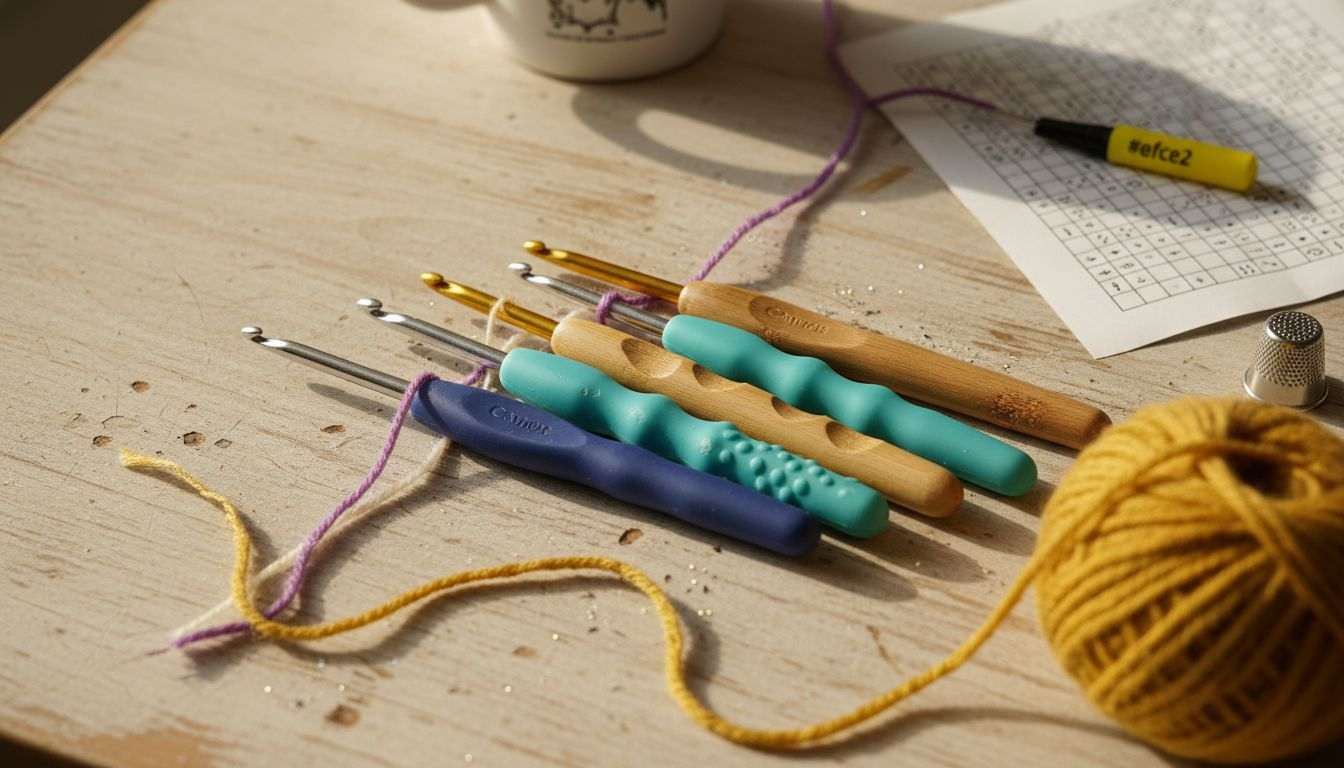
Here is a comparison of ergonomic crochet hook materials and their benefits:
| Material | Comfort Level | Durability | Best For |
|---|---|---|---|
| Rubber | Excellent grip | Moderate | Sensitive hands |
| Silicone | Cushioned support | High | Extended crocheting |
| Bamboo | Lightweight | Moderate | Warm hand feel |
| Aluminum | Balanced weight | Very durable | General purpose |
| Steel | Firm support | Highest | Tight stitch work |
Pro tip: Test multiple ergonomic hook styles and materials to find the one that feels most comfortable for your unique hand structure and crocheting technique.
Posture and Hand Position for Reduced Strain
Proper hand positioning is critical for preventing strain and injury during extended crochet sessions. Reducing muscle fatigue requires strategic body alignment, focusing on creating a supportive environment that minimizes physical stress on your hands, wrists, and shoulders.
Optimal crochet posture involves sitting upright with shoulders relaxed and elbows supported, ensuring your body maintains a neutral alignment. This means positioning your work surface at a height that allows your forearms to rest comfortably, with wrists in a relaxed, slightly extended position. Avoid hunching over your work or creating unnecessary tension in your neck and shoulder muscles. Crafters should aim to create a workspace that encourages natural, fluid movements and prevents awkward positioning that can lead to repetitive strain injuries.
To further reduce strain, experienced crafters recommend alternating hand positions frequently, using larger hooks with thicker yarn, and incorporating ergonomic aids like padded gloves or wrist supports. These techniques help distribute physical stress across different muscle groups and prevent the concentrated strain that can lead to chronic pain or long-term injuries. Pay attention to your body’s signals, taking breaks when you feel tension or discomfort, and consider gentle stretching exercises specifically designed for crafters to maintain flexibility and prevent muscle fatigue.
Pro tip: Set up a mirror near your crafting area to periodically check your posture and ensure you’re maintaining a relaxed, neutral body position while crocheting.
Warning Signs and Common Injuries in Crocheting
Repetitive strain injuries pose a significant risk for dedicated crocheters who spend long hours crafting. Chronic conditions can develop from sustained repetitive motions, affecting the delicate muscles, tendons, and nerves in hands, wrists, and arms. Early recognition of warning signs is crucial for preventing long-term damage and maintaining a healthy crafting practice.
The most common injuries among crocheters include carpal tunnel syndrome, tendonitis, and muscle strains. Repetitive strain injuries manifest through specific symptoms such as persistent pain, tingling sensations, numbness, and reduced hand function. Crafters may experience these symptoms as a gradual progression, often starting with mild discomfort that intensifies with continued repetitive movements. Warning signs include sharp or burning pain in the wrists, reduced grip strength, difficulty performing intricate movements, and a feeling of stiffness or weakness in the hands and forearms.
Prevention requires a proactive approach to crafting ergonomics. This means incorporating regular breaks, using ergonomic tools, practicing proper hand positioning, and listening to your body’s signals. Crafters should pay attention to early warning signs and modify their crafting techniques immediately if they experience consistent discomfort. Consulting with a healthcare professional can provide personalized guidance for managing and preventing repetitive strain injuries specific to crocheting.
Below is a summary of common crochet-related injuries and practical prevention strategies:
| Injury Type | Typical Symptoms | Prevention Strategy |
|---|---|---|
| Carpal Tunnel Syndrome | Tingling, numbness | Use ergonomic supports |
| Tendonitis | Persistent pain | Alternate hand positions |
| Muscle Strain | Stiffness, weakness | Take frequent breaks |
Pro tip: Keep a pain journal to track the frequency, intensity, and location of any discomfort you experience while crocheting, which can help you and your healthcare provider identify potential ergonomic issues.
Expert Tips to Enhance Comfort and Longevity
Crochet comfort requires a holistic approach that combines thoughtful technique, strategic tool selection, and mindful body awareness. Experts recommend focusing on ergonomic strategies that protect crafters from potential repetitive strain injuries while maintaining the joy of creating.
Selecting the right tools is crucial for sustainable crafting. Ergonomic crochet techniques involve careful tool and technique selection, including choosing hooks with cushioned grips, using padded wrist supports, and maintaining consistent yarn tension. Crafters should experiment with different hook materials and handle designs that complement their individual hand structure and grip style. This might involve trying hooks with larger handles, textured surfaces, or specialized ergonomic designs that distribute pressure more evenly across the hand.
Physical self-care is equally important in maintaining long-term crafting comfort. This includes creating a dedicated crafting space with proper lighting and seating, incorporating regular stretch breaks, and developing body awareness during crafting sessions. Techniques like alternating hand positions, varying yarn and hook sizes, and performing gentle hand and wrist exercises can significantly reduce the risk of strain and fatigue. Pay attention to your body’s signals and be willing to modify your approach when you experience discomfort.
Pro tip: Create a small stretching routine specifically designed for crafters, targeting hands, wrists, and shoulders, and perform these exercises before and after your crocheting sessions.
Enhance Your Crochet Comfort with Thoughtful Tools and Supplies
Many crocheters face hand fatigue and strain from extended crafting sessions. This article highlighted the importance of ergonomic crochet tools and proper posture to prevent discomfort and injuries. If you want to support your hands and wrists while creating beautiful projects consider upgrading your setup with accessories designed to reduce physical stress.
Explore our selection of quality Yarn that is soft and easy to work with, helping you maintain relaxed hand tension and improve overall comfort. Keep your essentials organized and at hand with one of our durable Yarn Bags to create a dedicated, ergonomic crafting space.
.png)
Take control of your crafting experience today by visiting Craftiss where you can find tools and supplies tailored to enhance your crochet comfort and protect your hands from strain. Invest now in your long-term crochet health for more enjoyable and pain-free crafting sessions.
Frequently Asked Questions
What is crochet ergonomics?
Crochet ergonomics focuses on creating a comfortable and sustainable crafting experience by reducing physical strain and preventing injuries during prolonged crafting sessions. It involves techniques such as proper hand positioning, workspace organization, and using ergonomic tools.
How can I prevent repetitive strain injuries while crocheting?
To prevent repetitive strain injuries, it’s important to take regular breaks, use ergonomic tools, maintain proper hand positioning, and pay attention to your body’s signals. Incorporating gentle stretching exercises for your hands and wrists can also help.
What features should I look for in ergonomic crochet hooks?
When selecting ergonomic crochet hooks, look for features such as cushioned grips, non-slip surfaces, handle shapes that fit your hand, and lightweight materials. Additional elements like thumb rests and textured surfaces can enhance comfort and reduce hand fatigue.
How can I improve my posture while crocheting?
To improve your posture while crocheting, sit upright with relaxed shoulders, support your elbows, and ensure your work surface is at the right height. Maintain a neutral wrist position and avoid hunching over your work to prevent strain on your neck and shoulders.
