


What Is Yarn Swift and Why It Matters for Beginners
Sorting through twisted yarn can quickly take the fun out of your crochet project. For many American beginners, handling yarn hanks without the right tools leads to constant tangling and wasted time. Discover how a yarn swift transforms yarn preparation by keeping strands smooth and snarl-free, making crafting easier and more enjoyable from the start. This guide clears up common misconceptions, shows how yarn swifts work, and helps you choose one that fits your needs.
Table of Contents
- Yarn Swift Defined And Common Misconceptions
- Types Of Yarn Swifts And Key Distinctions
- How Yarn Swifts Work In Daily Projects
- Benefits For Crochet Beginners And Practical Impact
- Choosing The Right Swift For Your Needs
- Common Mistakes And What To Avoid
Key Takeaways
| Point | Details |
|---|---|
| Importance of Yarn Swifts | Yarn swifts are essential tools for preventing yarn tangling and ensuring smooth winding, particularly for beginners. |
| Types of Yarn Swifts | Different swifts, like umbrella, Amish-style, and tabletop, cater to various needs and crafting spaces. |
| Common Mistakes to Avoid | Ensuring proper adjustment and technique is crucial to avoid frustrations and potential yarn damage during use. |
| Selecting the Right Swift | Consider personal crafting needs, material preferences, and budget when choosing a yarn swift for optimal results. |
Yarn swift defined and common misconceptions
A yarn swift is a specialized tool designed to hold yarn hanks securely during the winding process. Unlike common misconceptions, it’s not just another random crafting accessory, but a critical piece of equipment for knitters and crocheters who work with hank-style yarn. Textile experts explain) that yarn swifts have an adjustable diameter to accommodate various hank sizes and rotate around a central rod.
Understanding the true purpose of a yarn swift can dramatically improve your crafting experience. Many beginners mistakenly believe they can wind yarn without this tool, but a swift actually provides several key benefits:
- Prevents yarn tangling
- Reduces potential yarn damage
- Creates smoother, faster winding
- Maintains yarn integrity during preparation
Contrary to industry production assumptions, yarn swifts are primarily used by individual crafters, not massive textile manufacturers. Crafting resources confirm that using a swift greatly reduces yarn snags and knots, making the entire winding process more efficient.
How yarn swifts work is relatively straightforward. They expand and contract to hold yarn hanks of different sizes, allowing crafters to transform loose, twisted hanks into neat, usable yarn balls or cakes. The rotating mechanism ensures consistent tension and prevents yarn from becoming tangled or stretched during winding.
Pro tip: When selecting a yarn swift, consider both umbrella-style and tabletop models to find the one that best matches your crafting space and yarn collection.
Recommended supplies for your project


Types of yarn swifts and key distinctions
Yarn swifts come in several distinctive designs, each tailored to different crafting needs and preferences. Textile experts note) that the most common types include umbrella swifts, Amish-style swifts, and simple rod models, each with unique characteristics that impact their functionality.
The primary types of yarn swifts can be categorized by their design and construction:
-
Umbrella Swifts
- Most popular among hand spinners
- Collapsible for easy storage
- Adjustable diameter
- Available in wood or metal
-
Amish-Style Swifts
- Feature rotating cross with adjustable pegs
- Typically made of wood
- Provides stable yarn holding
- Manually adjustable for different hank sizes
-
Tabletop Swifts
- Compact design
- Clamp or mount directly to work surfaces
- Ideal for limited crafting spaces
Key distinctions between yarn swift models often revolve around their construction material, portability, and ease of use. Crafting resources highlight that the choice depends on individual crafting needs, yarn collection, and available workspace.
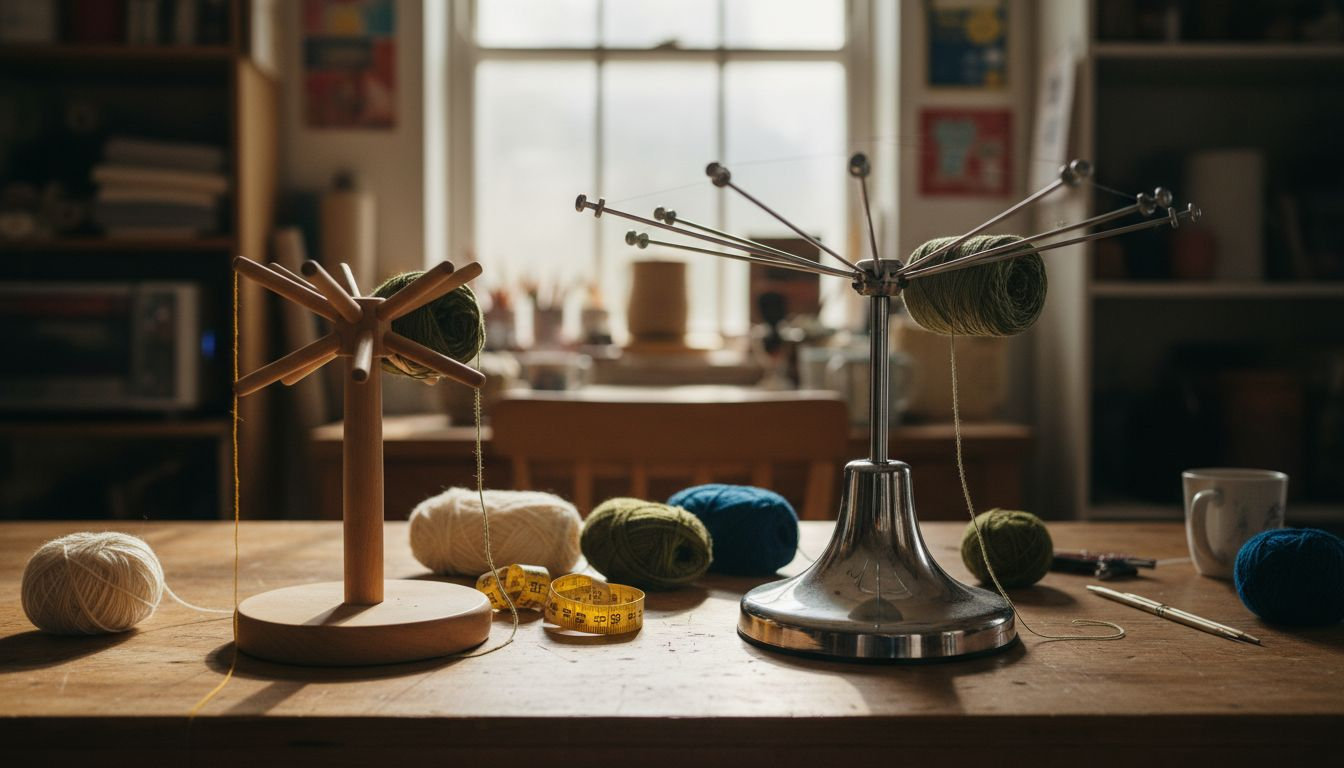
When selecting a yarn swift, crafters should consider factors like rotation smoothness, size adjustability, and how well the swift accommodates different yarn hank sizes. Some models offer more versatility, while others specialize in specific yarn types or crafting techniques.
Pro tip: Before purchasing a yarn swift, measure your typical yarn hank sizes and available crafting space to ensure you select the most compatible model for your specific needs.
Here is a comparison of common yarn swift types and their ideal use cases:
| Swift Type | Best For | Key Material | Portability |
|---|---|---|---|
| Umbrella | Spinners, varied hanks | Wood or metal | Highly foldable |
| Amish-Style | Stable winding, large hanks | Wood | Moderate, flat |
| Tabletop | Small spaces, travel | Wood or plastic | Lightweight |
How yarn swifts work in daily projects
Textile experts explain) that yarn swifts play a crucial role in transforming yarn hanks into usable formats for crafting projects. These tools are essential for preventing tangling and maintaining consistent yarn tension during the winding process.
In daily crafting workflows, yarn swifts function through several key mechanisms:
-
Secure Yarn Holding
- Prevents yarn from falling or becoming tangled
- Maintains consistent yarn positioning
- Allows smooth, controlled unwinding
-
Rotation Functionality
- Spins smoothly as yarn is pulled
- Accommodates different winding techniques
- Reduces manual handling and strain
-
Tension Management
- Controls yarn release
- Prevents overstretching
- Ensures uniform yarn preparation
Practical application matters most for crafters. Crafting resources highlight that yarn swifts enable seamless unwinding, helping knitters and crocheters maintain consistent workflow and yarn quality throughout their projects.
The dynamic nature of yarn swifts makes them invaluable for various crafting techniques. Whether you’re working with delicate lace-weight yarns or bulky wool hanks, these tools adapt to different yarn types and project requirements, making yarn preparation efficient and stress-free.
Pro tip: Always rotate your yarn swift slowly and evenly to prevent unexpected yarn tangles and maintain optimal tension during the winding process.
Benefits for crochet beginners and practical impact
Textile experts note) that yarn swifts offer transformative benefits for crochet beginners by simplifying the most challenging aspects of yarn preparation. These tools eliminate the frustration of tangled yarn and create a smoother learning experience for newcomers to the craft.
The specific advantages for crochet beginners include:
-
Simplified Yarn Management
- Prevents yarn tangling
- Reduces preparation time
- Minimizes learning curve frustrations
- Supports consistent yarn tension
-
Confidence Building
- Eliminates manual yarn wrestling
- Creates more predictable winding process
- Encourages skill development
- Reduces beginner anxiety
-
Technical Skill Enhancement
- Teaches proper yarn handling
- Introduces professional crafting techniques
- Improves overall project preparation
- Develops muscle memory for yarn management
Practical learning matters most. Crafting resources highlight that yarn swifts help beginners focus on actual crocheting techniques instead of getting stuck in complicated yarn preparation processes.
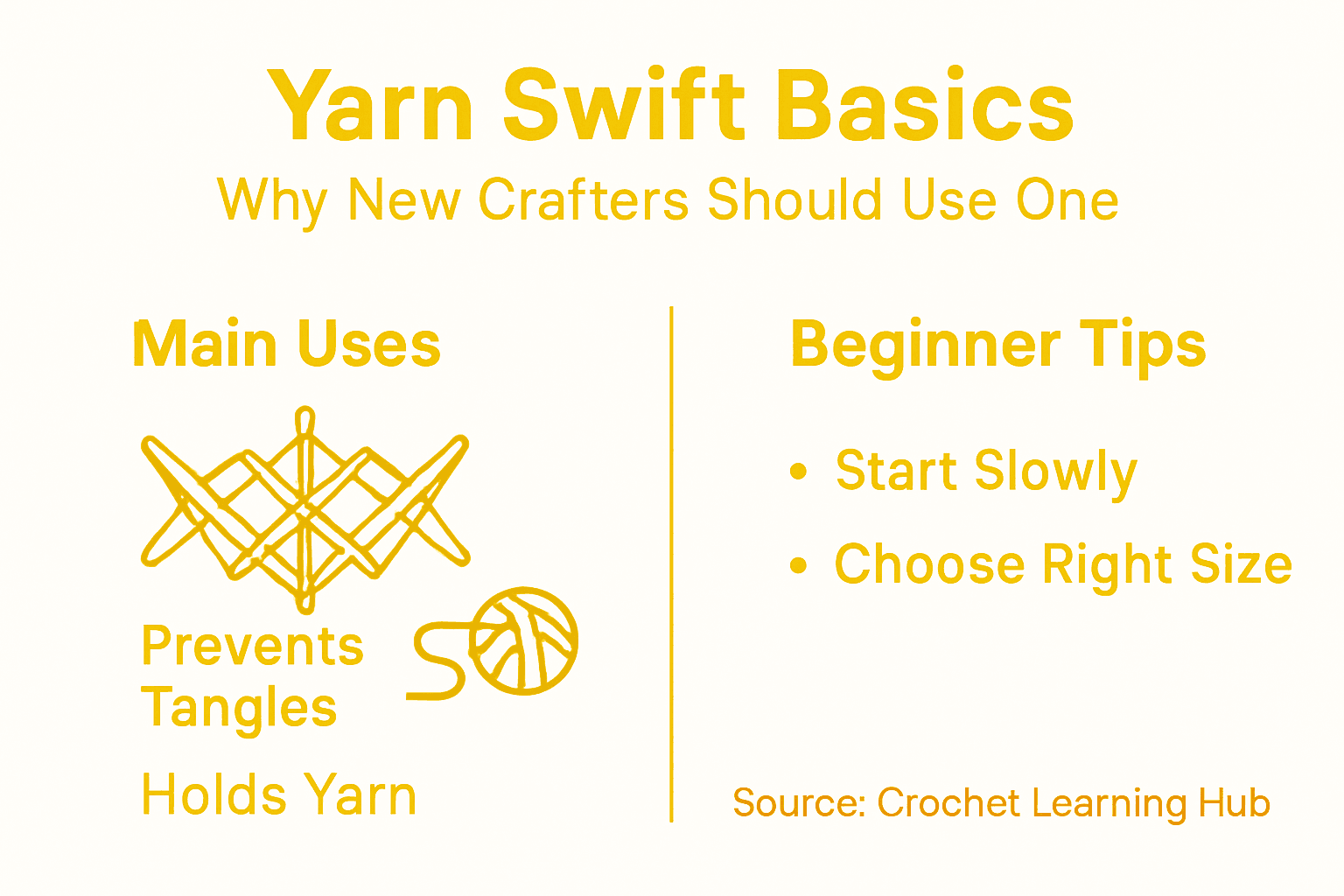
By providing a stable, controlled environment for yarn management, these tools essentially act as training wheels for new crafters. They transform what could be a frustrating experience into an accessible, enjoyable introduction to the world of crochet, making complex techniques feel more approachable and less intimidating.
Pro tip: Select a beginner-friendly yarn swift with clear instructions and watch online tutorials to quickly master its use and maximize your crafting potential.
Choosing the right swift for your needs
Crafting resources emphasize that selecting the perfect yarn swift requires careful consideration of multiple personal crafting factors. Your ideal swift will depend on your unique yarn collection, workspace constraints, and long-term crafting goals.
Key selection criteria include:
-
Material Considerations
- Wooden swifts: Classic aesthetic
- Metal swifts: Durable and sleek
- Plastic swifts: Lightweight and affordable
- Composite models: Balanced performance
-
Space and Portability Factors
- Foldable umbrella swifts for small spaces
- Tabletop models for dedicated craft areas
- Compact designs for travel-friendly options
- Adjustable mechanisms for versatility
-
Budget and Investment Levels
- Entry-level swifts for beginners
- Mid-range options with additional features
- Premium models with advanced rotation systems
- Long-term durability versus initial cost
Textile experts confirm) that choosing a swift involves balancing practical functionality with personal crafting preferences. The right swift should feel like a natural extension of your crafting toolkit, making yarn preparation seamless and enjoyable.
Consider your specific crafting needs carefully. A beginner might prioritize affordability and ease of use, while an experienced crafter might invest in a high-end swift with precision engineering and smooth rotation mechanisms.
Pro tip: Test different yarn swifts at local craft stores or borrow from crafting friends to understand which design feels most comfortable and intuitive for your personal workflow.
Below is a summary table outlining what to prioritize when choosing a yarn swift:
| Factor | Beginner Priority | Advanced Crafter Priority |
|---|---|---|
| Price | Budget-friendly | Investment value |
| Mechanism | Easy setup | Precision rotation |
| Adjustability | Standard sizes | Full range versatility |
| Durability | Basic use | Long-term reliability |
Common mistakes and what to avoid
Textile experts warn) that novice crafters often make critical errors when using yarn swifts that can compromise their entire crafting experience. Understanding these common pitfalls can help prevent frustration and potential yarn damage.
Key mistakes to avoid include:
-
Improper Swift Adjustment
- Incorrect hank size settings
- Loose yarn mounting
- Over-tightening securing mechanisms
- Ignoring swift stability requirements
-
Winding Technique Errors
- Pulling yarn too aggressively
- Inconsistent winding tension
- Failing to maintain smooth rotation
- Neglecting yarn alignment
-
Maintenance and Care Oversights
- Skipping regular mechanism cleaning
- Storing swift in harsh conditions
- Ignoring minor mechanical issues
- Using inappropriate swift for yarn type
Crafting resources highlight that many beginners underestimate the importance of proper swift selection and usage. Forcing incompatible swifts or using them incorrectly can lead to tangled yarn, broken threads, and unnecessary crafting frustration.
The most successful crafters approach their yarn swift as a precision tool, taking time to understand its mechanics and maintaining it carefully. Rushing through yarn preparation or using an unsuitable swift can transform a potentially enjoyable crafting session into a challenging ordeal.
Pro tip: Practice your yarn swift technique on inexpensive yarn first, and always move slowly and deliberately when winding to develop muscle memory and precision.
Unlock Smooth Yarn Preparation With The Right Tools and Supplies
If you are new to crocheting or knitting you understand how frustrating tangled yarn can be. This article highlights the importance of a yarn swift to keep your yarn hanks secure and prevent knots during winding. To build on that foundation, enhancing your yarn management with quality materials is essential for a more enjoyable crafting experience. Explore our extensive collection of finely curated Yarn that works perfectly with your yarn swift and elevates your projects.
.png)
Don t let yarn frustration slow your creativity. Visit CRAFTISS today to discover yarns suited for all skill levels along with handy storage options like our Yarn Bags. Take the next step now and transform your crocheting and knitting workflow with carefully selected yarns and accessories designed to support beginners and seasoned crafters alike.
Frequently Asked Questions
What is a yarn swift and how does it work?
A yarn swift is a specialized tool that holds yarn hanks securely while winding them into usable balls or cakes. It rotates around a central rod, allowing for smooth and controlled unwinding without tangling.
Why should beginners use a yarn swift?
Yarn swifts simplify the process of yarn management by preventing tangling and maintaining consistent yarn tension, making the learning process smoother for beginners in knitting and crocheting.
What are the different types of yarn swifts available?
The primary types of yarn swifts include umbrella swifts, Amish-style swifts, and tabletop swifts. Each type has unique characteristics, such as portability and adjustability, which cater to different crafting needs.
How can a yarn swift improve my crafting experience?
A yarn swift can significantly enhance your crafting experience by preventing yarn tangling, reducing potential yarn damage, and creating a more efficient winding process, which allows for a smoother workflow in your projects.
