

Over 60 percent of American crafters say experimenting with new yarn types inspires fresh creative ideas and solves frustrating project limitations. Novelty yarns offer a way to break free from conventional materials, adding eye-catching texture and color effects to even basic projects. For those who love crochet or knitting, understanding what makes novelty yarn unique and clearing up common misconceptions opens the door to dazzling results and limitless design choices.
Table of Contents
- Defining Novelty Yarn and Common Misconceptions
- Main Types of Novelty Yarn Explained
- Key Features and How Novelty Yarn Works
- Popular Uses in Crochet and Knitting
- Handling Tips, Drawbacks, and Alternatives
Key Takeaways
| Point | Details |
|---|---|
| Understanding Novelty Yarns | Novelty yarns provide unique textures and visual experiences, breaking the uniformity of traditional yarns. They are suitable for crafters of all skill levels, offering diverse creative opportunities. |
| Types of Novelty Yarns | Categories like Bouclé, Chenille, and Eyelash yarns each offer distinct features that can enhance crafting projects. Combining different types can create complex, multidimensional textures. |
| Handling and Challenges | Novelty yarns may present handling challenges, such as reduced stitch definition and snagging. Crafters should use them strategically and practice with smaller projects first. |
| Creative Applications | These yarns excel in accessories, home decor, and fashion garments, allowing for the creation of visually striking textile art. Start with simple designs to build confidence in using novelty yarns. |
Defining Novelty Yarn and Common Misconceptions
Novelty yarn represents a fascinating category of textile material that breaks traditional uniformity, offering crafters unique textural and visual experiences. Unlike standard yarns that maintain consistent thickness and appearance, novelty yarns feature deliberate irregularities that transform ordinary projects into extraordinary creations.
These complex yarns are characterized by distinctive structural variations like slubs, loops, uneven thickness, metallic inclusions, and color transitions. Crafters can integrate novelty yarns to add dramatic visual interest, unexpected texture, and sophisticated design elements to knitting, crocheting, and weaving projects. They often combine synthetic and natural fibers, creating intricate yarn compositions with unique structural characteristics.
Common misconceptions about novelty yarns include assuming they are difficult to work with or only suitable for advanced crafters. In reality, these yarns offer versatile creative opportunities across skill levels. Beginners can experiment with simple accent pieces, while experienced crafters can design complex textural landscapes using strategic yarn selections.
Pro tip: When first working with novelty yarns, start with smaller accent projects to understand their unique behavior and learn how different textures interact with your chosen craft technique.
Recommended supplies for your project


Main Types of Novelty Yarn Explained
Novelty yarns encompass a diverse range of specialized textile materials, each offering unique characteristics that transform crafting experiences. Bouclé, chenille, core, corkscrew, eyelash, and slub yarns represent the primary categories that crafters can explore to add remarkable texture and visual complexity to their projects.
Bouclé yarns feature distinctive looped structures created by wrapping an effect yarn around a base yarn, typically consisting of three plies. Chenille yarns deliver a soft, fuzzy surface reminiscent of pipe cleaners, achieved by cutting fabric strips or carefully trimming fibers. Core yarns utilize a central strand wrapped by additional fibers, creating a robust and versatile textile element. Corkscrew or spiral yarns generate dramatic visual interest through intricate twisting techniques that interlock different yarn types.
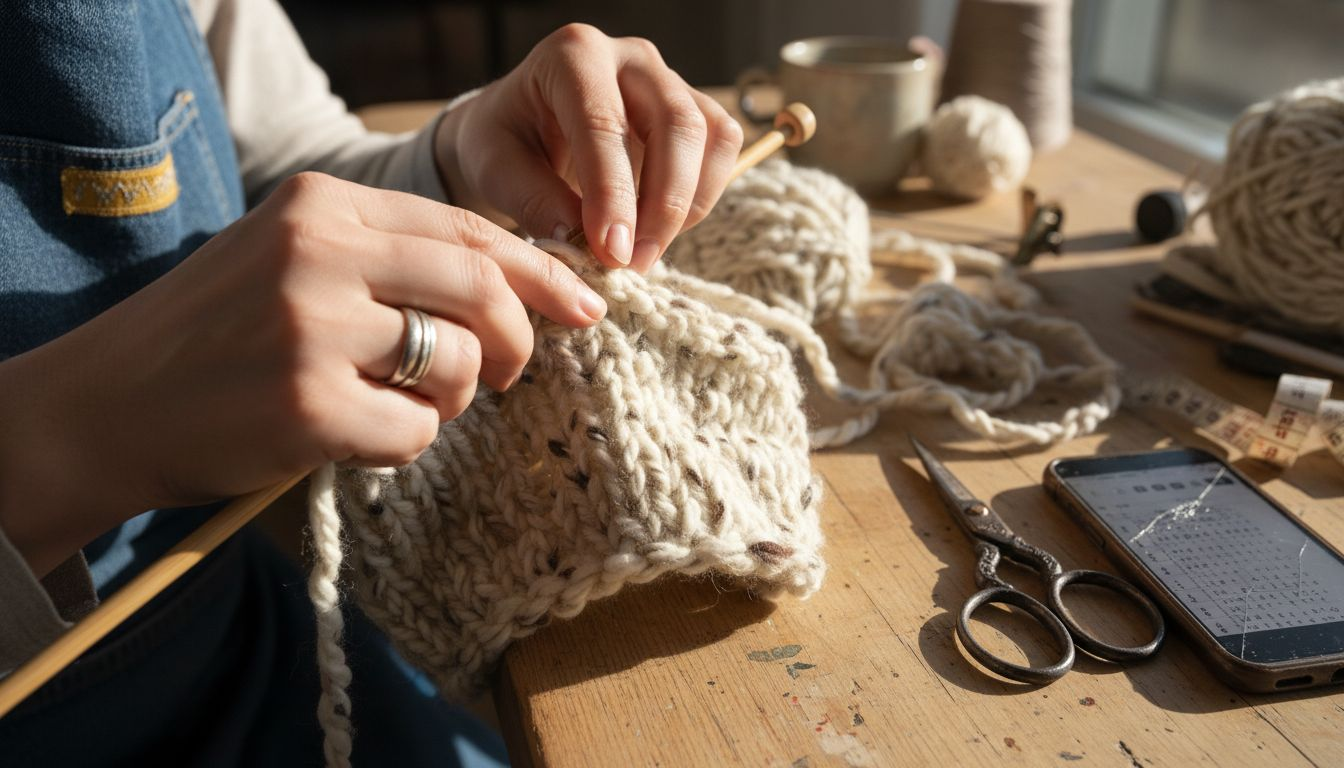
Eyelash yarns provide perhaps the most distinctive novelty yarn experience, characterized by long strands protruding from a central thread. These yarns can feature metallic, opalescent, or matte finishes with varying strand lengths, enabling crafters to introduce stunning textural elements. Variants like pigtail, ponytail, and fur-style eyelash yarns offer incredible design flexibility, allowing makers to dramatically transform simple projects into extraordinary textile art.
Pro tip: When selecting novelty yarns, consider combining different types in a single project to create complex, multidimensional textures that showcase your creative vision.
Here’s how the main novelty yarn types differ in structure and crafting impact:
| Yarn Type | Key Structural Feature | Best For | Typical Fiber Content |
|---|---|---|---|
| Bouclé | Looped, three-ply | Textured accessories | Wool, acrylic, polyester |
| Chenille | Fuzzy, cut-pile surface | Soft trims and toys | Cotton, rayon, polyester |
| Core | Wrapped central strand | Stable accent stitches | Cotton, polyester, blends |
| Corkscrew | Twisted spiral effect | Visual drama, statement art | Wool, acrylic |
| Eyelash | Long protruding strands | Decorative trims, faux fur | Polyester, metallic blends |
| Slub | Thick-thin irregularity | Rustic, organic texture | Cotton, silk, linen |
Key Features and How Novelty Yarn Works
Novelty yarns represent a sophisticated textile engineering marvel, designed to transform traditional crafting experiences through intentional structural manipulations. Unique texture creation occurs through strategic fiber combinations that challenge conventional yarn manufacturing techniques, introducing deliberate variations in thickness, twist, and visual appearance.
The fundamental architecture of novelty yarns typically involves a three-part structural system: a core ply providing foundational strength, an effect ply generating distinctive texture, and a binder yarn maintaining the yarn’s overall integrity. Man-made synthetic fibers play a crucial role in this process, offering unprecedented flexibility for creating complex surface effects like crimping, texturizing, and introducing unexpected visual dimensions. These engineered variations can include dramatic color transitions, unexpected loops, strategic twists, and intricate surface treatments that dramatically enhance a project’s aesthetic appeal.
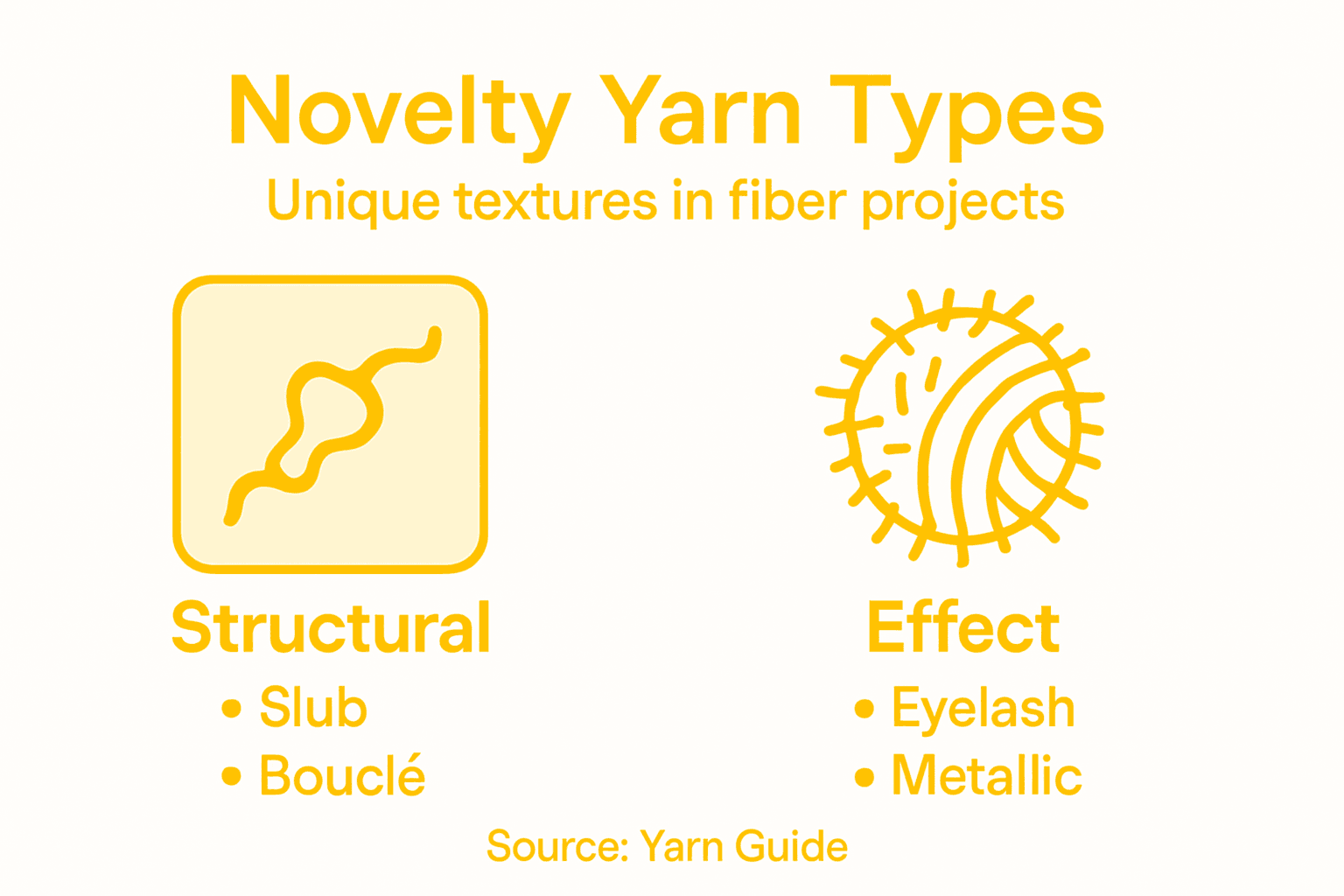
Eyelash yarns exemplify the most visually striking novelty yarn technique, featuring long protruding strands that create a fuzzy, dynamic textile surface. By incorporating different material types and strand lengths, crafters can dramatically transform simple projects, adding depth, dimension, and visual complexity that traditional yarns cannot achieve. The strategic placement of these unique yarns allows makers to obscure stitch definitions, create decorative trims, and introduce tactile experiences that elevate handmade textiles.
Pro tip: Experiment with combining multiple novelty yarn types in a single project to create truly unique textural landscapes that showcase your creative potential.
Popular Uses in Crochet and Knitting
Novelty yarns have revolutionized creative expression in fiber arts, offering crafters unprecedented opportunities to transform traditional knitting and crochet projects with extraordinary textural complexity and visual intrigue. These specialized yarns enable makers to elevate simple designs into sophisticated textile art pieces that capture attention and showcase individual creativity.
Accessories represent the most popular application for novelty yarns, with scarves, hats, gloves, and shawls becoming stunning canvases for unique textural explorations. Crafters strategically incorporate these yarns to create dimensional surfaces that traditional uniform yarns cannot achieve. Home decor items like decorative pillows, throw blankets, and wall hangings also benefit from novelty yarn techniques, allowing makers to introduce unexpected visual complexity and tactile richness into interior design elements.
Novelty yarns excel in fashion garment design, particularly for creating statement pieces that demand visual interest. Designers frequently use these yarns for accent sections, trims, and focal points in sweaters, cardigans, and contemporary wearable art. The strategic placement of novelty yarns can transform an ordinary garment into a remarkable, one-of-a-kind textile expression that reflects the maker’s artistic vision and technical skill.
Pro tip: Start with small accent projects when experimenting with novelty yarns to build confidence and understand their unique behavior before attempting more complex designs.
Handling Tips, Drawbacks, and Alternatives
Crafters must approach novelty yarns with strategic awareness, understanding their unique handling challenges and structural complexities. These specialized yarns demand more nuanced techniques compared to standard uniform yarns, requiring heightened attention to prevent potential crafting complications.
Specific drawbacks of novelty yarns include potential snagging, reduced stitch definition, and increased bulk in finished projects. Bouclé yarns, for instance, feature loose loops that can easily split on hooks or needles, while eyelash yarns tend to obscure underlying stitch patterns. These limitations make novelty yarns less suitable for intricate, structured garments requiring precise stitch clarity. Experienced crafters often recommend using these yarns strategically as accent elements rather than primary fabric components.
Alternatives to complex novelty yarns include textured tweed yarns and carefully blended fiber compositions that provide visual interest with greater structural stability. Crafters can also experiment with combining standard yarns with small novelty yarn sections, creating dynamic textural landscapes without compromising overall project integrity. This approach allows makers to incorporate unique visual elements while maintaining reliable crafting performance.
Pro tip: Practice working with novelty yarn scraps on small test swatches to understand their specific behavior before integrating them into larger, more complex projects.
This table summarizes novelty yarn handling tips, common drawbacks, and alternative solutions for crafters:
| Challenge | Handling Tip | Alternative Approach |
|---|---|---|
| Snagging/loop splitting | Use blunt needles/hooks | Choose tightly spun textured yarns |
| Reduced stitch definition | Work simple patterns | Accent with solid-color uniform yarns |
| Increased bulk | Make small or openwork pieces | Blend novelty and classic yarns |
Elevate Your Craft with Unique Novelty Yarns from CRAFTISS
Struggling to bring your knitting and crochet projects to life with striking texture and visual appeal Novelty yarns offer the perfect solution by adding dynamic effects like loops, slubs, and eyelash strands that transform ordinary items into stunning works of art. At CRAFTISS we understand the challenges of working with complex yarns and provide a curated selection designed to inspire creativity and simplify your crafting journey.
.png)
Explore our exclusive Yarn collection crafted for makers who want to experiment with distinctive textures and colors. Whether you are a beginner or an expert you can find the ideal novelty yarns and tools to master unique techniques and produce beautiful statement pieces. Visit CRAFTISS today and discover how our quality yarns alongside perfectly designed Yarn Bags can keep your supplies organized while fueling your artistic vision. Don’t wait to bring irresistible texture and handcrafted charm to your projects start exploring now.
Frequently Asked Questions
What is novelty yarn?
Novelty yarn is a type of textile material characterized by intentional irregularities such as slubs, loops, and uneven thickness, which adds unique textures and visual effects to crafting projects.
How do I work with novelty yarn as a beginner?
As a beginner, it’s best to start with small accent projects to become familiar with novelty yarns and understand their unique behavior in your selected craft technique.
What are the main types of novelty yarn, and how do they differ?
The main types of novelty yarn include bouclé, chenille, core, corkscrew, eyelash, and slub yarns, each offering different structural features and best uses, such as textured accessories or decorative trims.
What are the common challenges when using novelty yarn?
Common challenges include snagging or loop splitting, reduced stitch definition, and increased bulk in finished projects. It’s advisable to use blunt needles and consider simpler patterns or blending novelty yarn with standard yarn to address these issues.