


How to Crochet Fast: Proven Steps for Speed and Accuracy
Frustration can set in when an exciting yarn project feels like it is dragging on, especially for American crocheters eager to see results. Boosting your crochet speed is not just about working faster, but creating more accurate and comfortable pieces. This guide shares workspace optimization and practical stitching tips to help you finish projects efficiently, so you spend less time untangling and more time enjoying creative success.
Table of Contents
- Step 1: Optimize Your Crochet Workspace
- Step 2: Select Tools For Maximum Speed
- Step 3: Master Fast Crochet Stitches
- Step 4: Implement Efficient Hand Movements
- Step 5: Check Progress And Adjust Techniques
Quick Summary
| Key Point | Explanation |
|---|---|
| 1. Organize Your Workspace | A dedicated workspace with good lighting and ergonomic seating boosts comfort and productivity when crocheting. |
| 2. Choose Ergonomic Tools | Using lightweight, ergonomic crochet hooks helps reduce hand fatigue and enhances your crocheting experience significantly. |
| 3. Focus on Basic Stitches | Mastering fundamental stitches improves speed and confidence; practice consistently for better muscle memory and efficiency. |
| 4. Implement Efficient Hand Movements | Use relaxed grips and smooth motions to minimize strain, allowing for quicker and more accurate crocheting. |
| 5. Regularly Check Your Progress | Assessing your work frequently prevents mistakes from becoming major issues, ensuring consistent quality throughout your project. |
Step 1: Optimize Your Crochet Workspace
Creating an efficient workspace is critical for speeding up your crochet projects while maintaining accuracy and comfort. A well-organized area can dramatically improve your crafting experience and productivity.
Start by selecting a dedicated workspace with good lighting and comfortable seating. Natural daylight works best, but a bright desk lamp can also provide excellent illumination. Arrange your workspace to minimize physical strain by ensuring your chair supports proper posture and your work surface is at a comfortable height.
Your workspace organization should include several key elements:
- Dedicated storage for yarn by weight and color
- Clear workspace with minimal clutter
- Easy access to essential tools like scissors, hooks, and stitch markers
- Ergonomic positioning of your working area
One key strategy for workspace optimization is creating efficient pattern layouts that reduce unnecessary movement and streamline your crafting process. Consider using a small side table or rolling cart to keep frequently used supplies within easy reach.
A tidy workspace leads to faster, more accurate crochet projects.
Pro tip: Invest in a comfortable chair with good back support and arrange your tools in a semicircle around your primary working area for maximum efficiency.
Recommended supplies for your project


Step 2: Select Tools for Maximum Speed
Selecting the right tools can dramatically improve your crocheting speed and overall crafting experience. Your goal is to choose equipment that reduces strain and enhances your natural workflow.
When selecting crochet hooks, prioritize ergonomic design and comfort to maximize your efficiency. Look for hooks with the following characteristics:
- Lightweight materials like aluminum or bamboo
- Comfortable grip designs that reduce hand fatigue
- Color-coded sizing for quick identification
- Smooth shaft for consistent yarn movement
Consider investing in a hook set with multiple sizes and ergonomic handles. Hooks with cushioned grips or specialized shapes can help prevent hand cramping during long crafting sessions. Silicone-covered or rubber-handled hooks distribute pressure more evenly and reduce the risk of repetitive strain injuries.
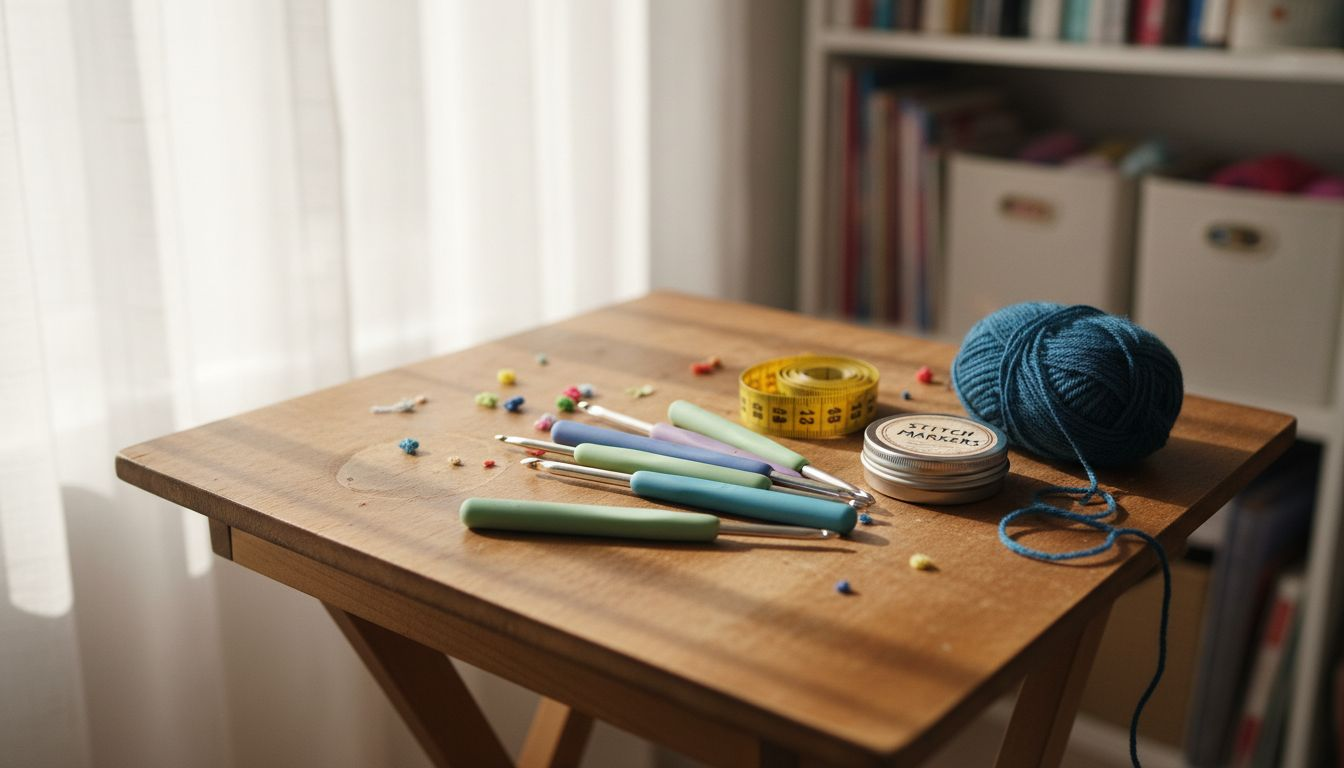
Here’s a quick comparison of crochet hook materials and their effects on speed and comfort:
| Hook Material | Pros for Speedier Crochet | Best For |
|---|---|---|
| Aluminum | Lightweight, smooth movement | Fast, repetitive projects |
| Bamboo | Warm feel, reduces slippage | Delicate, non-slick yarns |
| Plastic | Soft grip, very lightweight | Beginners, travel use |
| Steel | Fine detail, high durability | Lace or thread crochet |
The right tools can transform your crocheting from tedious to effortless.
Choose hooks that match your individual hand size and crafting style. Some crafters prefer inline hooks, while others find tapered hooks more comfortable. Test different styles to discover what works best for your technique.
Pro tip: Rotate your hooks periodically and stretch your hands to maintain flexibility and prevent muscle fatigue during extended crocheting sessions.
Step 3: Master Fast Crochet Stitches
Mastering fast and accurate crochet stitches is the cornerstone of improving your crafting speed. Your goal is to develop muscle memory and consistent technique that allows you to work more efficiently and confidently.
Basic stitch techniques form the foundation of rapid crocheting. Focus on developing proficiency in fundamental stitches like single crochet, double crochet, and half double crochet. Each stitch requires specific hand movements that become more fluid with consistent practice.
To accelerate your stitch speed, concentrate on these key techniques:
- Consistent tension throughout your work
- Smooth yarn movement between fingers
- Minimal hand repositioning during stitching
- Rhythmic hand motions that feel natural
Practice each stitch type repeatedly to build muscle memory. Start with slower, deliberate movements and gradually increase your speed as you become more comfortable. Watch how professional crafters move their hands and try to emulate their efficient techniques.
Speed comes from smooth, consistent motion, not rushed movements.
Learn to read patterns quickly and recognize stitch repeat sequences. This skill helps you anticipate the next movement and reduce hesitation during your crafting process.
Pro tip: Practice your stitches while watching television or listening to music to make repetitive training more enjoyable and less monotonous.
Step 4: Implement Efficient Hand Movements
Implementing efficient hand movements is crucial for reducing strain and increasing your crocheting speed. Your hands are your most important tools, and learning to move them strategically can transform your crafting experience.
Focus on ergonomic techniques that minimize hand strain while maximizing your movement efficiency. Proper hand positioning allows you to create smooth, consistent stitches with minimal effort and maximum precision.
Develop your hand movements by practicing these key techniques:
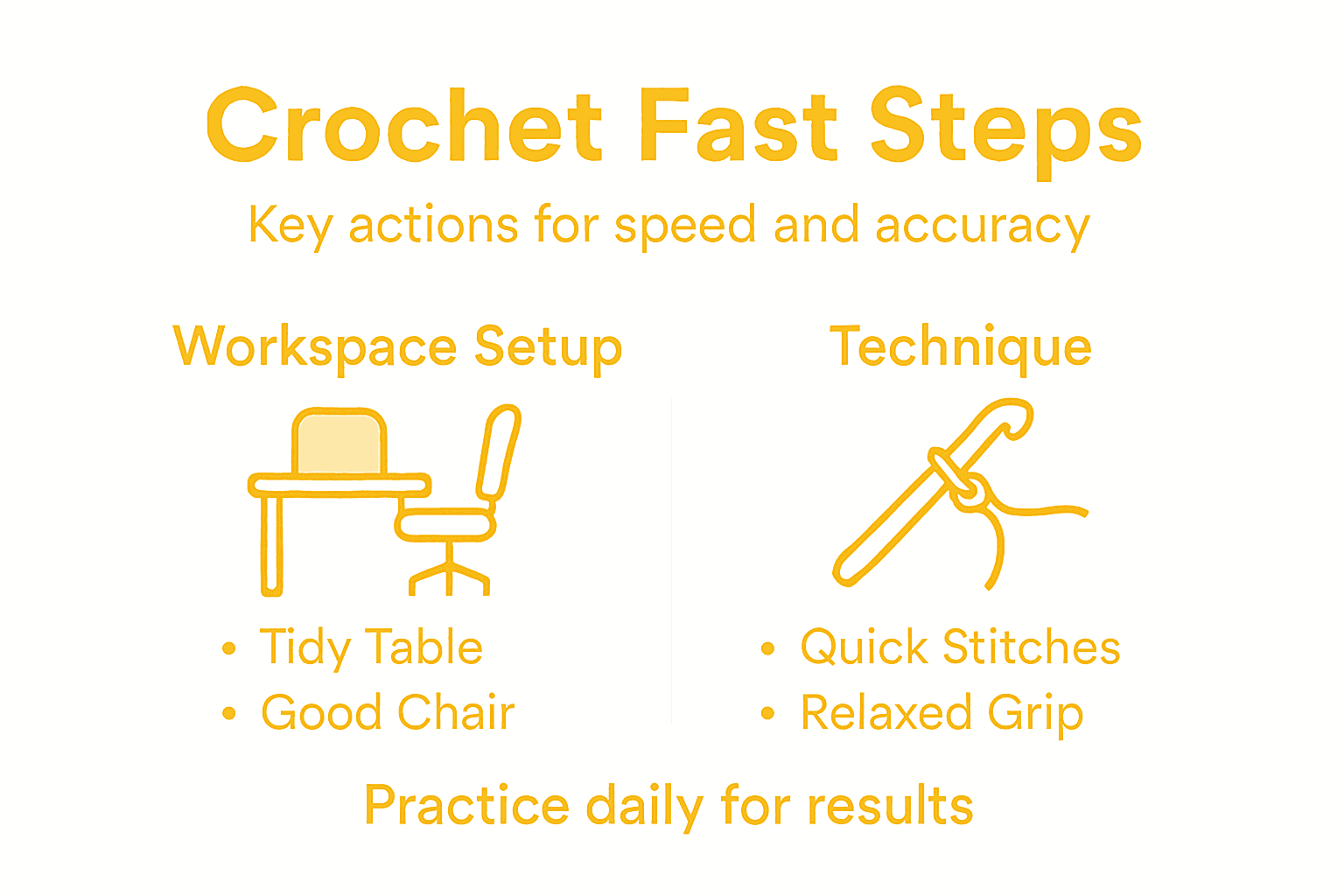
- Maintain a relaxed grip on your hook
- Position your wrist in a neutral, straight alignment
- Use your entire arm to create fluid motions
- Rotate hand positions to prevent muscle fatigue
Start by observing your current hand movements. Many crafters unconsciously create unnecessary tension by gripping too tightly or holding their hands in awkward positions. Practice in front of a mirror to identify and correct inefficient movements.
Smooth, controlled movements are faster than rushed, tense motions.
Incorporate gentle hand and wrist stretches before and after your crocheting sessions. This helps improve flexibility and reduces the risk of repetitive strain injuries, allowing you to crochet more comfortably and efficiently.
Pro tip: Take short breaks every 20-30 minutes and perform simple hand stretches to maintain flexibility and prevent muscle stiffness.
Step 5: Check Progress and Adjust Techniques
Tracking your crochet progress and making timely adjustments is crucial for maintaining speed and accuracy throughout your project. By regularly assessing your technique, you can quickly identify and correct potential issues before they become time-consuming problems.
Regularly check your gauge and stitch consistency to ensure uniform results. This means measuring your work against the project pattern and making necessary adjustments to your tension, hook size, or technique as you go.
Use these strategies to monitor and improve your progress:
- Measure your work every few rows
- Compare stitches to your original pattern
- Watch for tension variations
- Assess overall stitch uniformity
Start by creating a practice swatch before beginning your main project. This allows you to test your technique and make preliminary adjustments without risking your entire project. Pay close attention to how your stitches look and feel, noting any areas where your tension might be too tight or too loose.
Small corrections during the process save significant time later.
Don’t be afraid to unravel and restart if you notice consistent errors. Perfecting your technique takes practice, and each correction brings you closer to faster, more accurate crocheting.
This summary highlights common crochet speed issues and simple solutions:
| Challenge | Common Cause | How to Fix |
|---|---|---|
| Hand fatigue | Tight grip, poor ergonomics | Switch grips, add stretches |
| Uneven stitches | Inconsistent tension | Practice with swatches |
| Slow progress | Tool or pattern confusion | Organize space, check patterns |
| Frequent mistakes | Not checking progress | Pause to review regularly |
Pro tip: Take a photo of your work periodically to help you objectively assess your progress and identify areas needing improvement.
Elevate Your Crochet Speed with Premium Tools and Supplies
Mastering fast and accurate crochet stitches requires not only skill but also the right materials and workspace setup. If you are ready to reduce hand strain and maintain consistent tension, start by organizing your crafting area and choosing quality yarn that glides smoothly through your fingers. Explore our specially selected Yarn collection designed to enhance your stitch uniformity and rhythmic hand motions.
.png)
Ready to transform your crochet speed and accuracy today Discover our Bundles for Crochet and Knitting Beginners perfect for building muscle memory with all-in-one supplies and patterns. Keep your tools organized and accessible with stylish Yarn Bags crafted for ergonomic efficiency. Visit Craftiss now to start accelerating your crochet projects with the best materials crafted for comfort and precision.
Frequently Asked Questions
How can I optimize my crochet workspace for speed?
Creating an efficient crochet workspace is essential for improving speed. Choose a well-lit area with comfortable seating, organize your tools and yarn, and keep everything within easy reach. Aim for a clutter-free environment that supports good posture to enhance your crafting experience.
What type of crochet hooks should I use for faster crocheting?
For maximum speed, select ergonomic crochet hooks made from lightweight materials like aluminum or bamboo. Opt for hooks that have comfortable grips and smooth shafts, which help reduce hand fatigue and promote faster yarn movement. Test different styles to find the one that suits your technique best.
What are the basic crochet stitches I should master for speed?
Focusing on fundamental stitches like single crochet, double crochet, and half double crochet is essential for improving speed. Practice these stitches regularly to build muscle memory, making your movements more fluid and confident during your projects.
How can I implement efficient hand movements while crocheting?
To ensure efficient hand movements, maintain a relaxed grip on your hook and position your wrist straight. Use your entire arm to create smooth motions and practice in front of a mirror to identify any unnecessary tension. Develop a rhythmic motion to enhance speed and accuracy.
How do I check my crochet progress and make adjustments?
Regularly measure your work against the pattern to ensure consistency in gauge and stitch uniformity. Make adjustments to your tension or hook size as needed to maintain accuracy. Taking time to check your progress can help you avoid significant mistakes that cost time later on.
What are some common challenges in crocheting fast and how can I address them?
Common challenges include hand fatigue, uneven stitches, and slow progress due to poor techniques. Address these by switching grips, practicing with swatches, and regularly assessing your technique during your project. Consider taking breaks every 20-30 minutes to stretch and refresh your hands.
